The Seat That Changes the Room
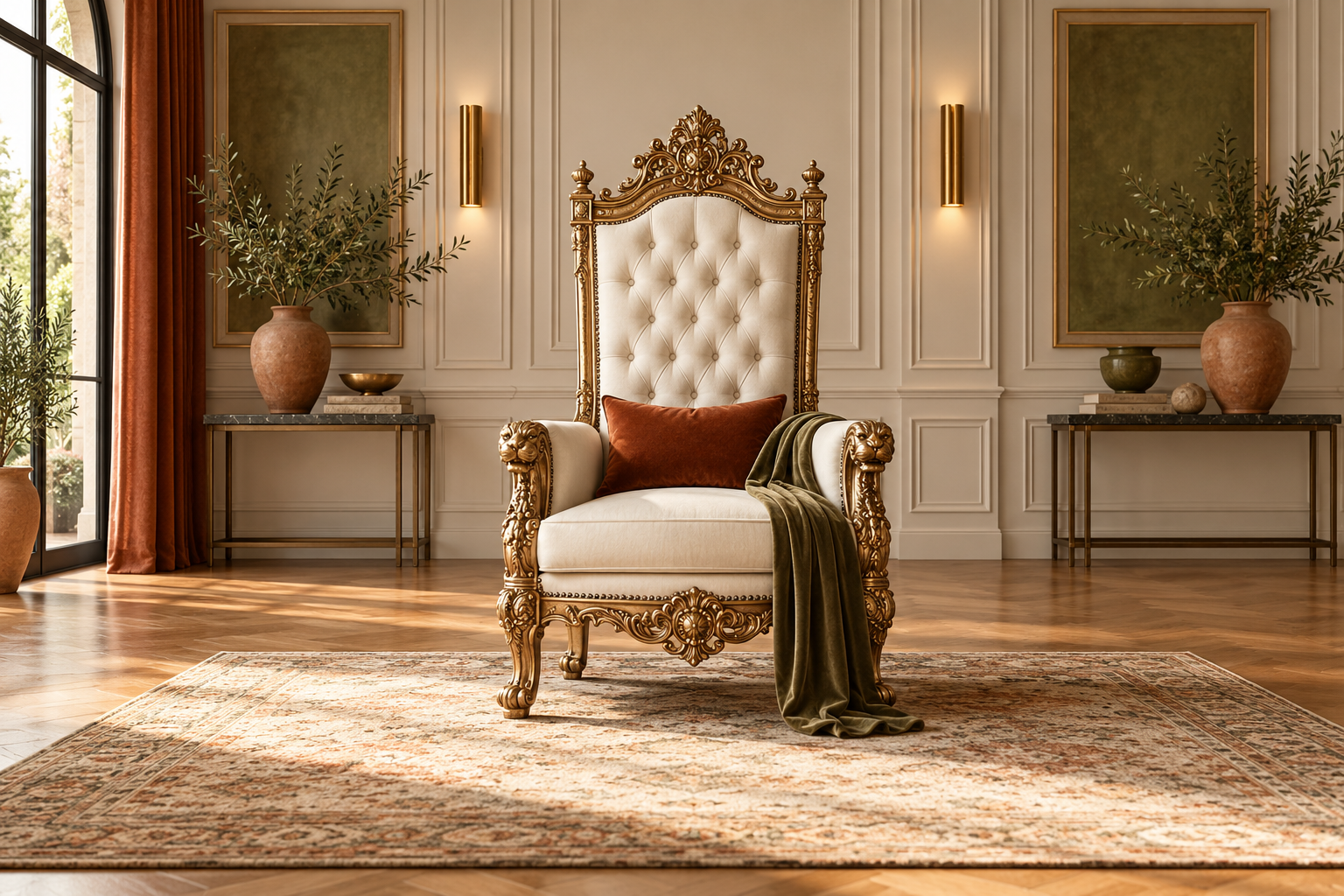
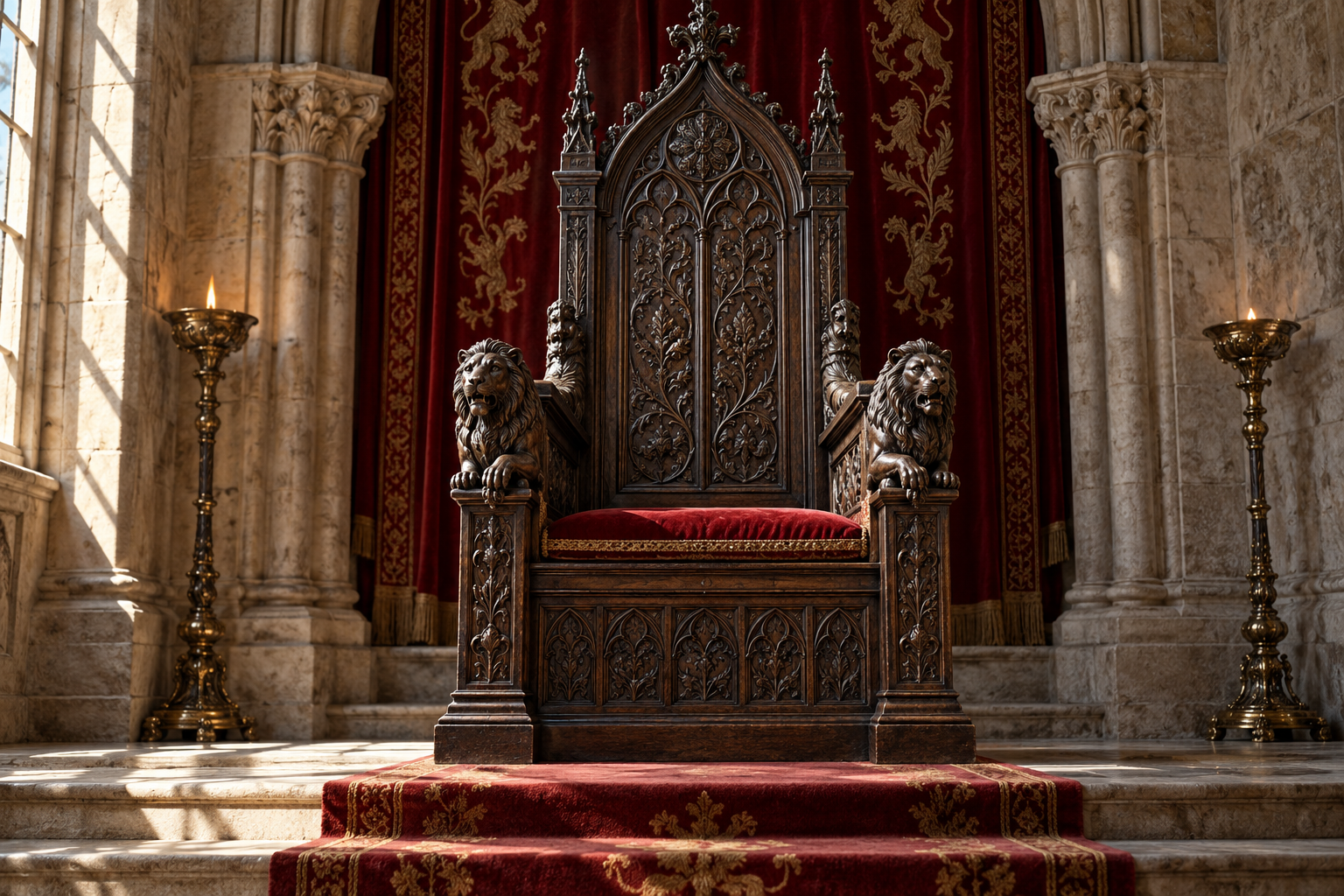
An empty throne can become the most commanding object in a room. Its position tells us to notice it, its back frames an absent figure, and the space around it implies that this seat has a particular role. That response is not produced by ornament alone. A throne works through relationships: between object and occupant, between occupant and audience, and between the seat and the story told about it.
Understanding that design language makes historical thrones more interesting and original throne concepts more thoughtful. It also helps us avoid an easy mistake: assuming every tall chair, lion carving, or metallic surface means the same thing everywhere. The visual interpretation in this guide offers ways to look closely. For historical objects, the strongest conclusions still come from the specific chair's documented setting, materials, imagery, and ceremonial use.
Throne Foundations
- Examine the seat, occupant, audience, and setting together.
- Read the silhouette before interpreting individual ornaments.
- Treat height as part of a relationship within the scene.
- Separate observed appearance from documented material identification.
- Research symbols within their specific cultural context.
- Distinguish a representation of a throne from surviving furniture.
- Look for evidence of the chair's ceremonial role.
- Keep historical interpretation separate from original invention.
- Use collection records to identify the object under discussion.
- Allow unanswered questions to remain visible in the explanation.
Royal Facts
- A chair's significance may depend on the ceremony associated with it.
- An isolated photograph can omit the original architectural setting.
- A metallic surface does not by itself identify solid metal.
- A sculpted seat and a wooden chair provide different kinds of evidence.
- A motif's meaning cannot be established from its shape alone.
- A backrest can frame the occupant within a larger composition.
- A throne may have undergone repairs that affect its present appearance.
- Modern displays can differ from an object's historical arrangement.
- A title, attribution, and documented date help distinguish similar-looking objects.
- A visual interpretation should not be presented as a proven historical intention.
Royal Picks
- Use the holding institution's object record as an identification source.
- Consult a documented ceremonial account when studying an actual role.
- Compare full views with detail photographs.
- Record the accession number when a collection provides one.
- Keep a notebook separating observations, sources, and hypotheses.
- Look for conservation writing about altered surfaces or repairs.
- Use simple silhouette sketches for visual analysis.
- Review a plan or photograph of the surrounding room when available.
- Choose credited reference images for a design research board.
- Label original concept sketches clearly as imagined interpretations.
Behind the Throne
- Ask what makes the seat important before counting its ornaments.
- The viewing distance can change which design features remain readable.
- A repeated emblem may connect furniture to a wider setting.
- The same chair can appear different when isolated from its audience.
- A carefully maintained surface and an aged surface invite different readings in fiction.
- An object's present location may not explain its original use.
- A source's certainty should determine the strength of a historical claim.
- A replacement component can complicate a purely stylistic reading.
- Ceremonial movement can give meaning to an otherwise static arrangement.
- A clear distinction between evidence and invention improves storytelling.
Throne Wonders
- An empty seat can become a scene's central presence.
- A restrained outline can communicate authority without dense ornament.
- A fictional council might express shared power through several coordinated seats.
- A repaired emblem can become a meaningful detail in an invented dynasty.
- A throne facing a landscape can make the realm part of its composition.
- Negative space around a chair can strengthen its visual importance.
- A canopy can extend a seat into an architectural idea.
- A small material contrast can direct attention toward the occupant.
- An abandoned throne can support a story about absence rather than spectacle.
- The relationship between chair and person can be more memorable than a decorative crest.
Throne FAQs
- Does a tall back always mean royal authority? No. Interpret the object through its documented context.
- Do lions mean the same thing on every throne? No. Specific cultural and object evidence matters.
- Can I identify materials from a photograph? Some features may be visible, but consult documented descriptions before making firm claims.
- Is a sculpture evidence of a real chair design? It is evidence of a representation; further claims need supporting research.
- Why study the room around a throne? Placement, approach, and surrounding activity can explain its role.
- Can wear tell us who used a chair? Not by itself; an attribution needs evidence.
- What is the best starting source? The institution or documented collection holding the identified object.
- Can fantasy thrones borrow historical ideas? They can develop visual references, with clear attribution and appropriate cultural care.
- Must an original throne use crown imagery? No. Its story can be expressed through proportion, materials, and setting.
- How do I avoid overinterpreting? Separate what is visible, what sources establish, and what you are proposing as a reading.
Silhouette Makes the First Statement
Before we recognize individual details, we recognize an outline. A broad upright back can establish a strong central shape. A narrow rising crest can draw the eye upward. Large arms may frame an occupant, while an open structure can create a different relationship with the space behind it. Those choices influence what a viewer notices first, even before the surface is examined.
As a design exercise, reduce a throne to a dark shape against a light background. Does the seat remain identifiable? Is the occupant supported visually, or swallowed by the ornament? This exercise does not reveal the historical meaning of an actual artifact. It reveals how a particular composition directs attention. A clear outline can support many interpretations, from formal restraint to theatrical excess, depending on the materials, setting, and use that complete it.
Height Is a Relationship, Not a Universal Formula
A high back can enlarge the visual field around a seated person. A platform can change the relationship between that person and an approaching audience. An architectural canopy can extend the composition farther still. Yet these elements should be examined as part of an arrangement rather than treated as a simple equation in which greater height always means greater authority.
A throne can appear commanding through isolation, contrast, or the way people orient themselves toward it. Conversely, a very tall chair can look awkward if its occupant seems lost within the frame. In an original concept, choose the kind of encounter the throne should create. Is the ruler meant to be distant, approachable, enclosed, exposed, or visually connected to a wider group? The proportions become more meaningful when they answer a specific narrative question.
Materials Communicate Through Their Setting
The appearance of carved timber, polished metal, textile, or stone-like mass can influence a viewer's expectations. A weathered surface may suggest continuity or neglect within a designed scene. A reflective finish may produce a sense of spectacle. A visibly repaired component may imply a history of use. These are interpretive possibilities, not automatic meanings carried by the materials themselves.
Historical material claims require particular care. An object that looks golden may contain several different substrates and surface treatments. A stone representation of a ruler on a throne is evidence of a representation, not necessarily a measured record of the furniture it depicts. Consult object records before describing a material as rare, imported, sacred, or politically significant. In creative design, clearly label invented materials and symbolism as part of the imagined world rather than presenting them as historical facts.
Symbols Need More Than a Familiar Shape
Crowns, animals, plants, shields, and celestial forms can make a throne visually rich. Their meanings depend on who made the object, where it was used, and what evidence connects the imagery to a particular identity or ceremony. A lion is not a universal shorthand that allows every chair to be explained in one sentence. The same visible motif can belong to very different stories.
For an original throne, build a small symbolic vocabulary rather than collecting every impressive emblem. Decide which forms relate to the imagined office, landscape, craft tradition, or personal history. Repeat them with intention across the chair and its setting. A single well-developed motif can be more persuasive than a back crowded with unrelated symbols. For a documented historical chair, keep the institution's interpretation separate from your own visual observations and any unanswered questions.
A Case Study in Object and Ceremony
Westminster Abbey describes the Coronation Chair as an oak chair commissioned by Edward I to contain the Stone of Scone, brought from Scotland in 1296. Its account records the chair being made in 1300–1301 and decorated with painted imagery on a gilt ground. Those details connect the object to a specific historical purpose rather than a generic idea of medieval luxury. Westminster Abbey: The Coronation Chair
The useful lesson for looking is the relationship between the physical seat and the role assigned to it. Its significance cannot be reduced to a tall back or a particular finish. When examining another ceremonial chair, ask an equivalent set of questions: what was commissioned, what accompanied it, and what documented action gave the seat its role? The answers may explain choices that appearance alone leaves ambiguous.
Representations and Furniture Offer Different Evidence
A sculpture of a seated ruler can help us examine how authority was pictured, but it is not interchangeable with a surviving chair. The Metropolitan Museum's educational record for its seated statue of Hatshepsut identifies the ruler seated on a throne with her feet on a raised platform. The sculpture is a useful starting point for discussing the composition of a royal image. The Met: Seated Statue of Hatshepsut
Look at the whole representation: the figure, seat, base, and viewing position. Then distinguish what is visible from what is known through the collection's research. A contemporary designer can learn from the clarity of a composed figure and seat without claiming that a sculpted form proves the construction of a historical wooden throne. Keeping evidence types separate makes both historical discussion and creative interpretation more precise.
The Room Extends the Throne's Message
A throne's setting can amplify, soften, or complicate its presence. An axial approach can make the seat the destination of a room. Repeated columns or wall panels can create a visual rhythm leading toward it. An open garden setting can produce a different relationship, drawing the chair into a landscape rather than enclosing it within a formal architectural frame.
People complete that arrangement. Who approaches? Who stands nearby? Which direction does the occupant face? In a film or imagined realm, these are powerful design choices because they shape the scene's social relationships. In historical interpretation, they are research questions that need evidence from the relevant place and period. Avoid reconstructing a complete ceremony from an isolated object photograph. The photograph may show the chair clearly while omitting the activity that made its position meaningful.
Wear, Repair, and Absence Can Tell a Story
Not every effective throne looks newly finished. Within an original fictional setting, a repaired arm, replaced cushion, or missing emblem can suggest a changing relationship with power. A meticulously maintained chair might suggest ongoing ceremony, while a covered seat in an unused room can create another mood entirely. The object becomes part of a story through what has happened around it.
For actual artifacts, visible wear should not become a license to invent anecdotes. A mark may relate to use, storage, damage, restoration, or something not yet understood. Conservation records can clarify changes that an ordinary photograph cannot explain. Describe what you can observe and attribute explanations to their sources. This discipline leaves room for curiosity while protecting the distinction between a compelling imagined narrative and a documented history.
Read the Whole Composition
The design language of royal seating becomes richer when we stop searching for one universal symbol of power. Outline, scale, material, imagery, placement, and ceremony work together. Sometimes the most revealing detail is the relationship between two elements: a modest seat beneath elaborate architecture, a figure framed by a high back, or a familiar motif given a specific local meaning.
For a historical throne, begin with its identity and record, then build observations around the evidence. For an original throne, begin with the kind of authority or encounter you want to imagine, then choose a consistent visual language. Either approach rewards the same habit of attention. Look past the decorative shorthand and consider why this particular seat, in this particular setting, has been made to matter.
Related Articles
Color and Upholstery for Statement Seating
Color and upholstery can transform the character of statement seating. Explore palettes, texture, pattern scale, seams, trim, and real lighting to create a coherent seat for interiors, events,…

Commissioning Custom Seating: Turn an Idea into a Clear Design Brief
A striking idea becomes a successful commission through clear decisions. Learn how to turn inspiration into a practical throne design brief, collaborate with a maker, review samples and…
Designing Statement Seating: Form, Comfort, and Fit
A memorable seat needs more than a striking silhouette. Explore how form, usable dimensions, comfort, materials, and setting work together to turn an imaginative chair into a convincing…