
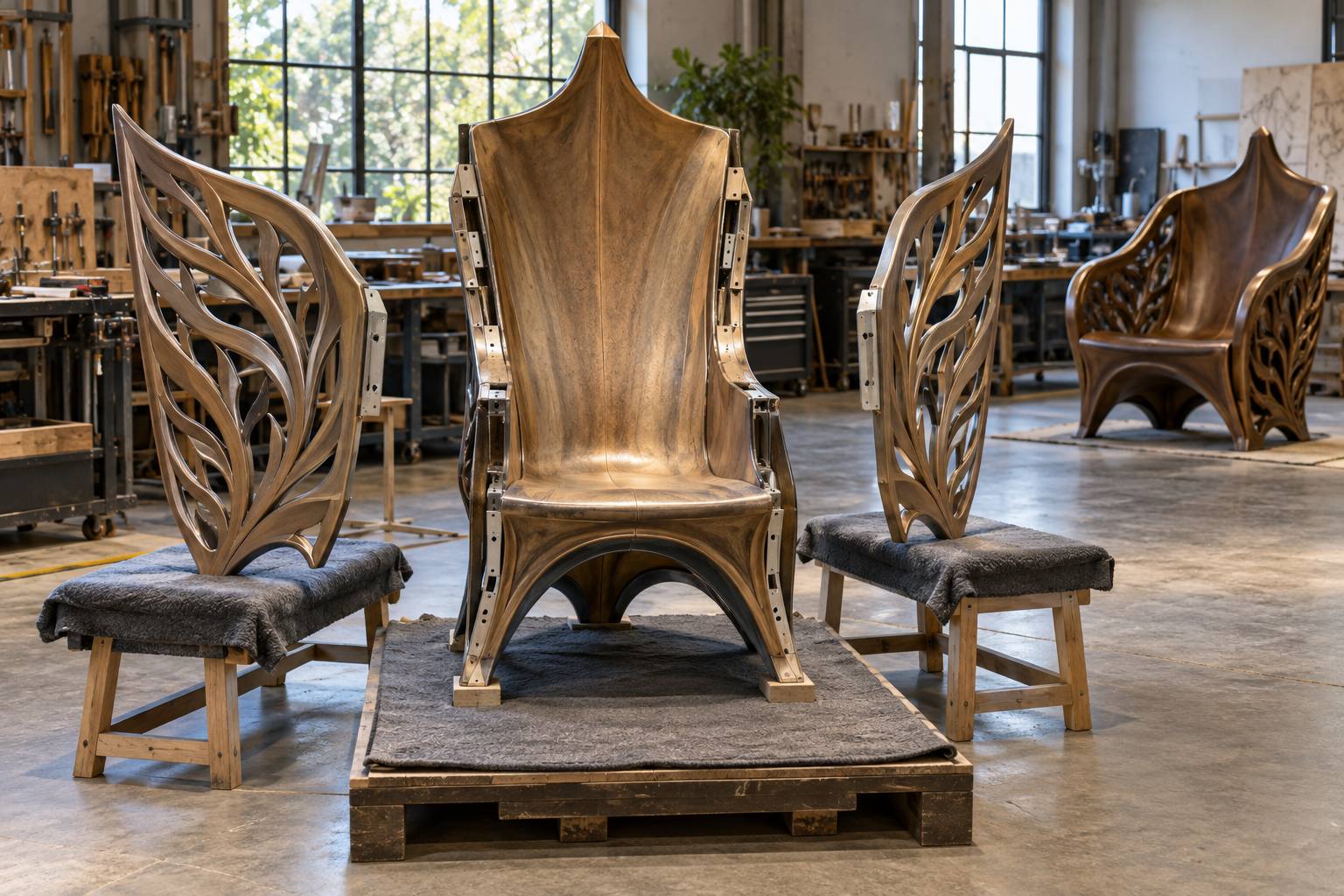
The way a seat comes apart can be as important as the way it comes together. A one-piece form may offer a clean silhouette, while a modular approach can make transport, installation, repair, and storage more manageable. Neither strategy is automatically the better design. This section compares them through the needs of statement chairs, oversized seating, scenic thrones, and themed installations. We consider where divisions can follow natural changes in shape or material, how connections remain accessible, and what an assembly sequence asks of the installation team. A modular object should still look resolved when complete; a one-piece object still needs a workable route to its destination. Discover how overall size, handling, finish protection, repeat use, and maintenance influence the choice. Sometimes a hybrid arrangement offers the clearest answer, with a complete seating core and removable decorative elements. The goal is to make construction support the concept. A thoughtful assembly strategy can protect a strong silhouette while allowing the finished piece to travel, arrive, and remain serviceable throughout its intended use.
Throne Foundations
Start with the route, assembly location, and intended future moves. Compare the dimensions of a complete object with the dimensions of the components that could travel separately.
Then distinguish structural modules from removable ornament. A detachable crest and a divided occupied frame perform different roles and need different development. The choice is not always modular versus entirely indivisible: a unified seating core with separate decorative parts can preserve a clean appearance while addressing particular delivery or maintenance constraints.
Royal Facts
A component that fits through a doorway may still fail to turn in a corridor or fit inside a lift. Packed dimensions and handling space also matter. Modular construction adds connections and an assembly sequence; one-piece construction can reduce those interfaces while creating other transport and access demands.
Neither label establishes simplicity by itself. Record component dimensions, documented weights, and required installation positions. A clear comparison describes what arrives, how it is handled, and what must happen before the seat is ready.
Royal Picks
Use an exploded drawing, a route survey, a component schedule, and a packing layout. Show where hands or handling equipment engage each component and where installers reach the connections.
For a proposed seam, inspect a representative detail at the intended viewing distance. Compare the complete one-piece route with the complete modular sequence, including packaging and final positioning. This prevents a convenient small module from looking like an easy solution when its connections become inaccessible after neighboring parts are installed.
Behind the Throne
Work through assembly in order and then reverse it. The final decorative cover should not block a fixing that must be tightened later, and removing one worn panel should not require unnecessary dismantling.
Place seams along meaningful boundaries where possible, such as a material change or ornamental border. Keep structural and scenic attachment roles clear in the documentation. A successful modular form depends on the relationship between connections, tolerances, access, and appearance, not simply on cutting a large design into smaller pieces.
Throne Wonders
A practical division can become a design feature. Repeated panels can establish rhythm, a crest border can conceal a break, and a separate upholstered insert can create a deliberate contrast.
Try sketching the assembly lines as part of the initial composition rather than adding them at the end. Then inspect the object without those lines emphasized to see whether the whole remains coherent. The aim is a convincing complete seat whose necessary separations feel intentional instead of accidental.
Throne FAQs
Does modular mean easy for any crew to assemble? Instructions, access, handling, and the connection design determine that.
Can a one-piece seat include removable decoration? Yes; describe the actual assembly rather than forcing it into an absolute label.
Are hidden seams always preferable? A deliberate visible junction may be more practical and visually convincing.
When should module size be decided? Early enough to coordinate the transport route, occupied structure, finishing, packing, and the sequence used to build and install the final object.