
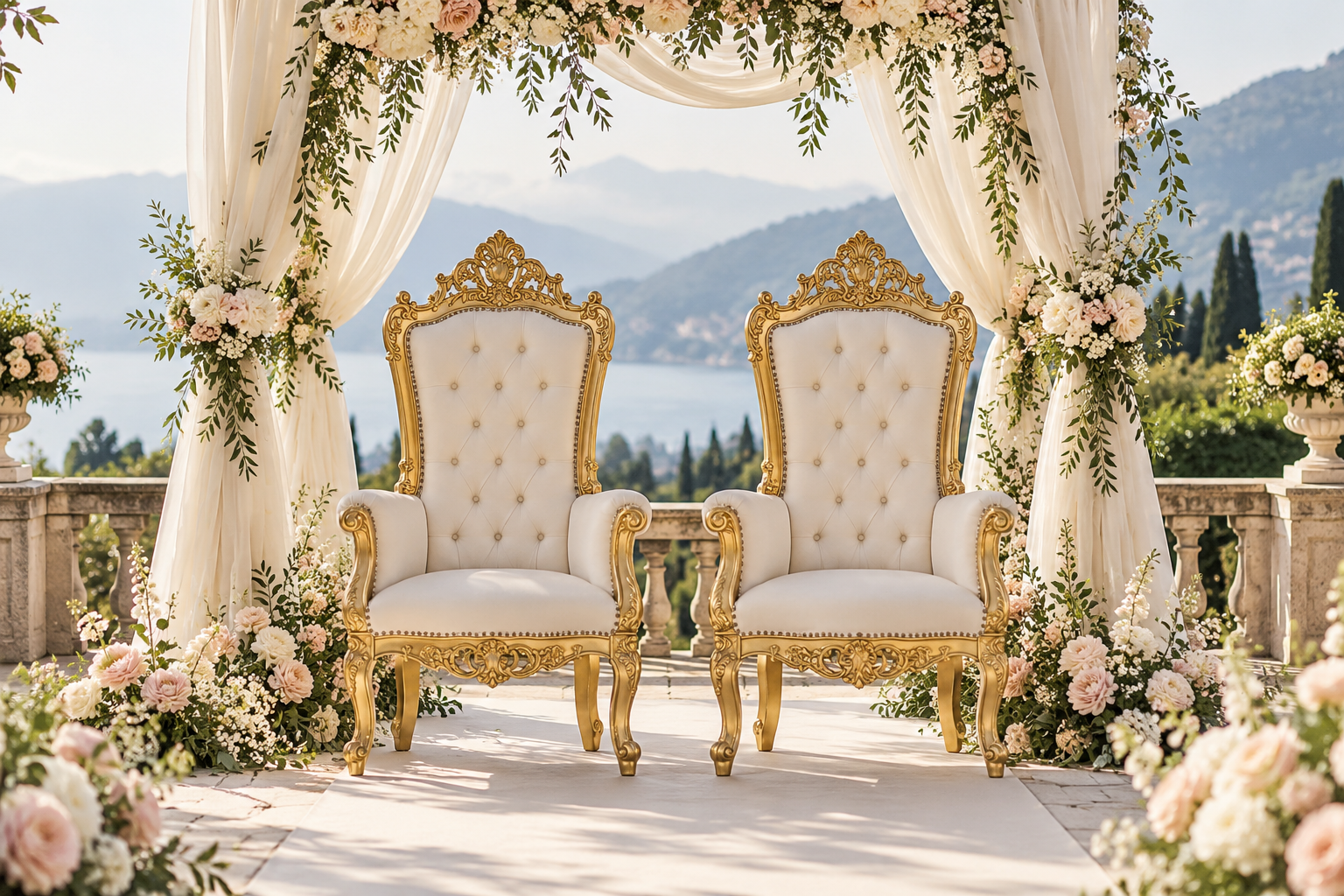
Wedding seating becomes most meaningful when it reflects the couple and supports the moments they want to enjoy. Weddings & Celebrations explores ceremonial chairs, coordinated pairs, sweetheart seating, and portrait arrangements through that personal brief. Begin with the wedding timeline: a brief photograph, a formal entrance, and a long reception meal create different comfort and layout needs. Consider clothing, trains, bouquets, arm positions, nearby tables, and the space required to enter and leave the seat. Palette and materials should relate to the venue and flowers rather than defaulting automatically to gold and white. A floral surround may look beautiful empty yet cross a face once someone sits, so an occupied mockup can be invaluable. This section also considers rental dimensions, permitted decoration, access, setup, collection, and contingency arrangements. If the throne moves between ceremony and reception, that transition needs a practical plan. The aim is a setting that feels special without becoming an obstacle to the celebration, giving the couple an intentional place within the scene and comfortable alternatives as the day's activities change.
Throne Foundations
- Define the throne's role in the wedding timeline: ceremony, sweetheart seating, reception portrait, or lounge feature.
- Choose seating for the couple's actual comfort and clothing rather than the empty-chair photograph alone.
- Coordinate the silhouette with the venue, floral design, and overall wedding palette.
- Confirm whether each seat is intended for one person or an explicitly approved shared arrangement.
- Plan an approach that accommodates dresses, trains, mobility needs, and nearby attendants.
- Check how the throne relates to the dining table if it will be used during a meal.
- Decide whether flowers attach to a separate surround or to approved decoration points.
- Include setup and removal in the venue schedule.
- Arrange a seated photography test or representative mockup before final styling.
- Assign responsibility for keeping cushions, clothing clearance, and accessories in order during use.
Royal Facts
- A portrait throne and a reception dining chair support different durations and activities.
- A high arm can affect bouquet placement and the way a couple turns toward one another.
- A wide dress can change available seating space without changing the chair's physical dimensions.
- White, ivory, cream, and champagne materials can appear distinct when placed together.
- A paired-chair arrangement can convey unity without requiring a shared seat.
- A tall back can obscure decorative scenery placed directly behind it.
- A wedding throne can be understated and contemporary rather than heavily gilded.
- A rental's delivery charge may depend on venue access and setup requirements as well as distance.
- An outdoor ceremony setting can change exposure and contingency needs throughout the day.
- The couple's portrait sightline may differ from guests' view across the reception room.
Royal Picks
- Use fabric and finish samples alongside the actual wedding palette.
- Prepare a layout showing the throne, table, floral surround, and nearby circulation.
- Ask for measurements including arms, back height, seat depth, and assembled width.
- Schedule a clothing-aware fit check when possible.
- Keep floral attachment details coordinated with the supplier and decorator.
- Choose a seating duration appropriate to the furniture's comfort and intended use.
- Include access, setup, collection, and weather contingencies in supplier arrangements.
- Provide the photographer with the throne's planned position and portrait purpose.
- Use a reset reference showing cushions, flowers, and optional accessories.
- Reserve an alternative comfortable seating option within the wedding plan.
Behind the Throne
- A throne that frames one person beautifully may separate a couple visually when two large backs compete.
- A sweetheart table can hide most of the throne, making its upper silhouette more important than lower ornament.
- A floral cascade may look balanced empty but cross a face once someone sits.
- A dramatic train needs room not just for the portrait but for entering and leaving the seat.
- A mirrored pair of chairs can feel formal, while slightly angled seating encourages connection in photographs.
- A rental photographed under studio light may look warmer or cooler in the venue's evening lighting.
- A ceremony throne moved to reception creates a second handling task that needs staff and timing.
- A decorative cushion can reduce effective seat depth, affecting posture during a long meal.
- An ornate chair need not carry the entire theme when flowers and architecture already provide strong detail.
- A comfortable alternative helps the couple enjoy the event when the ceremonial seat is best reserved for brief moments.
Throne Wonders
- Design paired botanical thrones joined visually by a shared floral canopy.
- Explore ivory upholstery with warm wood for a softer royal atmosphere.
- Create a modern wedding court using sculptural seats and restrained metallic details.
- Develop a fantasy-inspired portrait corner with coordinated standing and seated compositions.
- Imagine removable ceremonial crests that become keepsake display pieces afterward.
- Compare a grand throne pair with a simpler shared backdrop and separate chairs.
- Design an autumn wedding palette around burgundy fabric, bronze accents, and natural foliage.
- Create a moonlit reception portrait using deep blue surroundings and warm facial lighting.
- Develop a floral surround that changes from ceremony backdrop to reception portrait setting.
- Build a visual planning board showing the throne occupied, at dinner, and in the full venue.
Throne FAQs
- Do wedding thrones need to match exactly? No. Coordinated proportions, materials, or motifs can connect distinct chairs intentionally.
- Can the couple share one throne? Only use a seat specifically intended and approved for that arrangement; width alone does not establish suitability.
- How do I check dress clearance? Test the approach, seat, arms, and exit with representative clothing dimensions and the expected train.
- Can a throne be used for dinner? Check table relationship, comfort, reach, and the supplier's intended use rather than assuming a portrait seat suits a meal.
- Should flowers attach directly to the chair? Agree on permitted attachment methods with the owner and florist before installation.
- What color works beyond gold and white? Consider the couple's palette, venue materials, flowers, clothing, and lighting; wood, bronze, jewel tones, or muted colors can work.
- Can the throne move between ceremony and reception? Plan the approved handling, route, staffing, timing, and reset rather than treating it as an incidental task.
- How much space should surround it? Allow for the actual clothing, approach, photographs, attendants, and circulation in the venue layout.
- What should I ask a rental supplier? Confirm dimensions, condition, intended use, access requirements, delivery, setup, collection, decoration permissions, and contingency arrangements.
- How can the setting feel personal? Use meaningful motifs, a considered palette, and a comfortable arrangement instead of relying solely on oversized ornament.
Wedding Throne Chairs: Designing a Memorable Seating Moment
A wedding throne should create a beautiful moment and support the people at its center. Plan coordinated chairs, clothing clearance, flowers, photographs, and supplier details around the celebration you actually want to enjoy.