
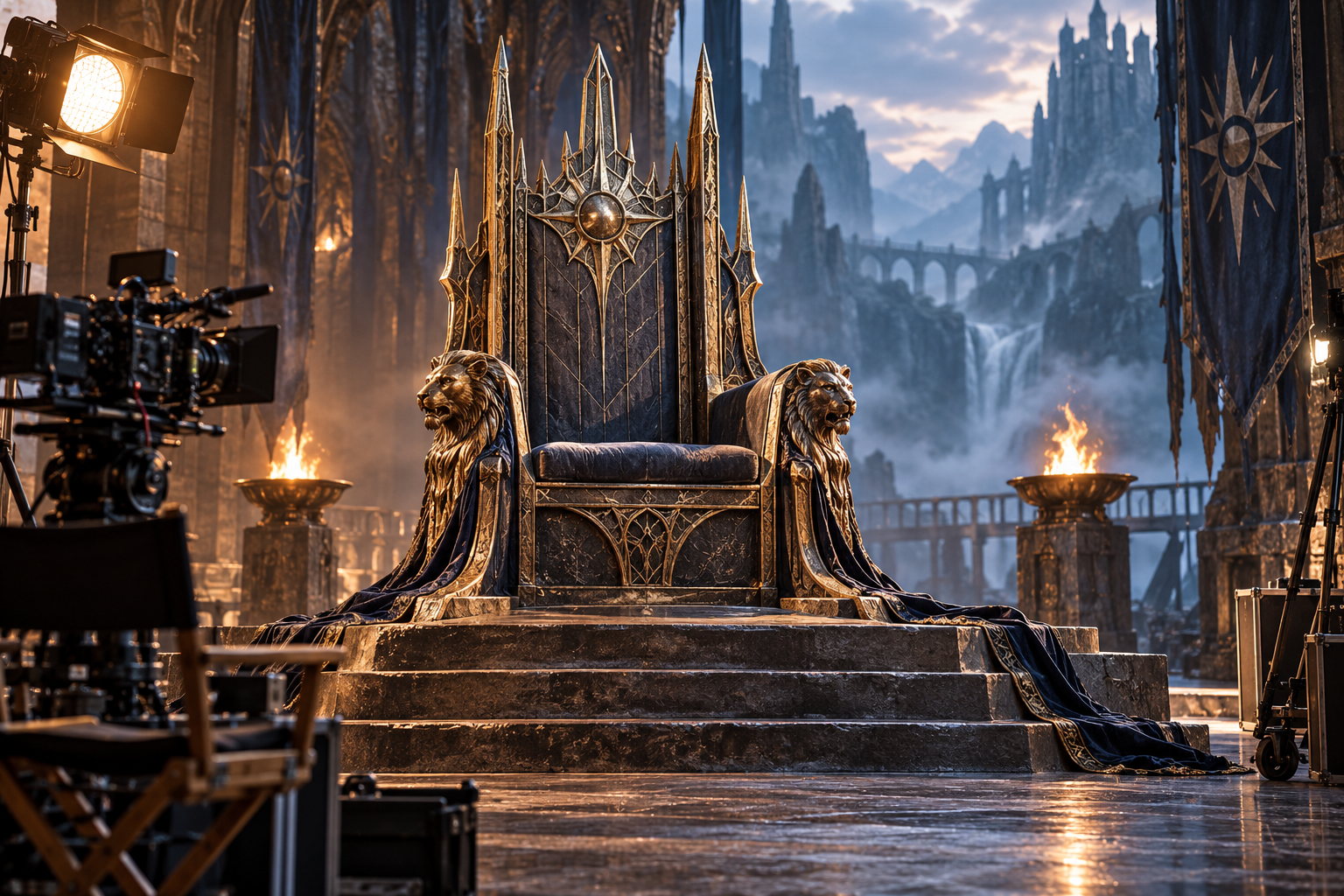
On screen, a throne can introduce a ruler before a single line of dialogue. Its scale, materials, placement, and relationship to the camera can suggest confidence, isolation, inherited power, or a claim that nobody quite accepts. Film & Television Seating examines these visual and narrative choices. Look at what happens when the seat is occupied, abandoned, damaged, approached, or deliberately refused. Compare the throne with the costume, architecture, lighting, and surrounding characters that complete its meaning. A design is not simply an elaborate prop; it participates in the story's understanding of authority. This section distinguishes a screen version from its literary source, later replicas, and modern fan interpretations. It also separates analysis of the finished image from the practical production work explored in the props section. Follow the details that change across scenes and ask what those changes reveal about character or allegiance. Whether the setting is historical drama, epic fantasy, or an invented future, viewing turns the royal seat into a revealing part of the film's visual language rather than a decorative background object.
Throne Foundations
- Study a screen throne as part of its story world before examining it as an isolated chair design.
- Identify the character, location, and version of the production being discussed.
- The silhouette can establish a seat of authority before a close-up reveals its details.
- A throne can express a ruler’s values through restraint, excess, inherited ornament, or visible alterations.
- Framing determines how much of the surrounding court or room contributes to the image.
- Distinguish what the screen shows from what production documentation confirms.
- A change of occupant can change a throne’s narrative meaning without changing the physical seat.
- Compare lighting, costume, posture, and scenery when explaining why the chair feels imposing.
- Keep an on-screen object separate from replicas, collectibles, and fan-created reinterpretations.
- This category examines design and storytelling; physical fabrication belongs in the production-props guides.
Royal Facts
- A low camera angle can show a chair differently from a level product photograph.
- A close-up can omit the platform or steps visible in a wider shot.
- The same throne can appear under several lighting conditions within one story.
- An edited sequence may combine views filmed separately.
- A promotional image can present a different arrangement from the scene in the finished production.
- A miniature replica’s dimensions do not establish those of the on-set object.
- A throne represented on screen may combine practical scenery with digital imagery.
- A character’s costume can conceal upholstery or other seat details.
- Different adaptations of one fictional setting can use different throne designs.
- An empty throne can remain a narrative focal point without a seated ruler.
Royal Picks
- Choose a wide establishing shot to study the throne’s relationship with the room.
- Pair it with a close view when discussing a specific crest or material effect.
- Compare the same throne with different occupants rather than mixing unrelated chairs.
- Use officially credited production-design material when identifying the people behind a design.
- For adaptation comparisons, label the film, series, season, or version clearly.
- Create a silhouette study that excludes lighting and costume to isolate the chair’s form.
- Compare an empty-seat shot with an occupied shot to examine narrative emphasis.
- Select production references that distinguish original set objects from exhibition replicas.
- For an original concept, begin with the ruler’s role and the world’s material vocabulary.
- Use a scene-specific viewing note when a detail is visible only briefly.
Behind the Throne
- Do not convert a convincing stone effect into an unsupported claim that a set throne was carved from stone.
- Separate a designer’s documented intention from your interpretation of the finished scene.
- A threatening silhouette does not establish whether the actual set seat was uncomfortable or difficult to use.
- Check whether a photographed version belongs to the production or to a later promotional display.
- Review more than one shot before describing a feature obscured by costume or shadow.
- When comparing episodes, identify whether the story has intentionally changed the throne’s condition.
- Keep a replica maker’s additions separate from details visible in the source production.
- A camera composition can make the occupant seem isolated even within a large ceremonial space.
- Avoid supplying an invented symbolic meaning when neither the story nor its makers establish it.
- Explain spoilers when a throne’s changed ownership or destruction is central to the analysis.
Throne Wonders
- A modest chair can become formidable when every other character stands below it.
- A throne inherited from another ruler can carry tension before anyone speaks.
- An oversized back can visually separate a small figure from the surrounding court.
- A damaged emblem can suggest a contested identity within an original story.
- A quiet, unadorned seat can contrast with an extravagant ceremonial room.
- A throne seen through a doorway can become an anticipated destination.
- Changing only the lighting can shift a familiar seat from welcoming to ominous.
- An empty chair can represent absence, succession, or uncertainty when the scene supports that reading.
- A ruler who refuses the throne can give its design a new narrative role.
- An original screen throne can communicate character without reproducing a recognizable franchise silhouette.
Throne FAQs
- Should I identify a screen throne by the actor alone? Include the fictional character and production version so the object is unambiguous.
- Can appearance establish its real material? No. Use production documentation to distinguish actual construction from a scenic effect.
- Why compare wide and close shots? Wide views show spatial relationships; close shots reveal selected details.
- Are promotional photographs the same as scene evidence? Not always. Label their context and compare them with the finished production.
- Does a different adaptation use the same throne? Do not assume so; compare the identified versions separately.
- Can I analyze symbolism without a maker’s statement? Yes, but present it as an interpretation supported by the scene.
- How should a replica be captioned? Identify it as a replica and name the production design it interprets.
- What if part of the throne is digital? Explain the combined image only to the extent supported by reliable production information.
- How does this differ from Film & Stage Sets? Here the focus is on-screen design and narrative meaning; the props category covers producing, handling, and documenting physical set pieces.
- What makes an original cinematic throne convincing? Connect its form, materials, condition, and room placement with the fictional ruler and story world.