Make the Seating Moment About the Couple
Wedding throne chairs are most memorable when they look as though they belong to the people using them. They might create a formal portrait, frame a sweetheart table, or offer a special place during part of the ceremony. The design can be grand or understated, traditional or imaginative. What matters is that the seating supports a meaningful moment rather than becoming another impressive object the couple has to work around.
Begin with the wedding experience, then choose the chair. A brief photograph, a long meal, and a ceremonial entrance ask different things of furniture. Clothing, movement, venue access, flowers, and photography all influence the result. This guide brings those decisions together so the visual idea remains connected to comfort and the day's actual schedule, from the first supplier conversation to the final collection.
Throne Foundations
- Put the seating moment on the wedding timeline first.
- Specify whether the chairs serve portraits, dining, ceremony, or several uses.
- Choose the intended occupant arrangement explicitly.
- Review usable space with the wedding clothing in mind.
- Connect the chair palette to the actual venue.
- Design flowers around the occupied composition.
- Share the arrangement with the photographer early.
- Confirm exactly what the supplier's service includes.
- Assign responsibility for movement and reset.
- Plan comfortable alternative seating when appropriate.
Royal Facts
- A portrait chair and a dining chair may serve different durations.
- Two coordinated chairs can feel unified without identical ornament.
- A train can change the space needed around a seat.
- Tall backs may create a visual gap in a couple's portrait.
- Several pale upholstery colors can look noticeably different together.
- A floral arrangement can overlap faces only once the chairs are occupied.
- A rental may require permission for decorative attachments.
- Delivery and final placement are not always the same service.
- Relocating the throne adds another setup task to the schedule.
- An outdoor location needs furniture approved for its actual conditions.
Royal Picks
- Request the usable seat dimensions as well as the overall size.
- Use fabric samples beside the actual wedding palette.
- Prepare an occupied layout study for the floral focal area.
- Give the photographer a clear description of the desired moment.
- Keep supplier specifications in the shared planning folder.
- Ask for representative condition photographs of rental chairs.
- Use a simple setup image as a reset reference.
- Review the route with the venue and delivery team.
- Choose an independent floral surround when it suits the approved plan.
- Reserve another comfortable chair for longer seated activities if needed.
Behind the Throne
- The couple's interaction can matter more than an imposing symmetrical setup.
- A slight chair angle may create a more connected portrait.
- A sweetheart table can hide lower ornament and emphasize the backs.
- Bouquet placement deserves space within the planned pose.
- An ornate pair can become too visually separate without a shared frame.
- A formal clothing trial can reveal issues absent from ordinary seat measurements.
- Venue light can change the apparent warmth of upholstery and metallic finishes.
- An independent backdrop may make future chair changes easier.
- A reset plan prevents cushions and accessories drifting between photographs.
- A clear relocation assignment protects the timeline from unexpected handling work.
Throne Wonders
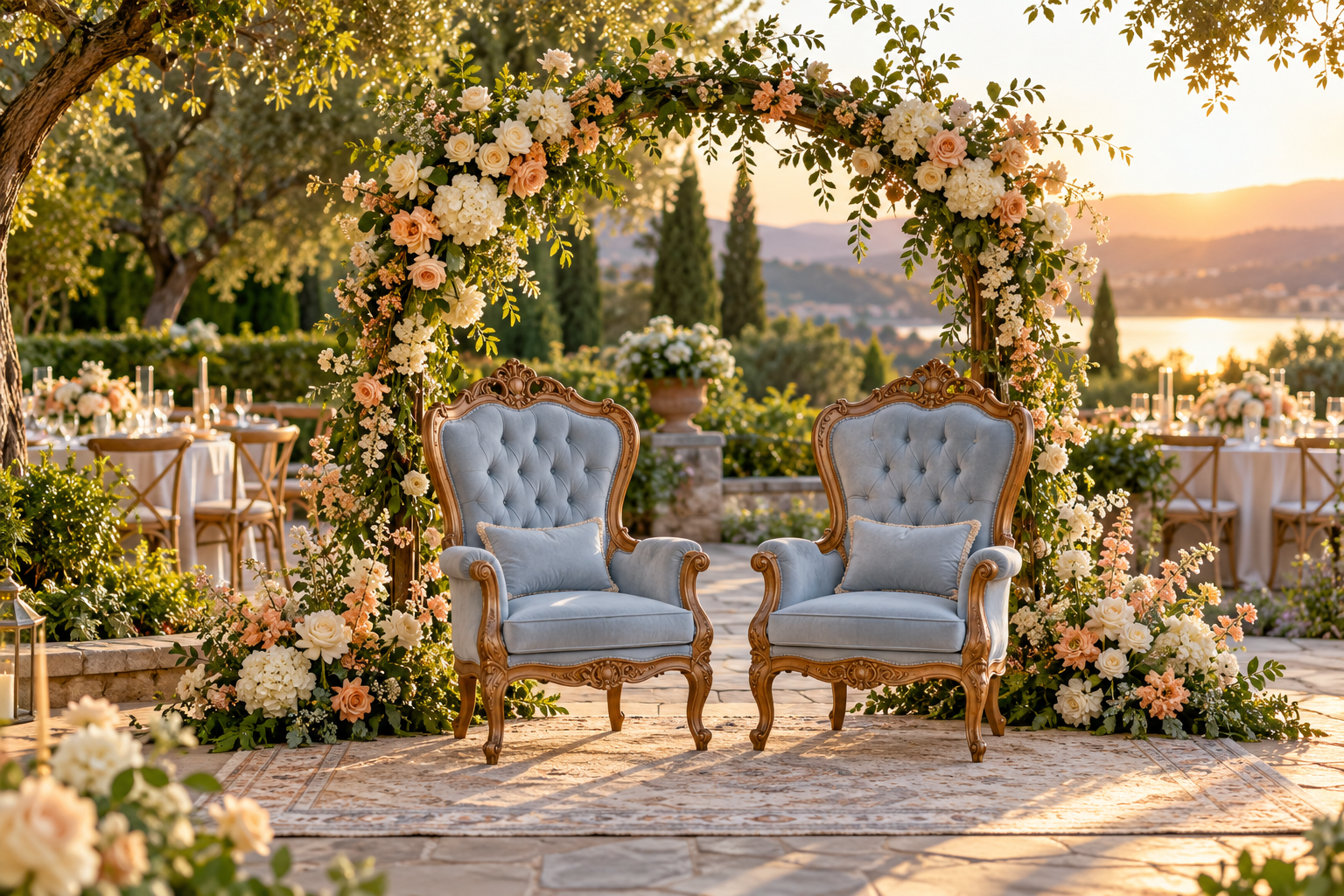
- Pair pale blue upholstery with warm wood and peach flowers.
- Use burgundy and bronze for an autumn wedding portrait.
- Frame coordinated chairs with one shared botanical arch.
- Create a modern royal setting with sculptural seating and restrained flowers.
- Let meaningful textile details personalize an otherwise simple pair.
- Use the venue's garden view as part of the backdrop.
- Connect different chairs through the same cushion shape.
- Design a quiet portrait corner away from the busiest reception activity.
- Let an understated throne support a richly colored floral setting.
- Turn a brief seated conversation into the central photographic moment.
Throne FAQs
- Do the wedding thrones have to match? No. Related proportions or materials can connect distinct chairs.
- Can both partners share one chair? Use only furniture specifically intended for that arrangement.
- Are thrones suitable for dinner? Assess table relationship, comfort, and intended use rather than assuming.
- How do we check dress clearance? Review the approach, seat, arms, and exit with representative clothing dimensions.
- Should flowers attach to the chair? Agree on the method with the owner and florist before installation.
- Must the colors be gold and white? No. Let the couple and venue guide the palette.
- Can the chairs move during the day? Yes, when approved handling, staffing, route, timing, and reset are planned.
- What should we tell the photographer? Describe the desired interaction and the specific seating arrangement.
- What if weather changes? Follow an agreed plan appropriate to the furniture and venue.
- What makes the final choice successful? The couple can enjoy the intended moment comfortably while the team understands the setup.
Decide When and How the Thrones Will Be Used
Put the proposed seating moment on the timeline before choosing a style. If the thrones are intended only for portraits, identify when those photographs will happen and how the couple reaches the setting. If the chairs will be used during dinner, evaluate their relationship with the table and the expected sitting duration. If guests will use them too, that changes the brief again.
Be specific with the supplier about each planned use. A chair selected for a short seated photograph should not automatically be treated as dining or shared seating. When one setup serves several parts of the day, discuss whether it remains in place or moves. Moving a throne between ceremony and reception creates a real handling and reset task. Assign that task in the plan rather than leaving it to whoever happens to be nearby when the schedule becomes busy.
Choose Between a Pair and a Shared Arrangement
Two coordinated chairs give each person a defined seat and allow the pair to be angled toward one another. A shared arrangement can create another kind of closeness, but only when the furniture is specifically intended for that occupant arrangement. Do not infer suitability from the outside width or a photograph that makes a seat look generous.
A pair does not need to be identical to feel connected. Similar proportions, related upholstery, or a shared backdrop can establish unity while allowing different details. Review how the chairs look occupied: very tall backs or widely separated arms can create a visual gap between the couple. A small change in angle or spacing may be more effective than adding extra flowers to bridge the composition. Let the desired interaction guide the layout, whether that is conversation, a formal pose, or a relaxed portrait.
Review Fit with the Wedding Clothing in Mind
Wedding clothing changes the relationship with a seat. A full skirt, long train, structured jacket, cape, or elaborate headpiece can occupy space that an ordinary furniture photograph does not show. Consider approaching the chair, turning, sitting, arranging the clothing, and standing again. The usable space inside the arms matters more than the grandeur of the overall outline.
When practical, arrange a fit review or representative mockup with the relevant dimensions. Include the people whose access or mobility needs affect the arrangement, and ask what would make the seating comfortable for them. Avoid treating a portrait pose as the only requirement. A beautiful image should not depend on an awkward transfer or a position the couple cannot comfortably maintain. If the throne is best reserved for a short moment, plan another suitable seat for longer parts of the celebration.
Connect the Chairs to the Venue's Character
The venue already provides a design context. Warm timber and textured stone may support a different throne than a pale modern room or a garden terrace. Start with the setting's permanent colors and shapes, then introduce the chairs as part of that composition. Gold and white are options, not a compulsory wedding throne formula.
Pale blue upholstery with natural wood can feel soft and distinctive. Burgundy and bronze can suit an autumn palette. A restrained ivory chair can allow a richly colored floral setting to lead. Compare real samples alongside the flowers, linens, and clothing where possible. Be especially attentive when several pale materials sit together: ivory, cream, champagne, and bright white can produce a relationship that looks different in person from the one imagined on separate screens.
Frame the Couple with Flowers and Backdrops
A floral surround should be designed around an occupied composition. An arch that looks balanced behind empty chairs can put a blossom cluster directly beside a face or hide the upper silhouette of the throne once someone sits. Ask the florist and photographer to review the focal area together when the seating is an important part of the visual plan.
Clarify how decorations are supported and attached. A freestanding surround gives a different installation brief from flowers fixed to rented furniture. Obtain the owner's permission for any proposed attachment method and keep that agreement with the setup plan. Leave the chair's useful areas clear. A cascade can suggest abundance without filling the place where a hand, dress, bouquet, or foot needs to go. The strongest frame supports the people first and lets the furniture contribute to the scene.
Plan the Portrait Before the Wedding Day
Share the intended seating arrangement with the photographer. Explain whether the priority is a formal portrait, an intimate conversation, a wide view of the venue, or several different compositions. The chair's height, arm position, and backdrop all affect what is possible. A wide-angle view of the empty setting does not necessarily predict a flattering occupied portrait.
Check the expected lighting at the relevant time of day. Outdoor conditions can shift, while a brightly lit backdrop can change the balance around the couple. Build enough flexibility into the plan for the photographer to adjust position and pose. Keep bouquets and accessories within the discussion so they feel intentional rather than being placed wherever space remains. A little advance coordination lets the special furniture support the photograph instead of dictating a stiff or inconvenient pose.
Read the Rental or Purchase Details Closely
A rental description should identify the actual chairs, dimensions, intended use, condition, included accessories, and services. Ask what delivery, placement, collection, and any permitted relocation involve. Confirm who supplies cushions and whether the chosen upholstery or finish is the one shown in the reference images. Keep the agreed details in writing so several suppliers are not working from different assumptions.
For purchase or a custom commission, consider what happens after the wedding. Storage, future use, maintenance, and resale are part of the decision. A custom emblem may be meaningful but could change the piece's later role. Compare complete options rather than headline figures, and ask suppliers to explain terms that affect changes or cancellation. This is practical planning, not a reason to choose the most complicated arrangement; often a clearly specified rental serves the occasion beautifully.
Coordinate Setup, Weather, and the Reset
The seating area should fit into the venue's access and setup schedule. Confirm the delivery route, available installation window, and who has responsibility for final placement. For an outdoor setting, discuss what exposure the furniture is approved for and where it goes if conditions change. A covered terrace and an exposed lawn are different environments, even within the same venue.
Prepare a simple reset reference showing the chairs, cushions, flowers, and optional accessories in their intended positions. It can help the team restore the scene after portraits or movement between events. Identify who is allowed to move the furniture and who checks the final arrangement. These small decisions protect the flow of the day. They also allow the couple to enjoy the moment without becoming the people responsible for solving a last-minute installation puzzle.
Choose a Beautiful Moment You Can Enjoy
Review the final arrangement through the couple's experience: the approach, the time seated, the photographs, and the departure. Then review it through the team delivering it: the agreed furniture, the route, the styling permissions, the schedule, and the contingency. When both views make sense, the seating is ready to become part of the celebration.
Wedding throne chairs do not need to dominate the whole day to be special. A thoughtfully chosen pair, a clear backdrop, and a few minutes of comfortable connection can create a memorable scene. Let the couple's personalities and the venue shape the design, and keep the logistics specific enough to support it. The most successful royal seating moment is one the couple remembers for how it felt, not for the effort required to manage the chairs.
Related Articles
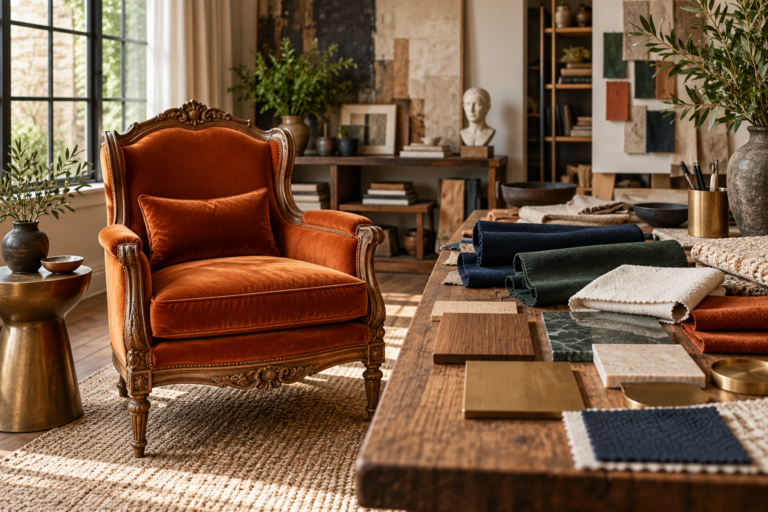
Color and Upholstery for Statement Seating
Color and upholstery can transform the character of statement seating. Explore palettes, texture, pattern scale, seams, trim, and real lighting to create a coherent seat for interiors, events,…
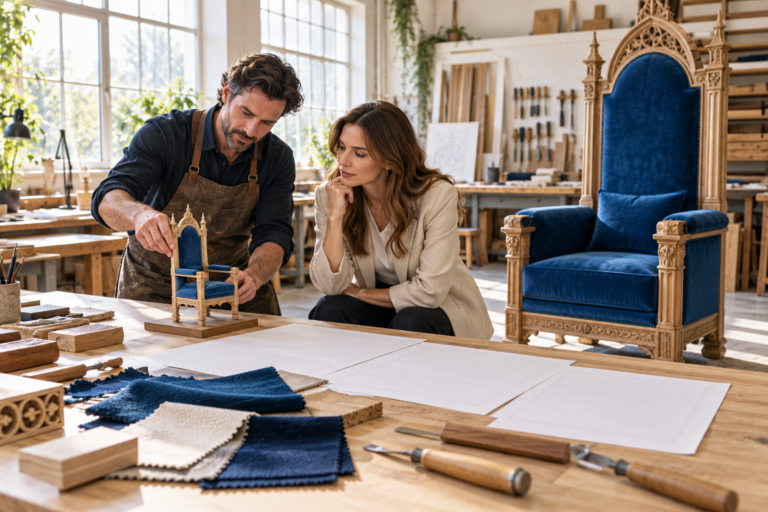
Commissioning Custom Seating: Turn an Idea into a Clear Design Brief
A striking idea becomes a successful commission through clear decisions. Learn how to turn inspiration into a practical throne design brief, collaborate with a maker, review samples and…
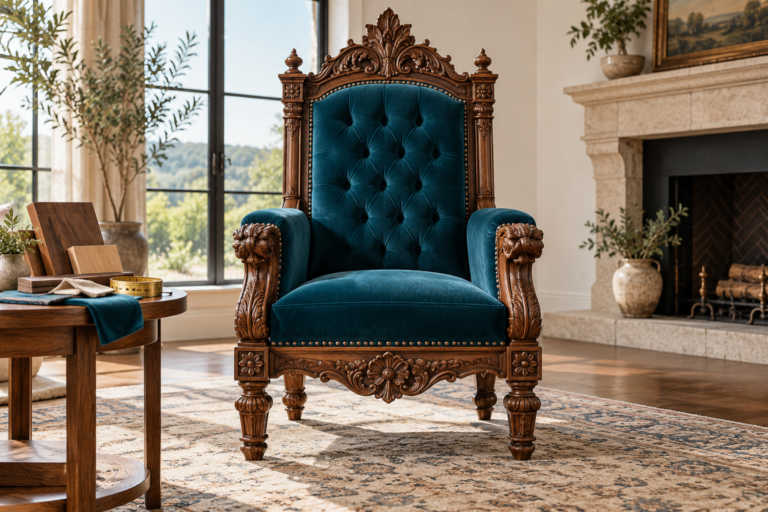
Designing Statement Seating: Form, Comfort, and Fit
A memorable seat needs more than a striking silhouette. Explore how form, usable dimensions, comfort, materials, and setting work together to turn an imaginative chair into a convincing…