
A Familiar Object, an Unexpected Encounter
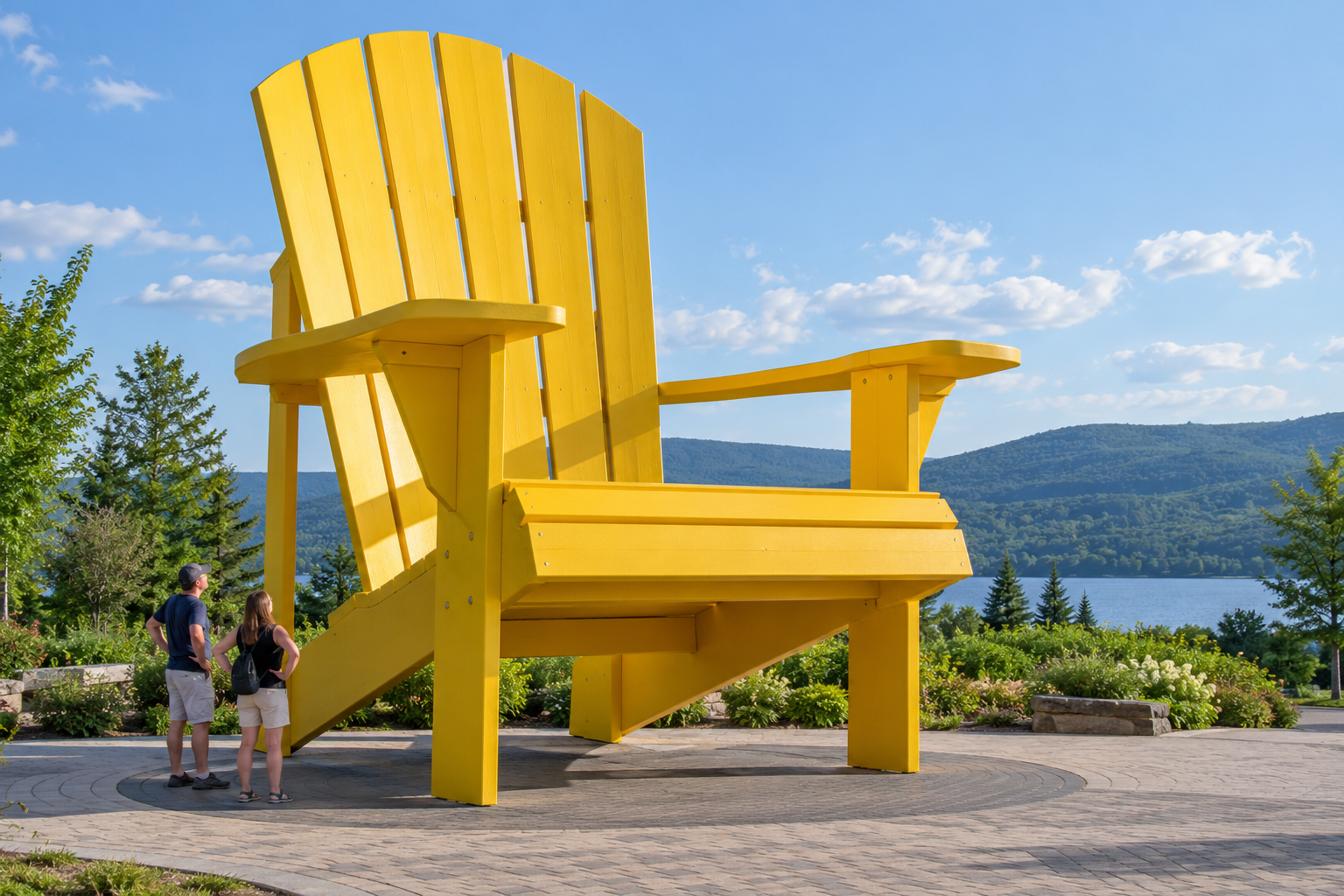
A giant chair creates a moment of recognition followed by surprise. People understand the back, arms, legs, and seat immediately, then realize that the object has outgrown the proportions they expect. That contrast can turn an ordinary furniture form into a landmark, a meeting place, or the subject of a memorable photograph.
Scale alone is only the beginning. The chair needs a relationship with its site and a clear idea of how visitors will encounter it. A sculpture viewed from the ground, a photo-op installation, and a piece with designed seating access are different projects. Defining that role early helps the visual concept develop into a coherent physical attraction.
Throne Foundations
- Define whether the object is sculpture, occupied seating, or a combination with separate visitor interfaces.
- Choose a recognizable chair silhouette before developing fine ornament.
- Establish the important approach and photo viewpoints.
- Separate overall dimensions from any usable seating dimensions.
- Include surrounding circulation and gathering space in the concept.
- Describe the intended interaction explicitly in the project brief.
- Review the complete assembly rather than the visible surface alone.
- Plan delivery and installation during design development.
- Use models to test scale relationships with the actual site.
- Connect maintenance expectations with the intended operating life.
Royal Facts
- A familiar object provides an immediate reference for perceiving exaggerated scale.
- A close photograph without context can make a giant chair look ordinary-sized.
- A tall back does not require a proportionally high occupied seat.
- A chair-shaped sculpture is not automatically intended for sitting.
- The outer finish may conceal a different structural material.
- A hollow form and a solid form can have very different handling requirements.
- Side views can change how clearly a giant silhouette reads.
- Seasonal planting can alter the background behind an outdoor landmark.
- A transport module can be smaller than the final assembled profile.
- A claim of record-breaking size needs a defined measure and reliable documentation.
Royal Picks
- A measured site plan clarifies the relationship between the chair and existing routes.
- Approach photographs show the view visitors encounter first.
- A small physical model helps compare scale and silhouette.
- Human scale figures make drawings easier to interpret.
- Finish samples reveal color and texture in the intended light.
- Assembly diagrams explain how separate components become the complete object.
- Packing studies connect the design with transport realities.
- A photo-position study tests the intended visitor image.
- A material record supports future maintenance discussions.
- A concise design brief keeps the visual idea and intended use aligned.
Behind the Throne
- The best photo position may require more space than the object itself.
- An ornamental seam can sometimes conceal a planned module division.
- A finish that works in a studio may appear very different in direct sunlight.
- Visitors may interpret a chair-like form as climbable unless the experience is clearly designed.
- A landmark's rear elevation can matter when paths circle the installation.
- Access to concealed connections should be planned before decorative skins are completed.
- A giant armrest can obscure a visitor in a photograph if the occupied composition is not tested.
- Repeated transport can place different demands on finishes than remaining at one site.
- The surrounding ground can influence both visual scale and the installation approach.
- A simple silhouette often leaves more room for the setting to contribute meaning.
Throne Wonders
- An everyday chair can become surprising without changing its basic visual vocabulary.
- The smallest person in a wide photograph can provide the strongest clue to an object's scale.
- A familiar piece of furniture can become a community meeting reference.
- A restrained giant chair can have more presence than a densely ornamented smaller object.
- Changing the viewpoint can make the same installation feel playful or monumental.
- A strong silhouette can remain recognizable even when surface details disappear at a distance.
- The contrast between ordinary paving and extraordinary furniture can create a compelling image.
- A landscape can frame a giant chair much as a room frames normal furniture.
- A destination's changing seasons can give one installation several distinct visual identities.
- The surprise of scale can invite curiosity across ages without a written explanation.
Throne FAQs
- Must a giant chair be usable seating? No; define whether it is a sculpture or an occupied installation.
- Can every dimension simply be enlarged? That may preserve appearance, but any human interface needs its own design.
- How should scale be shown in images? Include familiar context and people in permitted positions.
- Does a large chair need elaborate decoration? No; a recognizable silhouette may communicate the idea more clearly.
- Can it be built in sections? A modular approach may be appropriate when developed around the structure, transport, and assembly needs.
- Is one material always best? The complete design, exposure, intended use, and fabrication approach determine the comparison.
- Should visitors climb it? Only when that activity is explicitly part of an appropriately developed and approved installation.
- Can a rendering prove that a design is buildable? No; it communicates appearance rather than engineering or fabrication details.
- When should maintenance be considered? During design, so service access and replaceable parts can be integrated.
- What makes it an attraction rather than simply a large object? A clear encounter connecting the form, setting, and visitor experience.
Keep the Silhouette Easy to Recognize
A simple outline often communicates the idea faster than a complicated one. The recognizable profile of a familiar chair gives viewers a reference point for understanding the exaggeration. Broad slats, a distinctive back, or a clear arm shape may carry the entire concept without elaborate ornament.
Review the form from the approach route and from likely photo positions. A design that reads clearly in a front elevation may become confusing from the side or merge into surrounding buildings. Scale models and site overlays help test those relationships before surface details receive too much attention.
Separate Visual Scale from Human Use
Enlarging every dimension equally does not produce usable seating for ordinary visitors. Seat height, depth, arm position, and approach may become obstacles. Decide whether the giant object is intended to be occupied at all, then develop any visitor interface as a deliberate part of the design.
One approach may preserve a monumental outer silhouette while incorporating a separately planned seating area. Another may invite photographs from beside the object. Neither should depend on visitors improvising a way to climb into a chair that only resembles usable furniture. The intended interaction belongs in the brief and the physical design.
Give the Site a Role in the Composition
A giant chair in an open landscape creates a different impression from one framed by architecture. Planting, paving, nearby objects, and the distance from the entrance all help establish its scale. Avoid judging the proposal only as an isolated object against a blank background.
Consider the space people need to see it, gather near it, and move around it. The attraction should have a clear relationship with existing routes and activities. A dramatic location loses value if the most obvious photo position conflicts with circulation or if visitors cannot find a coherent approach.
Design the Photograph with Real Scale Cues
People, ordinary paving units, nearby trees, and familiar furniture help a photograph communicate size. Without those references, a giant chair can look like a normal chair photographed closely. The scene needs enough context to reveal the visual surprise.
Test both portrait and landscape compositions, including the crops likely to appear on small screens. A person standing beside the base may convey scale more clearly than someone hidden deep within an oversized seat. The best photograph should emerge naturally from the intended visitor experience rather than requiring a complicated explanation.
Choose Materials by Their Actual Roles
An oversized chair may combine supporting structure, decorative volume, contact surfaces, and coatings. These layers do different jobs. A timber-like appearance does not establish solid timber construction, and a monumental form does not need to be fabricated as one solid mass.
Discuss the proposed assembly with the appropriate makers and design specialists. Geometry, connections, exposure, intended interaction, and site conditions all affect the approach. Concept imagery can communicate appearance, but it cannot establish structural suitability or supply the details needed for an occupied installation.
Make Color Support the Landmark
Color can distinguish the chair from its surroundings or connect it with the identity of a place. A bold warm color against greenery may create an immediate focal point, while a natural finish can emphasize craftsmanship and material. Neither approach is automatically stronger.
Test the palette in the actual light and against the site background. Shadows, reflected surfaces, seasonal planting, and changing weather affect the result. Keep the silhouette legible from the important viewpoints, and consider how the finish will be cared for as part of the full installation rather than as a final decorative choice.
Plan How the Object Arrives
The completed chair may be much larger than the route available for delivery. Transport, lifting, assembly space, module divisions, and access to connections can influence the design long before fabrication begins. A clean silhouette and a workable installation strategy should be developed together.
Removable parts can follow natural changes in form or material, but their connections need a clear purpose and appropriate review. Record the assembly sequence, handling requirements, and finish protection. The installation is not complete when the chair leaves the workshop; it is complete when the intended object is correctly established at its site.
Think Beyond Opening Day
An attraction remains convincing through care. Plan access to inspect and maintain surfaces, attachments, and integrated features. Identify replaceable parts and keep records of materials, finishes, and approved procedures. A repeated photo opportunity also needs a practical operating arrangement around the object.
Seasonal installations introduce storage and repeated handling, while permanent pieces face an ongoing relationship with their environment. Describe the actual operating cycle rather than assuming that a large object will take care of itself. Long-term visual identity depends on decisions made during development as well as work performed after installation.
Turn Size into a Clear Design Idea
The most memorable oversized chairs offer more than a claim about dimensions. They combine a recognizable form, an intentional setting, and an encounter people understand. Scale gives the object its surprise; the surrounding design gives that surprise a place and purpose.
Begin with a concise brief that explains the form, site, audience, permitted interaction, photo experience, and intended life of the installation. Develop models and samples around the questions that remain. A giant chair becomes a strong attraction when its imaginative premise and its practical physical design support the same experience.
Related Articles
Color and Upholstery for Statement Seating
Color and upholstery can transform the character of statement seating. Explore palettes, texture, pattern scale, seams, trim, and real lighting to create a coherent seat for interiors, events,…
Commissioning Custom Seating: Turn an Idea into a Clear Design Brief
A striking idea becomes a successful commission through clear decisions. Learn how to turn inspiration into a practical throne design brief, collaborate with a maker, review samples and…
Designing Statement Seating: Form, Comfort, and Fit
A memorable seat needs more than a striking silhouette. Explore how form, usable dimensions, comfort, materials, and setting work together to turn an imaginative chair into a convincing…