
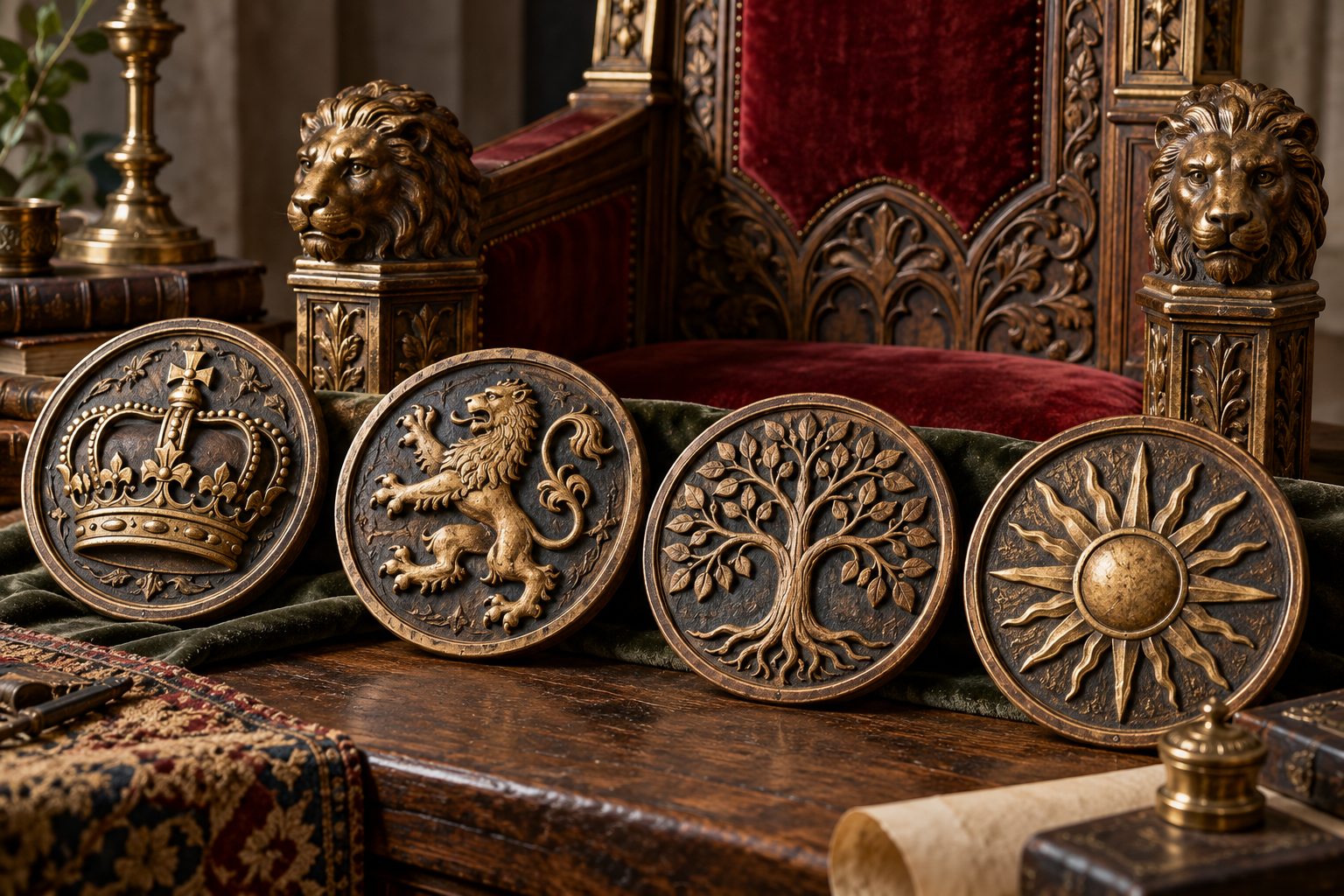
A lion, crown, monogram, branch, or celestial shape becomes meaningful through its place in a particular design and tradition. Symbols & Motifs Index starts with that context rather than assigning every motif a universal definition. Identify the object, period, culture, user, and location of the symbol, then examine inscriptions and surrounding imagery that help explain it. Personal emblems, dynastic marks, institutional insignia, and general decoration can look related while doing different work. Later alterations introduce another layer: a replaced crest may tell a story about changing ownership without belonging to the throne's earliest design. This section also distinguishes documented meanings from modern fantasy associations and encourages informed guidance around culturally specific or sacred forms. Clear descriptions come before confident interpretations. Record the visible shape, note damage or restoration, and preserve alternatives when evidence remains uncertain. By connecting symbols to identified examples and sources, the index makes comparison more revealing. It helps explain why a motif matters here, allowing ornament to become evidence of a relationship or claim rather than a decorative label detached from its history.
Throne Foundations
- Identify the object, culture, period, and setting before interpreting a royal motif.
- Record the symbol's visible form separately from its proposed meaning.
- Distinguish personal emblems, dynastic marks, institutional insignia, and general ornament.
- Check whether a symbol belongs to the original design or a later alteration.
- Use the surrounding inscription and imagery as interpretive evidence.
- Separate documented historical meaning from modern fantasy associations.
- Record alternate interpretations when evidence supports disagreement.
- Treat culturally specific symbols through informed contextual sources.
- Avoid assuming visually similar motifs have a shared origin.
- Cross-reference symbols with identified thrones and their documented users.
Royal Facts
- A crown motif can represent rank or authority without identifying a particular individual.
- An animal emblem can serve different purposes in different traditions.
- A repeated monogram can connect an object to a named patron when supported by context.
- A coat of arms contains an organized design rather than an arbitrary collection of royal-looking shapes.
- A maker can reproduce a historical symbol without reproducing its original political function.
- A color association can change across periods and communities.
- A symbol's placement can affect interpretation, including whether it faces the ruler or the audience.
- A later crest can overlay evidence of an earlier owner.
- A fictional emblem derives meaning from its invented world's established context.
- An unlabeled decorative animal should not automatically be assigned a specific dynasty.
Royal Picks
- Create an entry with image, location, description, context, interpretation, and source fields.
- Use detail photographs paired with a complete-object view.
- Consult collection records that identify the depicted insignia.
- Keep inscriptions transcribed separately from translated interpretations.
- Record the date and version of a fictional emblem.
- Compare related symbols within one documented context first.
- Use specialist heraldic sources for formal arms descriptions.
- Preserve uncertainty when a motif is incomplete or heavily restored.
- Document symbols removed or replaced during alterations.
- Keep contemporary design inspiration distinct from historical attribution.
Behind the Throne
- A familiar modern association can obscure a motif's documented earlier meaning.
- A symbol visible above the sitter can address the audience while hidden ornament serves a different purpose.
- A repaired crest can preserve the overall design yet lose identifying details.
- A copied emblem may indicate admiration, reuse, or imitation rather than direct royal ownership.
- A surviving inscription can narrow an interpretation that the animal imagery alone leaves ambiguous.
- A change of ruler can be expressed through replacement insignia without replacing the chair.
- A decorative border can frame the principal emblem and establish visual hierarchy.
- A source may describe a motif confidently while providing little evidence; attribution still deserves examination.
- A living tradition's use of a symbol should not be reduced to generic fantasy decoration.
- A strong index explains why an interpretation applies to this example rather than asserting a universal dictionary meaning.
Throne Wonders
- Trace one emblem across a throne, seal, banner, and architectural setting.
- Compare replaced crests on a seat used by successive rulers.
- Create a visual map of where symbols face within an audience chamber.
- Explore fictional heraldry built from a clearly defined invented history.
- Document restored and unrestored versions of the same motif.
- Compare abstract and figurative ways of representing authority.
- Build an image study showing how framing affects an emblem's prominence.
- Create a source-led gallery of identified royal monograms.
- Examine an object's ambiguous motif through several clearly attributed interpretations.
- Design an original emblem whose meaning emerges from a fictional ruler's obligations.
Throne FAQs
- Does a lion always mean royal courage? No. Establish the meaning through the specific culture, object, period, and evidence.
- Can a crest prove ownership? It can contribute evidence, but copying, later replacement, and restoration must also be considered.
- How should uncertain symbols be described? Record their visible features first, then distinguish supported identifications from hypotheses.
- Are all crown shapes equivalent? No. Their forms and meanings vary by context and should not be treated interchangeably.
- Can fictional symbols belong in the index? Yes, clearly linked to their work, version, and invented meaning.
- Why include inscriptions? They can identify names, titles, dates, or claims that clarify nearby imagery.
- What makes a comparison useful? Define the shared feature while explaining contextual differences and avoiding unsupported claims of connection.
- Can I adapt a sacred motif for decoration? Seek informed guidance about its meaning and appropriate use before treating it as generic ornament.
- How do later alterations affect interpretation? They can introduce new identities while concealing earlier ones; record both where evidence allows.
- What belongs in a symbol entry? Include context, image, precise description, interpretation, evidence, alternatives, and cross-references.