
Begin with the Experience the Seat Should Create
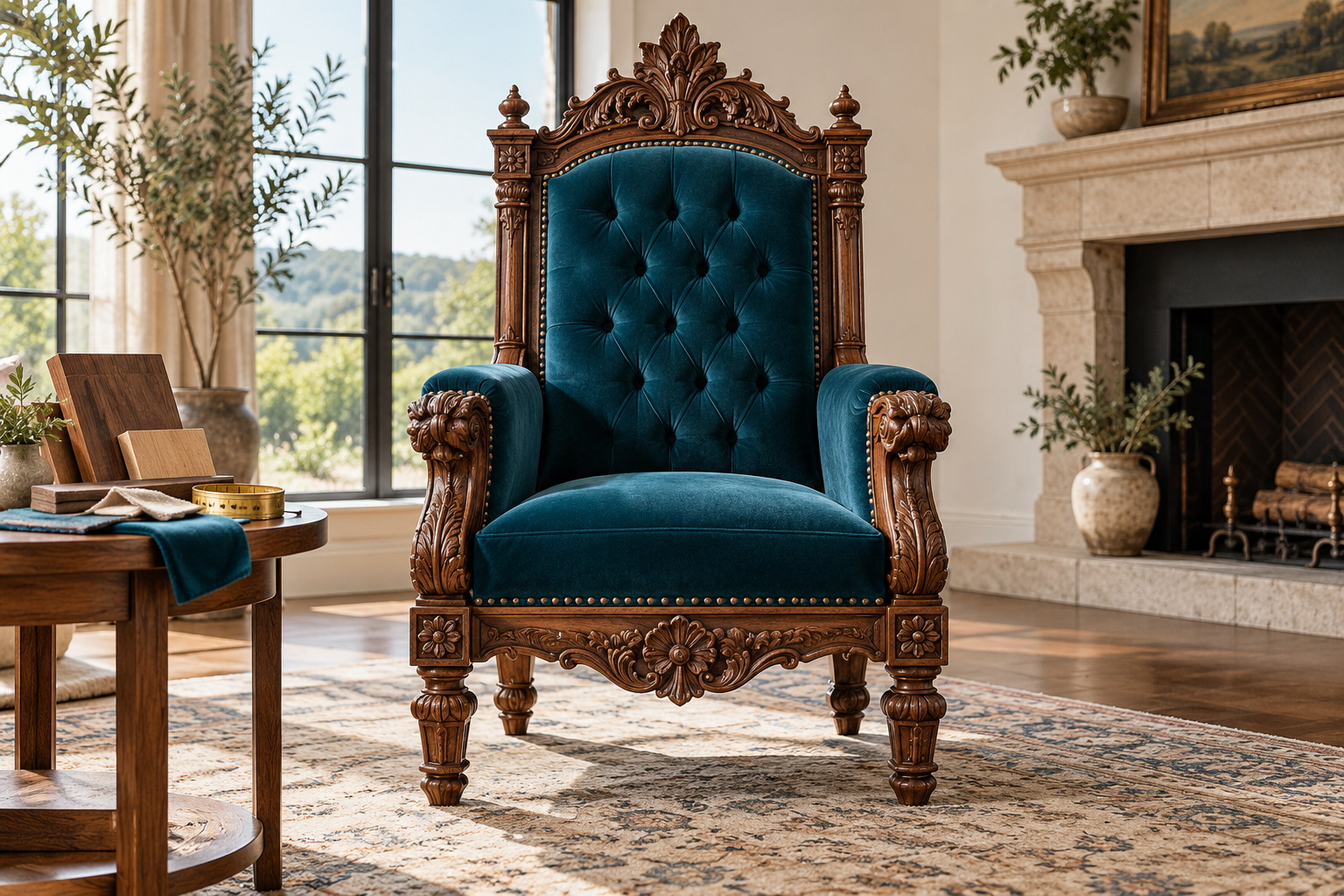
Statement seating can change the way people experience a place. A sculptural chair draws attention in a quiet interior, a ceremonial throne gives an occasion a focal point, and an oversized form can turn a familiar object into an attraction. The design begins with that purpose rather than a catalog image. Decide who will encounter the seat, whether they will occupy it, and what the moment should feel like.
Those decisions give form, comfort, and fit a shared direction. A dramatic back can carry the visual idea while the usable seat remains carefully proportioned. Materials can express character while contact surfaces serve the occupant. Treat the object, its people, and its setting as one brief, then develop the details that make the concept physical.
Throne Foundations
- Define the main activity before comparing decorative styles.
- Confirm that the piece is intended for occupied seating.
- Separate usable seat dimensions from overall outside size.
- Judge comfort for the expected sitting duration.
- Compare the full silhouette with the surrounding room.
- Ask which materials form the frame and which form the surface.
- Review detachable components before planning delivery.
- Compare complete proposals with the same specification.
- Record approved fabric, finish, and ornament choices.
- Keep care instructions and purchase documentation together.
Royal Facts
- A wide carved outline can contain a comparatively narrow seat.
- Cushion compression changes the occupied sitting position.
- A high back does not establish a chair's intended load.
- Upholstery color can shift in appearance under different lighting.
- Decorative pillows reduce the effective depth of a seat.
- A removable crest can affect the packed dimensions.
- Metallic appearance does not identify the underlying material.
- A return policy can differ for standard and custom furniture.
- Delivery to a doorway differs from placement inside a room.
- A throne's suitability depends on its specified use conditions.
Royal Picks
- A measuring tape helps compare the actual seat with a familiar chair.
- A floor plan reveals circulation around the proposed footprint.
- A dimensioned drawing clarifies ornamental projections.
- Fabric samples let you review texture in your own lighting.
- Finish samples help compare sheen as well as color.
- A seating appointment gives useful evidence about personal fit.
- A written quotation makes included services easier to compare.
- Delivery photographs can explain a difficult access route.
- A material specification separates decorative and supporting parts.
- A care folder keeps future repair information accessible.
Behind the Throne
- Start comparisons with the activity, not the most impressive photograph.
- Check whether arm scrolls interfere with the intended approach.
- Review the backrest with the cushion arrangement actually supplied.
- Consider where a drink, book, or bouquet will go during use.
- A quiet surrounding room can give modest ornament greater presence.
- Ask whether replacement upholstery remains accessible after assembly.
- Clarify which custom changes require a new drawing approval.
- Discuss route restrictions with the delivery team before ordering.
- Photographs of an occupied chair reveal different information from empty-chair views.
- Resolve uncertainty in the specification while changes remain practical.
Throne Wonders
- A natural timber throne can feel regal without metallic ornament.
- A small crest can become a meaningful personal signature.
- One jewel-toned textile can anchor an otherwise quiet room.
- Paired chairs can coordinate through proportion rather than identical carving.
- A contemporary geometric throne can create ceremonial presence.
- A detachable decorative element can support future restyling.
- Soft side lighting can reveal carving without adding more decoration.
- A carefully positioned footstool can become part of the composition when suitable for the user.
- A bold outline often remains memorable after fine detail disappears at a distance.
- The strongest statement chair still feels considered during everyday use.
Throne FAQs
- Can a throne be an everyday armchair? Yes, if its intended use, fit, and comfort suit that activity.
- Which measurement matters most? There is no single answer; compare usable width, depth, height, and arm position together.
- Does a heavier throne mean better construction? Weight alone does not establish construction quality or suitability.
- Can I choose upholstery from a screen? Request a physical sample when color and texture are important.
- Should I buy the tallest back available? Choose height in relation to the room, occupant, and intended visual effect.
- Can two people share a wide throne? Confirm its specified occupant arrangement rather than judging width alone.
- What if the delivery route is tight? Give measurements to the supplier before purchase and agree on an approved plan.
- Are decorative thrones suitable outdoors? Only use them within the maker's stated exposure conditions.
- Is customization always preferable? A standard design may already fit your needs; customize to solve a defined requirement.
- What should the final quote contain? The agreed object, dimensions, materials, finish choices, services, and relevant terms.
Separate Everyday Seating from a Display Piece
Begin by describing a typical moment of use. An everyday throne might hold a reader for an hour, support a conversation, and sit beside a practical side table. An event throne might be occupied briefly but repeatedly, with guests arriving in different clothes and posing in different ways. A scenic throne may exist to convey a character's authority on camera. Those are different briefs, even when the finished objects share a royal silhouette.
Ask the seller directly whether the piece is intended for occupied seating and for the conditions you propose. A decorative shell, photograph, or impressive weight does not establish that answer. Keep any documented use limits with the purchase details. If the chair will serve several purposes, identify the most demanding planned use before selecting it. Styling can change between occasions; the underlying furniture still needs to suit the people and activities involved.
Measure the Seat Inside the Silhouette
Overall width tells you how much space a throne occupies. It does not tell you how much space its occupant receives. Request the usable seat width between the arms, the depth from the front edge to the effective back support, and the seat height with its cushion in place. Also record the height and position of the arms. Thick scrollwork and extra pillows can make a visually generous chair feel unexpectedly confined.
Compare those measurements with a chair you already enjoy using, then examine the differences rather than treating the familiar chair as a universal standard. A taller seat might change how your feet meet the floor; a deeper one might move the backrest beyond a comfortable reach. For shared seating, obtain the intended occupant specification instead of inferring capacity from a wide photograph. A dimensioned drawing is especially useful when decorative projections obscure the actual seating area.
Give Comfort the Same Attention as Ornament
Comfort is the relationship between the person, the chair, and the activity. A firm upright seat may feel appropriate during a brief ceremony and restrictive during a long film. A soft cushion may seem inviting at first but change the effective seat height once occupied. A shaped back can offer a clear sitting position, while deep tufting may create a different contact pattern than the smooth upholstery beside it.
Whenever possible, arrange a seating trial with the intended occupant. Sit as you expect to use the throne, including reaching toward a table or turning to speak with someone nearby. Consider clothing and the ease of approaching and leaving the seat. If an in-person trial is unavailable, request specific dimensions, cushion information, additional photographs, and clear return terms. Visual confidence is useful, but it should be supported by information about the actual experience of sitting.
Choose a Style That Belongs in the Room
A throne does not need a palace to look intentional. In a modest room, a distinctive outline and carefully chosen material can provide enough drama. Elaborate gilded carving may work beautifully when nearby walls and furniture are quiet. A restrained wood or metal throne may be the stronger choice where the architecture already contains pattern, texture, and decorative detail.
Look at the chair from the room's main entrances and ordinary sitting positions. Does it complete a composition, obstruct a sightline, or compete with another focal point? Test the footprint with a simple floor layout and compare the full back height with nearby shelves, windows, and artwork. Consider the object in daylight and evening light. The goal is a relationship between chair and setting, not simply the largest or most ornate throne the room can physically contain.
Read Material Descriptions Carefully
A material description should explain both the visible surface and what lies beneath it. Solid carved timber, a veneered panel, a cast decorative component, and a metallic coating can all appear in one throne. None of those terms is a complete quality judgment. Their relevance depends on how the component is used, how it is connected, and whether the resulting object suits its intended purpose.
Ask where the stated materials occur. Does 'gold finish' describe paint, leaf, plating, or another surface treatment? Is the upholstered back separate from the supporting frame? Which parts can be repaired or replaced? Request samples when the color and texture are central to your decision. A clear specification helps you compare two proposals that may use similar marketing language while offering substantially different construction, finish systems, and maintenance needs.
Plan Delivery Before You Commit
A throne can fit its destination and still fail to fit the journey there. Measure the route through the building, including narrow doors, turns, stair landings, and any relevant elevator opening. Share those details with the supplier and establish who decides whether the route is workable. The overall assembled dimensions are only part of the information needed; packing and approved handling arrangements matter too.
Some designs include removable crests, arms, or other components. Confirm which parts are intended to detach, who reassembles them, and what documentation accompanies the process. Do not assume decorative pieces can serve as carrying handles. Agree on delivery services, placement, packaging removal, and any access limitations before payment. Resolving these details early protects the design you chose from becoming a last-minute logistical problem at the doorway.
Compare Design Approaches Against the Same Brief
A carved frame, a sculptural shell, and a fabricated structure with removable ornament may all produce a compelling seat. Compare them through the same requirements: intended interaction, usable dimensions, visual effect, transport, installation, and future care. A material label or an attractive rendering cannot answer those questions by itself.
Ask for drawings and samples that reveal the important relationships. The most useful comparison shows what each approach enables and what it asks of the project. This keeps the decision focused on the complete design rather than a headline price or a claim that one method is always superior.
Make Personalization Specific and Reviewable
Customization works best when you can describe the change clearly. 'More royal' could mean a taller back, a richer textile, a carved emblem, or a more formal setting. Translate that feeling into a short hierarchy: the features that matter most, the elements you are willing to adjust, and the practical requirements that must remain workable.
Review ornament and finish alongside the whole chair. A crest that looks elegant as a separate sketch might dominate the finished silhouette. A fabric pattern that works on a flat sample may be interrupted by tufting or seams. Ask to review relevant drawings and samples before the irreversible stages of making begin. Personalization should make the throne more coherent and meaningful, rather than accumulating decorative additions that compete for attention.
Resolve the Object Around Its Real Use
A successful statement seat holds its idea together when someone approaches, sits, moves, and leaves. Its distinctive features remain visible without fighting the occupant, and its dimensions relate to both the person and the surrounding space. Review those ordinary moments as carefully as the dramatic presentation view.
The final concept should explain the intended role, physical form, material approach, and practical setting clearly enough for the next stage of development. Imagination gives the seat its identity; careful decisions about fit and use make that identity convincing in the real world.
Related Articles
Color and Upholstery for Statement Seating
Color and upholstery can transform the character of statement seating. Explore palettes, texture, pattern scale, seams, trim, and real lighting to create a coherent seat for interiors, events,…

Commissioning Custom Seating: Turn an Idea into a Clear Design Brief
A striking idea becomes a successful commission through clear decisions. Learn how to turn inspiration into a practical throne design brief, collaborate with a maker, review samples and…
Designing a Seating Focal Point: Backdrops, Lighting, and Space
Turn a remarkable chair into a complete scene. Discover how backdrops, lighting, scale, surrounding furniture, and clear circulation give statement seating a strong place within an interior, event,…