
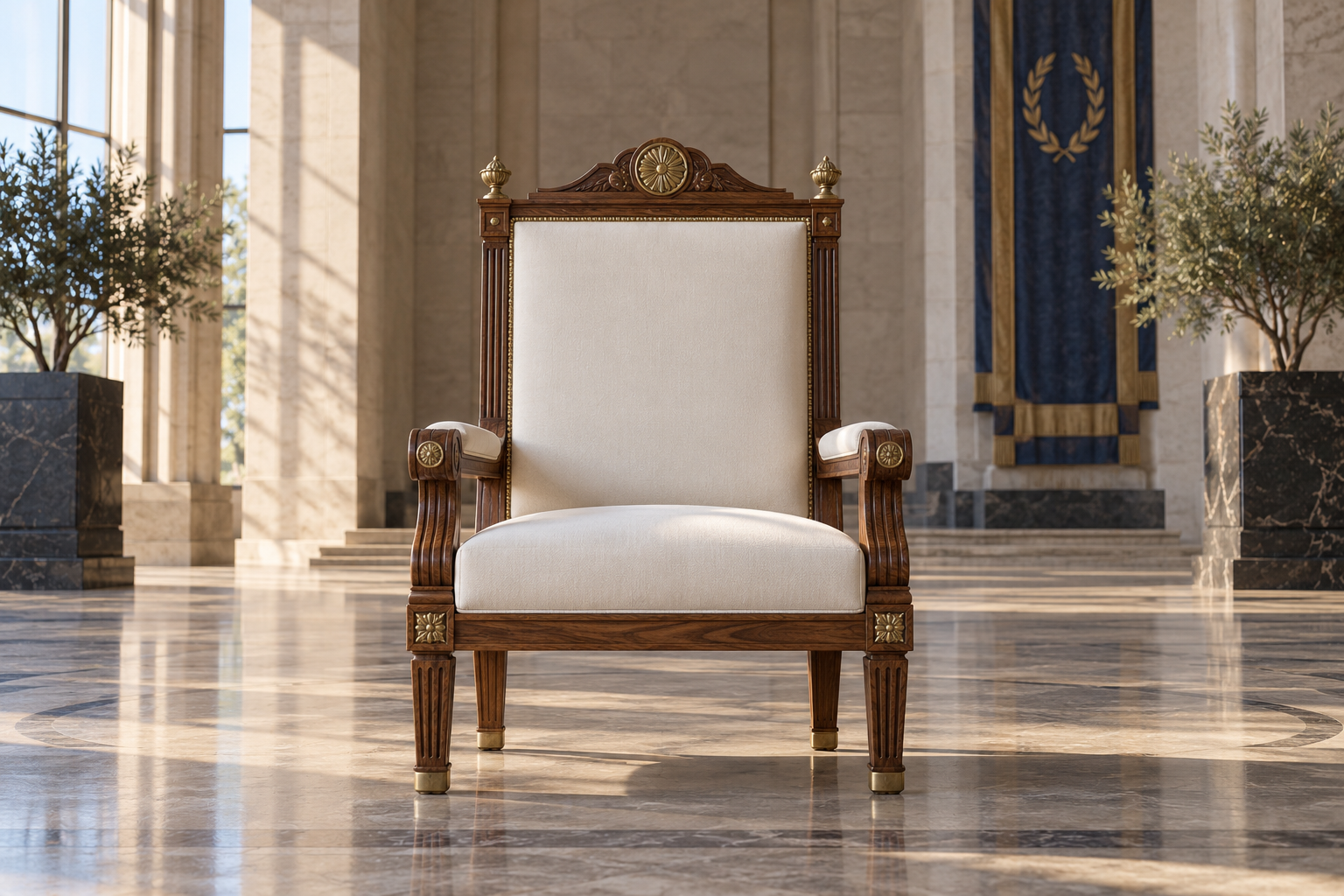
A ceremonial throne gives a moment a visible center. Its presence may come from a tall back, a carefully framed silhouette, a meaningful emblem, or the deliberate space around it. The most compelling examples connect the seat to the occasion rather than simply adding more ornament. Here we explore ceremonial seating as a physical design: the proportions people see, the surfaces they touch, and the setting that gives the chair its significance. A community celebration, theatrical ceremony, formal presentation, and private milestone each call for different choices. Sightlines, clothing, approach routes, and the length of the seated moment all influence the result. Historical traditions can provide rich inspiration, but their symbols deserve context and care. Contemporary designs can create their own visual language through shape, material, color, and restraint. Explore raised backs, paired seating, integrated crests, architectural framing, and the relationship between a chair and its surroundings. Whether the goal is quiet dignity or spectacular ceremony, begin with the people and purpose. That foundation helps turn an impressive object into a thoughtful part of the event.
Throne Foundations
Define the ceremonial role before drawing the throne. Is the seat for an individual honoree, a couple, a performer, or someone who sits only briefly during a presentation? Map the arrival, pause, seated moment, and departure.
These actions establish what the chair must frame and what must remain unobstructed. Then develop the back, arms, and base as a composition around that sequence. Ornament is most convincing when it supports the occasion instead of competing with the person at its center.
Royal Facts
Back height and seat height are independent design choices. A high back can create a formal outline without placing the occupant on an unusually high seat.
Likewise, broad ornament can make a chair appear substantial while the usable area remains carefully proportioned. Clothing changes the occupied silhouette, especially with long skirts, robes, or ceremonial accessories. Review the side view as well as the front, and distinguish the chair's footprint from any platform or background included in the overall scene.
Royal Picks
Gather an event schedule, measured venue views, clothing references, and a list of the important camera positions. Use these to compare two or three silhouettes at the same scale.
Add a rough full-size outline to test the relationship between the person's head and the chair crest. If the seat serves several occasions, study removable emblems and alternate textiles early. A useful design reference set should show how the chair will be used, not just how an empty throne looks in isolation.
Behind the Throne
Rehearse the movements around the seat during development. Look for awkward arm positions, ornament hidden by clothing, and details that interfere with a graceful entrance or exit. Decide who places the chair and how its position is repeated accurately.
A detachable emblem needs an intentional attachment and a finished appearance when removed. For paired ceremonial seats, review alignment and the space between occupants. Small placement decisions can make a carefully designed ceremony look either deliberate or improvised.
Throne Wonders
Explore the same chair with three different surroundings: an open backdrop, a textile frame, and a formal architectural setting. Notice which elements give the seated figure visual emphasis.
A restrained chair can gain presence from generous space around it, while a highly decorated one may need a quieter background. Repetition can create a shared ceremonial identity across several seats. These exercises help separate the chair's own design from the atmosphere contributed by the venue, allowing both to work together.
Throne FAQs
Is a raised platform essential? No; treat elevation as a separate decision about the particular ceremony and setting.
Must ceremonial seating look historical? Contemporary forms can establish a formal focal point through proportion and placement.
Can one throne serve different occasions? Consider adaptable emblems and textiles without compromising the core design.
What should be approved before fabrication? The occupied arrangement, major dimensions, silhouette, materials, and event-specific details should be clear enough that the maker and event team are developing the same chair.