
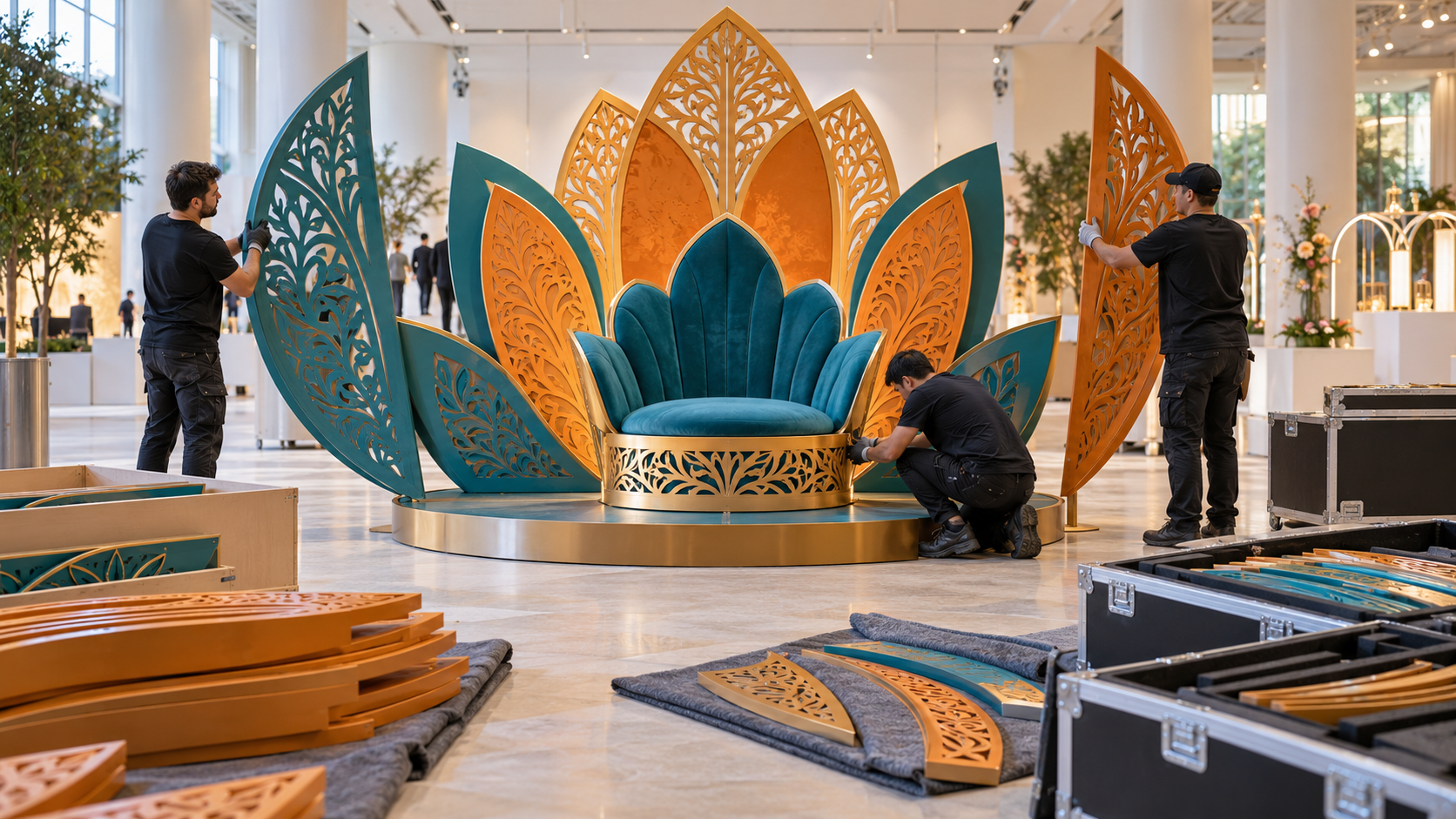
A touring seat has more than one home. It may appear at a festival, move into a shopping destination, travel to an exhibition, and return to storage before its next installation. Each move becomes part of the design problem. Pop-up and touring displays need a memorable presence, but they also need a clear plan for packing, transport, assembly, presentation, and removal. This section explores how statement seating can retain its identity across changing spaces and schedules. Modular forms, removable ornament, adaptable backdrops, and well-documented connections can help a concept travel without looking temporary or compromised. The intended visitor interaction must remain clear at every stop. We consider differences in access routes, floor conditions, available lighting, operating teams, and storage environments. Discover how an installation can be designed as a complete traveling system rather than an isolated chair. From compact promotional moments to substantial themed displays, thoughtful preparation allows a seating concept to arrive convincingly, function within its new setting, and leave ready for the next destination.
Throne Foundations
Design the display and its traveling system together. The seating, packing, assembly sequence, storage arrangement, and venue setup all belong to the same project. Define how often it moves and who installs it.
A one-off pop-up handled by its maker differs from a tour assembled repeatedly by changing crews. Preserve a clear visual identity while allowing the practical divisions needed to move the object. A convincing installed form is only one measure of a successful touring design.
Royal Facts
The smallest doorway is not the whole transport route. Turns, lifts, loading positions, vehicle space, and temporary storage can determine whether a component reaches its destination. Packed dimensions differ from finished dimensions, and protective packaging adds volume.
Repeated assembly also changes the demands on connections and finishes. Record the components and their handling requirements explicitly. An object that arrived successfully once may still need a different packing or module strategy for a venue with another route.
Royal Picks
Useful planning materials include an exploded diagram, a numbered component list, packing photographs, and a venue information sheet. Show the order of assembly and the location of each connection with clear images.
Trial the packing layout as carefully as the finished arrangement. Select finish samples that include edges and handling areas, where wear may be most visible. For repeated deployments, keep a condition record before and after each move so emerging problems can be addressed rather than rediscovered at the next installation.
Behind the Throne
Place module divisions where both assembly and appearance make sense. A seam can follow an upholstery edge or ornamental border, but the connection must still be reachable in the planned sequence.
Avoid relying on fragile decorative details as lifting points. Decide where tools, spare hardware, and small removable elements travel so they are available when needed. Also plan the final pack-out: crews working to a deadline should not have to invent a new arrangement to protect the finished surfaces.
Throne Wonders
A touring seat can reveal a different side of its design at each destination while retaining the same core identity. Adaptable backdrops, removable emblems, or controlled changes in lighting can refresh the scene without rebuilding the main object.
Try separating the permanent visual signature from venue-specific styling. This can make the installation more versatile while keeping its assembly understandable. The best transformation is one the crew can reproduce consistently, not an effect that depends on improvisation at every stop.
Throne FAQs
Can one display fit every venue? Check each site's route, space, operating conditions, and requirements before committing.
Does modular construction automatically make touring easy? Packing, connection access, finish protection, and instructions still need development.
Should assembly be tested before the first event? A trial can expose missing access and sequence problems while changes remain manageable.
What happens when a part is damaged on tour? Define how it is identified, reported, and replaced, with spare components considered where the project warrants them.