
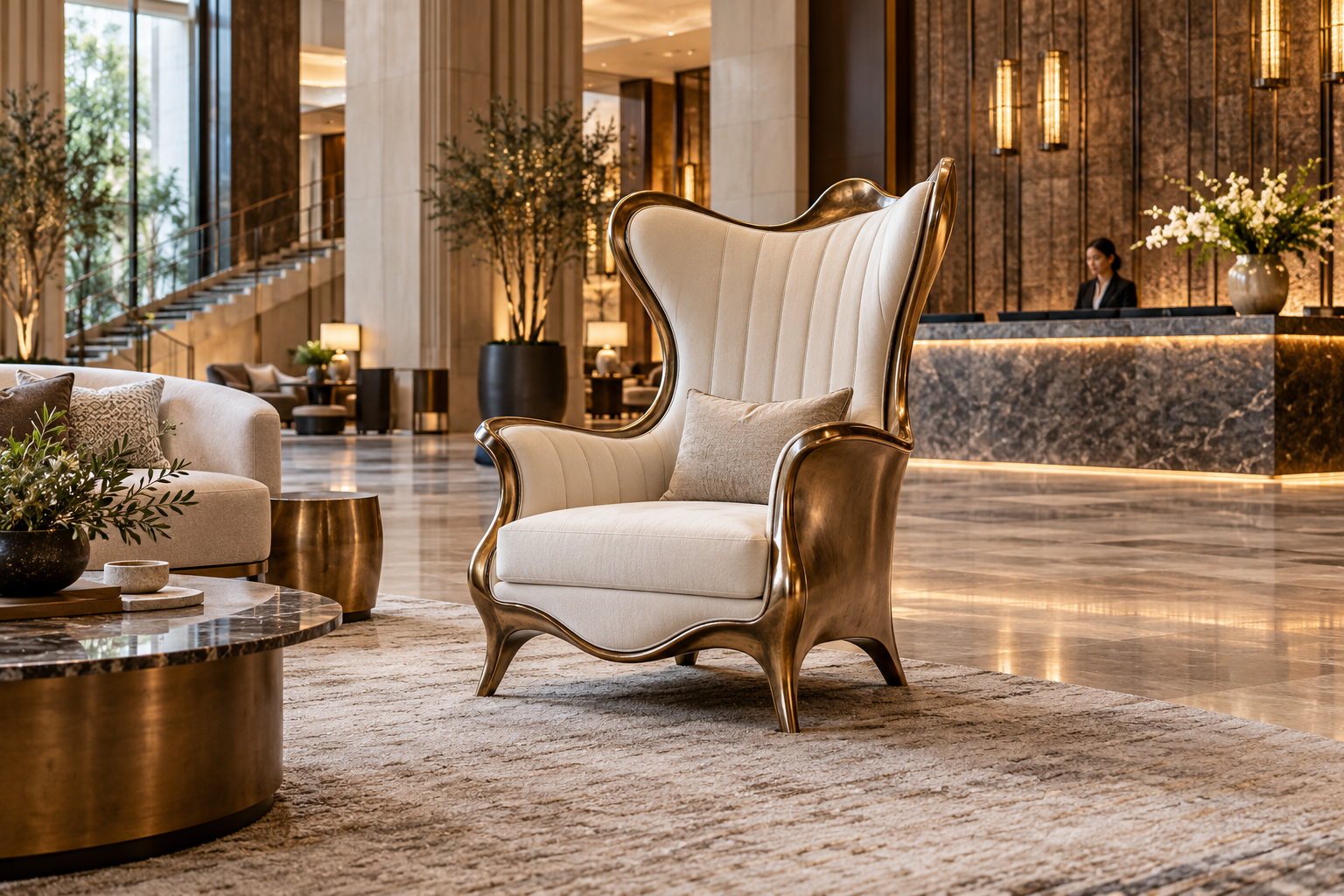
In a hotel, restaurant, shop, or visitor venue, a throne becomes part of the business's daily operation. It may offer comfortable seating, establish a brand identity, attract photographs, or anchor a bookable experience. Hospitality & Destination Interiors explores how to define that role before choosing the dramatic design. Consider frequency of use, guest behavior, cleaning, staff routes, table relationships, and the possibility of queues forming around a visual landmark. A decorative finish needs care instructions compatible with the actual routine, while high-wear components benefit from accessible repair or replacement. This section examines procurement briefs, supplier support, intended-use information, inspection responsibilities, and lifecycle cost beyond the initial purchase. A lobby feature can interfere with reception if its popularity is not anticipated; a restaurant throne can look generous yet place diners awkwardly at the table. Test those conditions through occupied mockups and practical layouts. The strongest commercial installation connects its visual identity to a clear customer benefit, giving the venue a distinctive element that staff can maintain and guests can understand and enjoy within the wider space.
Throne Foundations
- Define the commercial role: guest seating, lobby landmark, retail display, restaurant feature, or bookable experience.
- Write the expected use frequency and supervision into the furniture brief.
- Coordinate the throne with circulation and the space's access requirements.
- Select materials and upholstery for the actual cleaning and maintenance routine.
- Evaluate comfort according to whether guests sit briefly or remain for a service.
- Keep operational equipment and staff access practical around the statement piece.
- Specify intended occupancy and permitted interaction clearly.
- Plan inspection and repair ownership within the business's normal operations.
- Include installation and eventual replacement access in the space plan.
- Assess the full lifecycle cost rather than the purchase price alone.
Royal Facts
- Commercial use can involve more frequent contact and cleaning than occasional private seating.
- A lobby photo attraction can create waiting groups outside its visible footprint.
- A restaurant chair's relationship to the table affects reach and service.
- A decorative feature can influence customer behavior even without explicit participation signage.
- A finish's appearance does not establish compatibility with the business's cleaning products.
- A removable upholstery panel can simplify maintenance compared with a permanently integrated covering.
- A furniture warranty may distinguish commercial from residential use.
- A tall back can divide a room visually and affect staff sightlines.
- A social-media focal point can generate attention without necessarily improving the intended customer experience.
- A replacement component needs specification records if its appearance must match the original installation.
Royal Picks
- Use a procurement brief stating commercial use, environment, occupancy, and cleaning expectations.
- Request supporting product documentation relevant to the intended application.
- Trial a representative upholstery sample with the approved cleaning process.
- Prepare a floor plan that includes queues, staff routes, and nearby service points.
- Choose replaceable high-wear components where the design permits.
- Keep supplier contacts and component codes in the maintenance record.
- Create an inspection checklist linked to the installation's actual interaction points.
- Compare repair lead times and spare availability when assessing suppliers.
- Use occupied mockups to evaluate comfort and the guest photograph.
- Arrange appropriate project review for access, fire, installation, and other applicable requirements.
Behind the Throne
- A striking hotel-lobby seat can become an informal photo queue that interferes with check-in.
- A restaurant throne may look generous yet place diners too far from the table.
- A complex carved surface can increase cleaning time compared with a simpler silhouette.
- A popular chair may wear unevenly when guests repeatedly approach from the same side.
- A brand-colored fabric can become difficult to replace if its exact specification is not retained.
- A repair that closes the feature during peak hours has operational costs beyond the replacement part.
- A business should decide whether staff actively invite use or merely respond when guests approach.
- A throne placed near doors can affect both delivery access and everyday traffic.
- A visual feature's value is easier to assess when the business identifies the customer benefit it expects.
- An attractive prototype still needs review under the cleaning, staffing, and use conditions of the actual venue.
Throne Wonders
- Design a boutique-hotel throne that interprets local materials and stories.
- Create a restaurant statement seat coordinated with practical table heights and service routes.
- Explore a retail portrait feature with a separate waiting position.
- Develop replaceable crest panels for seasonal brand campaigns.
- Build a materials board showing both design intent and maintenance requirements.
- Imagine a library lounge throne centered on quiet reading rather than performance.
- Create a visitor-feedback trial before ordering several matching seats.
- Design a repairable hospitality chair with discreetly removable upholstery sections.
- Compare a dramatic isolated feature with a fully integrated seating group.
- Document operating lessons from the first month to refine placement and care.
Throne FAQs
- Can a residential throne be used commercially? Confirm the maker's intended use, supporting documentation, warranty, and suitability for the venue's operating conditions.
- Where should a lobby throne go? Evaluate circulation, guest behavior, photography, reception activity, staff visibility, and access before choosing the focal position.
- What upholstery is best for a business? Specify expected wear, cleaning, appearance, comfort, and applicable requirements, then compare documented materials and samples.
- How do I assess lifecycle cost? Include installation, cleaning, inspections, repairs, downtime, replacement components, and eventual removal.
- Can it work at a restaurant table? Test the actual seat height, arms, depth, reach, and service arrangement with a representative table.
- Should guests be allowed to photograph it? Define the intended experience and manage any resulting queue or obstruction within the operating plan.
- What should staff inspect? Follow the maker's guidance and check high-contact surfaces, connections, condition, and any installed interactive elements.
- How can repairs cause less disruption? Choose serviceable details, retain specifications, arrange spare parts, and plan maintenance outside peak use where possible.
- What documentation should procurement request? Seek intended-use information, materials, care, installation, relevant performance evidence, warranty terms, and repair support.
- How should success be measured? Relate guest feedback, usage, operating effort, and business outcomes to the purpose defined before purchase.