
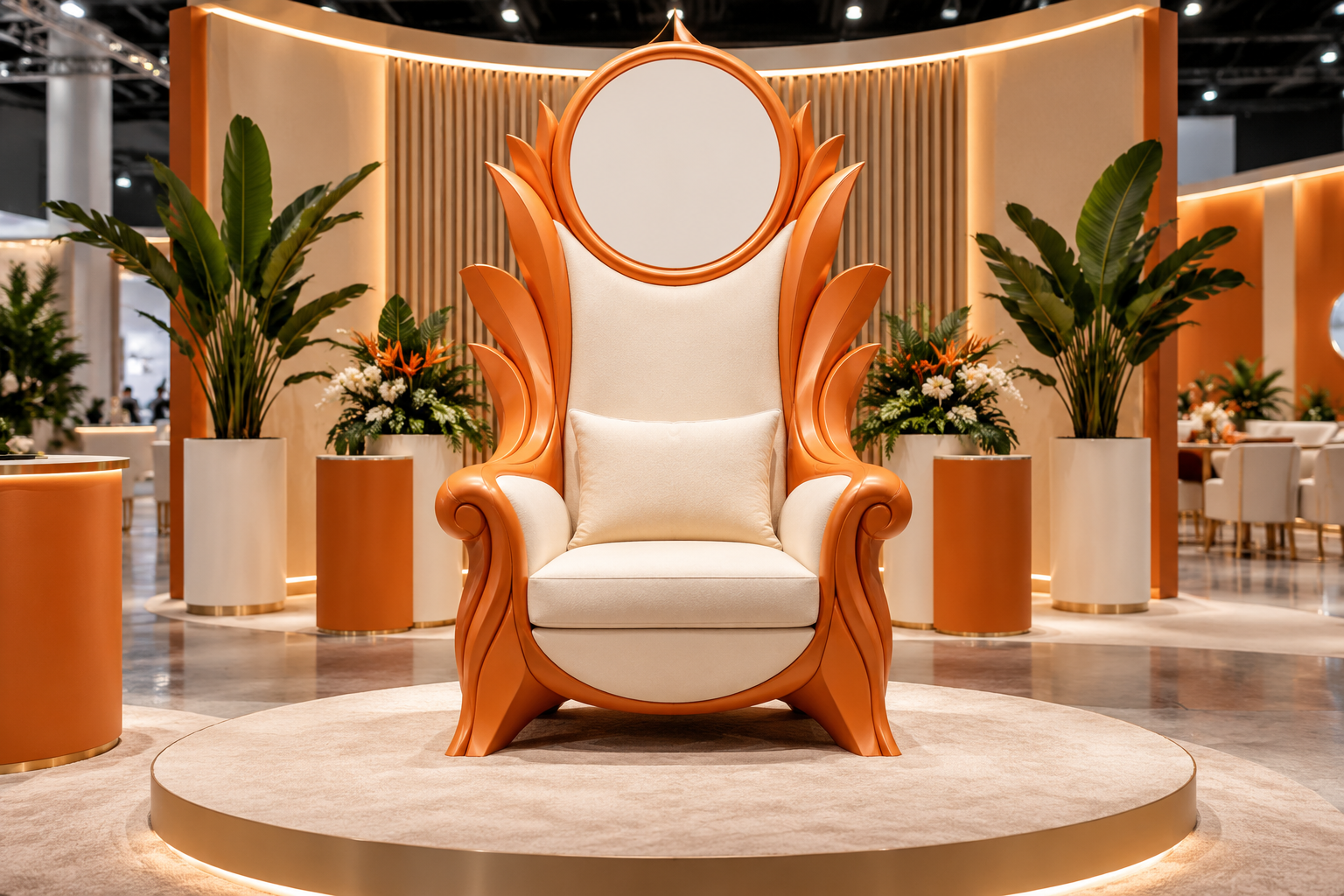
A promotional throne should express more than a logo attached to an impressive chair. It can translate a brand's character into shape, material, color, and an experience people choose to join. Branded Seating & Product Forms starts with the campaign objective and the intended audience. Is the aim a memorable portrait, a product story, a community activity, or an invitation to learn more? That purpose guides the design and the way success will be assessed. Test the occupied image so essential graphics remain visible, and compare paint, print, and lighting samples before assuming they will match. This section explores replaceable campaign panels, host guidance, reset routines, storage, and the approvals needed to keep the finished installation coherent. It also considers how guest photographs and any collected information fit the campaign's agreed permission process. A reusable activation benefits from clear documentation that survives beyond one event. The strongest branded throne feels connected to the organization without overwhelming its participant, giving the guest a moment and the campaign a recognizable identity that remains legible in the final photograph.
Throne Foundations
- Define the campaign's purpose before deciding where the logo belongs.
- Identify the audience, event setting, interaction, and intended photograph.
- Translate brand qualities into shape, texture, and proportion as well as color.
- Use approved artwork and current brand guidelines for every visible mark.
- Design the occupied view so the sitter does not cover the essential campaign identity.
- Separate reusable furniture from replaceable campaign panels and graphics.
- Coordinate the throne with booth layout, host positions, and surrounding displays.
- Plan how staff explain participation without turning the interaction into a long sales script.
- Set approval stages for concept, artwork, materials, and finished presentation.
- Define success measures that match the campaign's actual objective.
Royal Facts
- A logo visible on an empty throne may disappear behind a seated participant.
- Brand recognition can come from distinctive shapes and materials without repeating the logo everywhere.
- Print color, painted color, and illuminated color can appear different in one installation.
- A social-media crop may exclude graphics placed at the throne's outer edges.
- A promotional photo opportunity can create a queue that affects neighboring exhibitors.
- A removable graphic panel changes campaign messaging without replacing the main furniture.
- A campaign slogan and a product-performance claim require different kinds of review.
- A guest posing for a photograph does not automatically consent to every later marketing use.
- A reusable activation needs storage and repair planning between campaigns.
- A visually successful installation can still miss its objective if the desired next action is unclear.
Royal Picks
- Create an occupied mockup showing the logo within the intended photograph crop.
- Use a brand approval sheet containing current artwork, colors, and permitted variations.
- Compare physical paint and print samples under the expected event lighting.
- Prepare a campaign-panel system with documented dimensions and attachment points.
- Use a short host brief explaining the experience and any optional next step.
- Keep photography permissions and guest-information handling aligned with the campaign's approved process.
- Select success measures such as participation, qualified inquiries, or documented content use.
- Provide a reset photograph for accessories and campaign graphics.
- Create a packing inventory that separates reusable components from event-specific materials.
- Keep final artwork files and approval records with the installation documentation.
Behind the Throne
- A brand's premium positioning may be communicated more convincingly through restraint and finish quality than oversized graphics.
- A playful throne can encourage participation, but the invitation should still be understandable from the approach.
- A campaign emblem near the sitter's head needs careful composition to avoid awkward visual overlap.
- A product placed beside the throne can compete with the guest rather than support the story.
- Different camera formats can change which campaign elements remain visible in shared images.
- A last-minute logo replacement can create color or alignment mismatches unless the panel system anticipates updates.
- A reusable base should be photographed without campaign graphics to simplify planning for future activations.
- An event host can improve participation by offering an appealing experience before explaining optional promotional steps.
- A branded throne's condition becomes part of the brand impression, making touch-up and cleaning operational priorities.
- A campaign review should compare outcomes with the original brief rather than treating a busy photo queue as sufficient evidence.
Throne Wonders
- Design a founder's-chair concept that interprets a company's origin story through materials.
- Create interchangeable campaign crests for a traveling product tour.
- Explore a throne silhouette based on a recognizable packaging shape without reproducing it literally.
- Develop a guest portrait scene that frames the brand above the sitter's shoulders.
- Build a repairable activation kit that returns in a new colorway each season.
- Imagine a community campaign where participant-created emblems join the throne's backdrop.
- Compare subtle embossed branding with high-contrast printed panels in the same composition.
- Create an activation storyboard showing invitation, participation, photograph, and optional follow-up.
- Design a restrained sponsor treatment that shares the scene without overwhelming its main theme.
- Document the same reusable throne across several campaigns to show its changing identities.
Throne FAQs
- Where should the logo go? Test it with a seated participant and the actual image crops; avoid positions covered by heads, shoulders, or accessories.
- Does every surface need branding? No. A clear focal mark supported by coherent shape and materials can be more readable.
- Can one throne support several campaigns? Yes, with planned replaceable graphics, coordinated attachment points, and documented storage and reset procedures.
- Why do printed and painted brand colors differ? Materials, finish, lighting, and production methods affect appearance; approve physical samples together.
- How do I measure the activation? Choose measures tied to its purpose before the event rather than counting photographs alone afterward.
- Should participation require a sales conversation? Decide according to the campaign brief, keeping the guest invitation and any optional follow-up clear.
- Can guest photographs be reused in advertising? Follow the campaign's approved permission process and the scope communicated to participants.
- What should an agency receive for fabrication? Supply approved artwork, brand rules, dimensions, intended interaction, environment, schedule, and approval responsibilities.
- How can the setup stay reusable? Separate permanent furniture from campaign-specific panels, and retain unbranded reference images and component records.
- What belongs in the post-event review? Compare participation, outcomes, guest feedback, operating issues, and repair needs against the original objectives.