
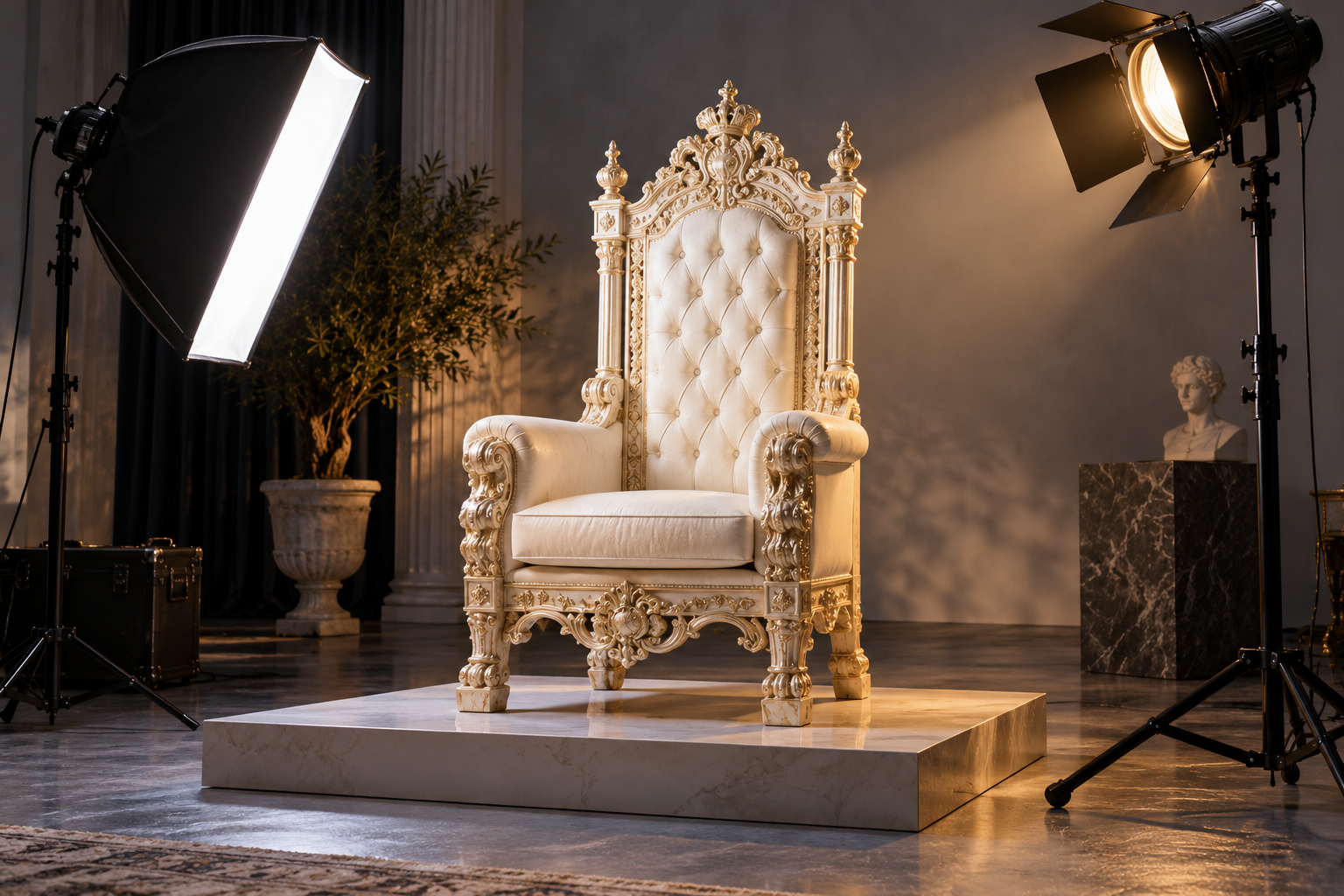
Light can reveal the shape of a seat, separate it from its background, and change the atmosphere of the entire scene. A sculpted crest may become legible through a grazing highlight, while an upholstered back can soften under broad illumination. Lighting & Special Effects explores those design choices for statement seating, photo opportunities, themed environments, and performance settings. The seated person belongs in the lighting plan from the beginning. A dramatic empty-chair image may become unflattering or confusing once someone enters the composition. We consider the balance between subject and scenery, reflections on metallic surfaces, contrast within deep recesses, and the effect of different camera positions. Integrated light and responsive elements can add another layer when they have a clear purpose. Their access, controls, operating conditions, and fallback behavior deserve planning alongside the visual effect. Discover how tests with actual materials can resolve surprises before installation. The aim is a coherent physical scene in which lighting supports the form and the experience, allowing the seat and its occupant to remain the focus rather than competing with the effects around them.
Throne Foundations
Design the light around an occupied scene, not an empty chair. Identify the face, clothing, seating silhouette, and background that the viewer should read first.
Separate light used to reveal people from light used to emphasize scenic form. A bright crest can become a distraction if the occupant remains in shadow. Start with a clear static composition, then consider whether color changes, a reveal, or another effect adds a meaningful experience rather than simply adding activity.
Royal Facts
An illuminated surface and a well-lit person are different results. Light direction, source size, reflections, and background contrast affect what the camera records. Glossy panels can reflect the source itself, while deep ornament can cast strong shadows.
The same colored light can change the apparent relationship between upholstery and painted trim. Test actual samples with the intended camera or phone positions. Do not judge an installation solely from a long-exposure promotional photograph or a rendering with idealized illumination.
Royal Picks
Prepare a simple lighting sketch that distinguishes face lighting, silhouette accents, background illumination, and any scenic effect. Test one layer at a time before combining them.
Include a seated stand-in wearing light and dark clothing to see which areas disappear or dominate. For integrated lights, request a sample of the proposed diffuser and surface around it. Select an effect only after defining its duration, trigger, audience, and reset, so the visual idea has a realistic operating sequence.
Behind the Throne
Mounting and access belong in the seating design from the start. Identify cable paths, service openings, control locations, and who is responsible for operation. A replaceable light source should not require dismantling unrelated ornament.
Consider what visitors see during startup, shutdown, or a failed effect. Electrical work and any physical special-effect systems require appropriate specialist design for the actual installation. The scenic brief should describe the desired experience clearly without pretending that a visual sketch supplies those technical specifications.
Throne Wonders
A subtle change can transform a scene. An edge accent may separate a dark back from a dark wall; light grazing a carved surface may reveal relief that frontal light flattens.
Try photographing the seat with each layer switched conceptually on and off during development. The strongest combination may use fewer effects than the first proposal. A quiet, legible scene can give visitors more freedom to pose than a rapid sequence that forces them to catch one fleeting instant.
Throne FAQs
Does every photo-op need colored lights? No; a well-composed neutral-light scene may better show the seat and its occupants.
Should effects run continuously? Define the viewing and reset sequence before choosing that behavior.
Can built-in illumination replace general scene lighting? Not automatically; review the occupied photograph.
What happens if an effect is unavailable? Plan a coherent static appearance and an operating response so the attraction still communicates its purpose without relying on every component working at all times.