
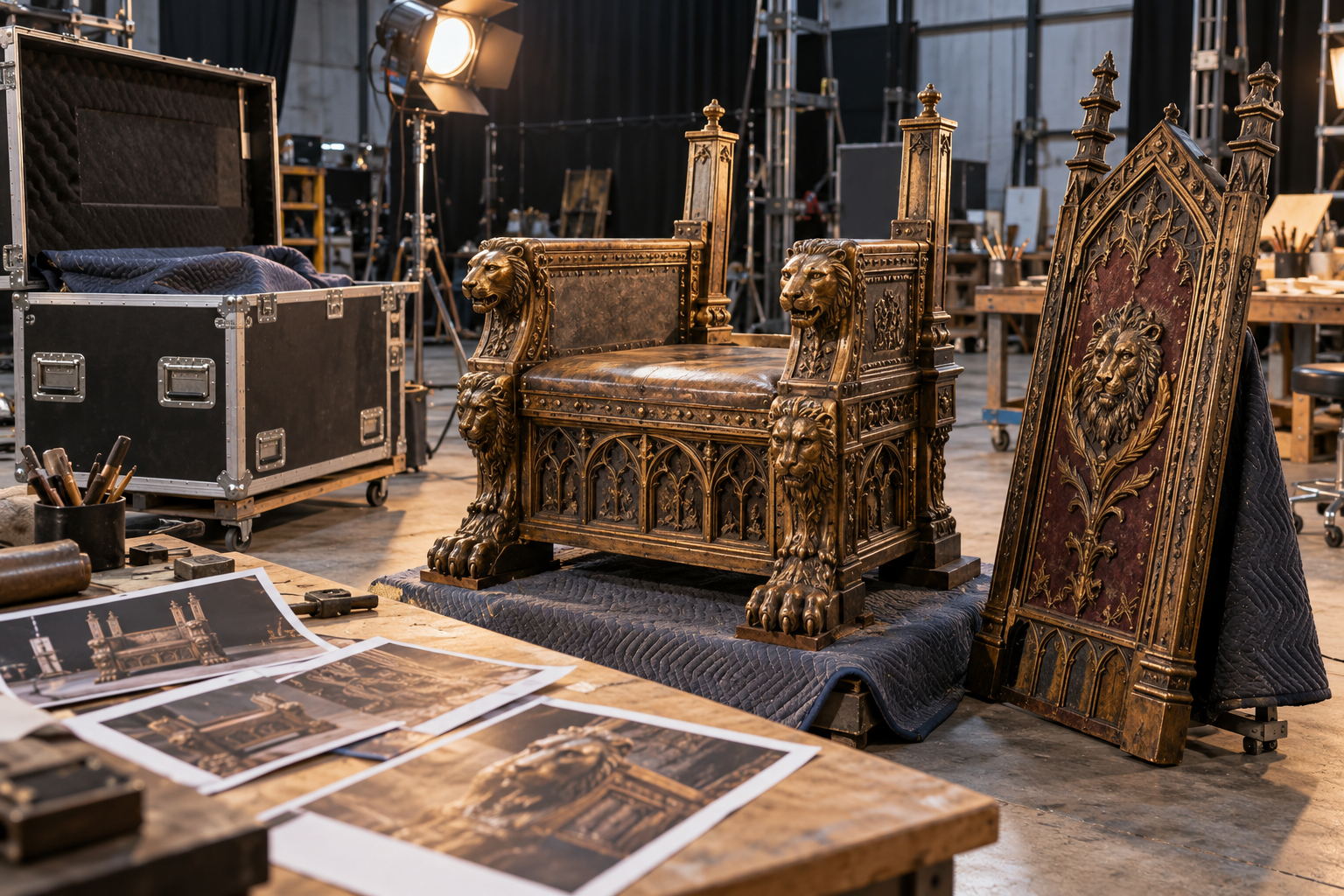
Behind a memorable screen throne is a carefully fabricated asset that must serve performers, cameras, crew, and a demanding production schedule. Film & Stage Sets explores that practical life. Begin with the scene requirements: who sits, what they wear, how they move, which surfaces the camera sees, and whether the story changes the throne's condition. A close-up hero version may need different treatment from background scenery, a miniature, or a separately planned action prop. Continuity adds another challenge when scenes are filmed out of narrative order. Cushions, emblems, damage, and repairs need records that allow the correct version to return. This section considers removable components, handling points, costume clearance, finish tests, packing, and the handover information that keeps departments coordinated. It also distinguishes an authenticated production object from a replica or screen-inspired interpretation. The focus is the throne as something made, moved, maintained, and repeatedly used to create an image. Understanding that work reveals why a convincing result depends as much on preparation and communication as on the sculptural detail visible in the finished scene.
Throne Foundations
- Start with the production brief: scenes, performers, actions, camera coverage, schedule, and intended prop versions.
- Distinguish a close-up hero throne from stunt, background, miniature, and replacement versions.
- Coordinate the seat with costumes, weapons, microphones, and the performer's movement.
- Define practical interaction, including sitting, standing, dragging, impact, and any scripted breakage.
- Map removable components to studio access, location transport, and daily setup requirements.
- Create a continuity record before the first scene alters the throne's appearance.
- Separate scenic finish from the frame and attachments required for occupied use.
- Agree on who authorizes repairs and visual changes during the shoot.
- Plan duplicate ornament for details likely to be damaged or changed between story stages.
- Document handling, assembly, inspection, storage, and the prop's approved uses at handover.
Royal Facts
- A hero prop is generally prepared for featured viewing; its visual demands can differ from background scenery.
- Continuity concerns the throne's state within the story, not simply the order in which scenes are filmed.
- A camera-facing surface may receive different visual treatment from an unseen rear surface.
- Costume bulk can change usable seating space even when the performer's body measurements remain unchanged.
- A breakaway version serves a planned action and should not be confused with an ordinary occupied throne.
- A removable crest can simplify transport while introducing a connection that needs consistent assembly.
- Studio lighting can reveal reflections, paint variation, and seams absent in workshop reference photographs.
- A prop's screen appearance does not establish which materials its makers actually used.
- A throne can be filmed in several physical states representing different moments in the story.
- A production replica and an authenticated screen-used object require different descriptions and provenance evidence.
Royal Picks
- Use a scene breakdown to identify every scripted interaction before fabrication starts.
- Prepare continuity photographs from consistent angles with identifying version and scene notes.
- Create a component inventory covering crest panels, upholstery, removable arms, hardware, and duplicate ornaments.
- Schedule a performer-and-costume fit check before final upholstery and fixed decoration.
- Keep finish samples available to the art department for repairs between shooting days.
- Use a version matrix showing which throne appears in each story period or damage state.
- Request a camera test when reflective finishes or fine surface patterns are prominent.
- Provide protected handling points rather than expecting crew to lift by decorative projections.
- Keep a production-approved change log for any repairs that alter visible details.
- Select storage packaging that preserves the approved surface state between scenes and locations.
Behind the Throne
- A throne photographed before and after a take can reveal small cushion shifts that become conspicuous in edited coverage.
- A silent-looking chair can create unwanted sound through loose panels, upholstery movement, or contact with costume hardware.
- A dramatic high back can interfere with microphones, lights, and reverse-angle coverage unless departments coordinate early.
- A throne may need a removable section for a camera position while preserving the appearance seen in the finished shot.
- A damaged-story version should be reproducible when scenes are filmed out of narrative order.
- An apparently minor repair can change reflection patterns enough to become visible in a close-up.
- Location floors and access routes can require handling changes that were unnecessary on the workshop floor.
- A performer rising while wearing a cape may expose snag points that an empty-throne inspection misses.
- A duplicate throne needs matching proportions and visible details even when its internal construction serves a different production role.
- An archived prop benefits from records explaining which modifications belong to filming and which occurred during later exhibition.
Throne Wonders
- Create a production display showing concept art, raw construction, camera tests, and the final screen appearance.
- Develop interchangeable damage panels that reproduce several story states without rebuilding the main prop.
- Explore a throne with hidden removable camera-access sections coordinated with the shooting plan.
- Build a visual continuity atlas tracking every emblem, cushion, scar, and detachable accessory.
- Design a fictional royal seat whose changing repairs mark successive seasons of a story.
- Compare a miniature and a full-size throne to show how detail is adjusted for different filming scales.
- Create a traveling exhibition pairing a production replica with clearly labeled behind-the-scenes fabrication photographs.
- Develop a duplicate-ornament kit organized by screen position and story condition.
- Imagine a throne transformed between two rival rulers through reversible panels and coordinated set dressing.
- Document how lighting changes the same prop from an inviting audience seat to a threatening interrogation backdrop.
Throne FAQs
- How does this differ from studying on-screen throne design? Prop work focuses on the physical asset's fabrication, handling, continuity, performer interaction, and production requirements.
- Does a production need more than one throne? It may, depending on camera use, action, locations, damage states, schedule, and backup requirements.
- When should costume be involved? Early enough to test sitting, standing, trailing fabric, rigid accessories, and any costume-related clearance before final detailing.
- Can a hero throne be used for a stunt? Only within its specifically approved role; appearance does not establish suitability for planned action.
- What should continuity photographs capture? Record consistent overall views and close details, including cushions, removable ornament, surface damage, and version identifiers.
- Why test the finish through the camera? Lighting, lens choice, exposure, and viewing angle can reveal reflections or textures that workshop inspection misses.
- Who should approve an emergency repair? Use the production's agreed responsibility chain so structural needs and visible continuity are both addressed.
- How should a throne be transported? Follow its documented handling and packing plan, using designated support points and protecting detachable ornament.
- What proves a throne was screen-used? Seek a credible provenance record connecting that physical object to the production rather than relying on resemblance alone.
- What belongs in the prop handover? Include assembly, version records, approved use, inspection and handling information, finish references, spare parts, and change history.
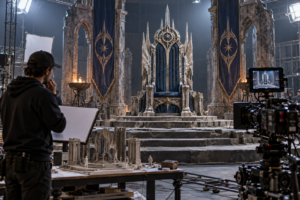
From Sketch to Screen: How a Throne Prop Shapes a Scene
A throne prop can establish a character before a line is spoken. Explore the creative journey from script and silhouette to materials, camera tests, performance, and the small continuity details that keep a fictional seat believable.