
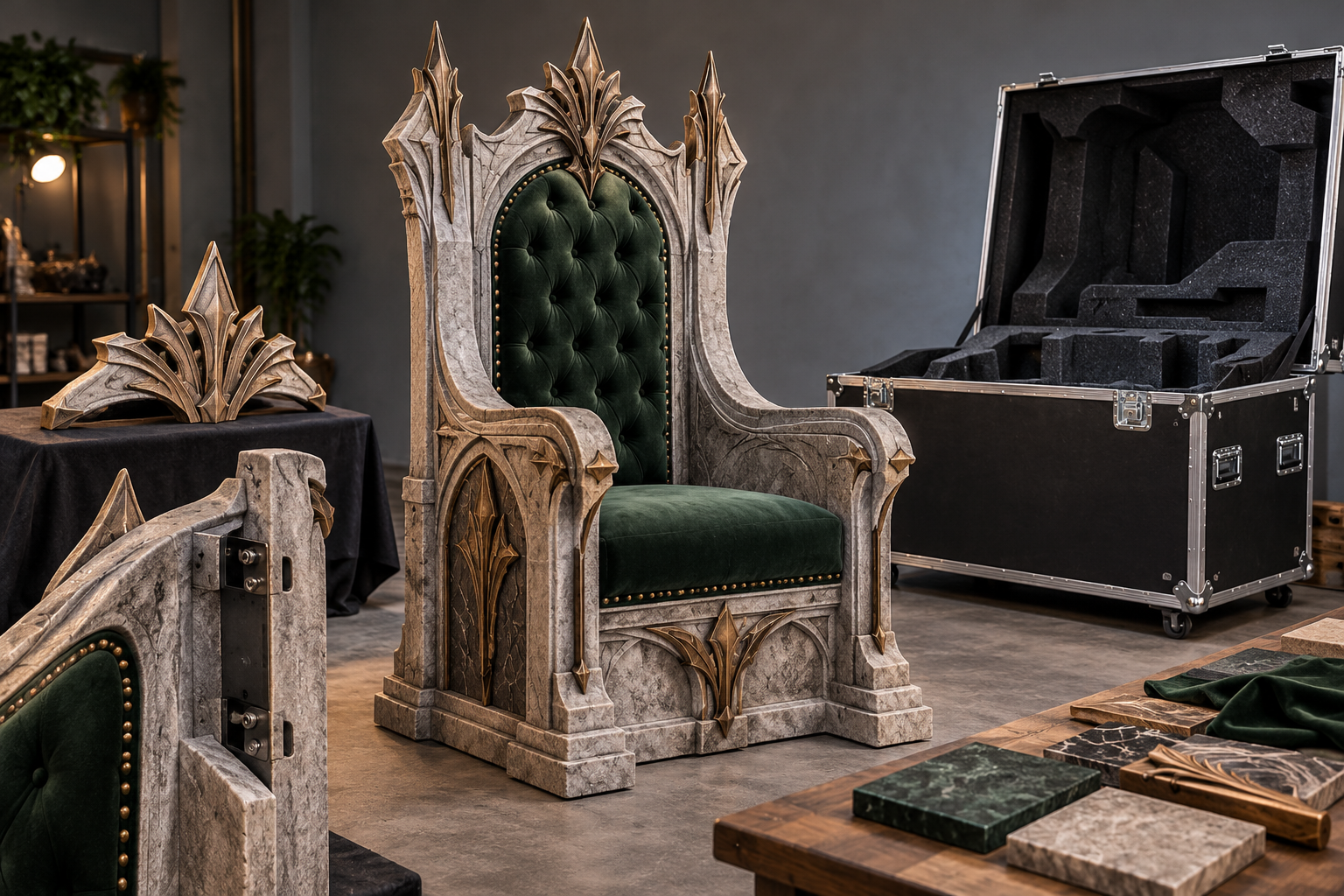
Two seats can look similar while being made in very different ways. A carved timber form, a fabricated metal frame with decorative panels, and a sculpted scenic shell each create their own opportunities and constraints. Construction Method Comparisons looks beneath the surface to compare those approaches through the intended design. Start with what the object must do, how it will be handled, and which parts carry the visual idea. Occupied seating, display-only sculpture, performance scenery, and a touring attraction are different briefs even when their silhouettes overlap. We consider the relationship between structure and decoration, the accessibility of connections, the quality of visible transitions, and the ability to repair or replace parts. Viewing distance and lighting can affect how much surface detail is useful, while transport and assembly may influence the method from the beginning. This section supports informed conversations with makers rather than providing universal construction prescriptions. A useful comparison explains what each approach enables, what it demands, and how it relates to the complete physical project. The strongest method is the one that supports the concept and its real use together.
Throne Foundations
Separate the jobs within the chair before comparing fabrication methods. A supporting frame, sculptural volume, decorative skin, and upholstered contact surface solve different problems. Carving, joinery, welding, molding, and digital fabrication may therefore appear together rather than compete as complete alternatives.
Describe the proposed assembly from the inside outward. A fair comparison explains which method performs each job and how the parts connect. The finished appearance alone cannot establish whether two similarly shaped seats use comparable construction.
Royal Facts
Method names describe processes, not guaranteed performance. A molded panel can have different backing and thickness from another molded panel; a welded assembly can use many geometries and sections.
Tool access, finishing access, and sequence can also influence the result. Repeated components may favor a different process from a one-off sculptural surface. Record the quantity and level of surface detail being compared, because those requirements can change the relevance of tooling, handwork, and assembly effort.
Royal Picks
Ask for section sketches, sample joints, and a breakdown of visible and concealed components. A small representative corner can reveal more than a finished color sample if the main question concerns transitions.
For a repeated ornament, compare a prototype and the proposed reproduction process. For a large shell, inspect how it attaches to the core. Useful references show the same kind of assembly problem, not merely a dramatic object made by the same supplier or with a similarly named technique.
Behind the Throne
Follow the build sequence on paper. Can the maker reach the last connection? Can a surface be finished before it is enclosed?
How would a damaged component be removed later? A continuous form may offer a seamless appearance but complicate local repair, while separated panels introduce joints that need deliberate placement. Consider who performs each stage and where tolerances accumulate. A hybrid assembly works best when the interfaces are designed together, rather than assuming independently produced parts will fit at installation.
Throne Wonders
Compare two ways to create a carved-looking back: shaping the visible material itself or forming a decorative surface over a separate support. Both can serve a visual concept, but their edges, attachment, repair, and material character differ.
The interesting design question is how honestly and convincingly the assembly resolves those differences. A seam can become an ornamental border; a replaceable panel can become a framed inset. Construction choices can contribute to the composition instead of remaining invisible compromises.
Throne FAQs
Can the best method be selected from a photograph? No; the hidden assembly and intended use are missing.
Is a single-material build always simpler? It may reduce some interfaces while making other tasks harder.
Does digital fabrication eliminate hand finishing? Do not assume it; ask what the proposed workflow includes.
What makes a comparison useful? Consistent requirements, representative details, and a clear account of fabrication, assembly, care, and repair, with technical suitability reviewed for the actual occupied or display-only design.