
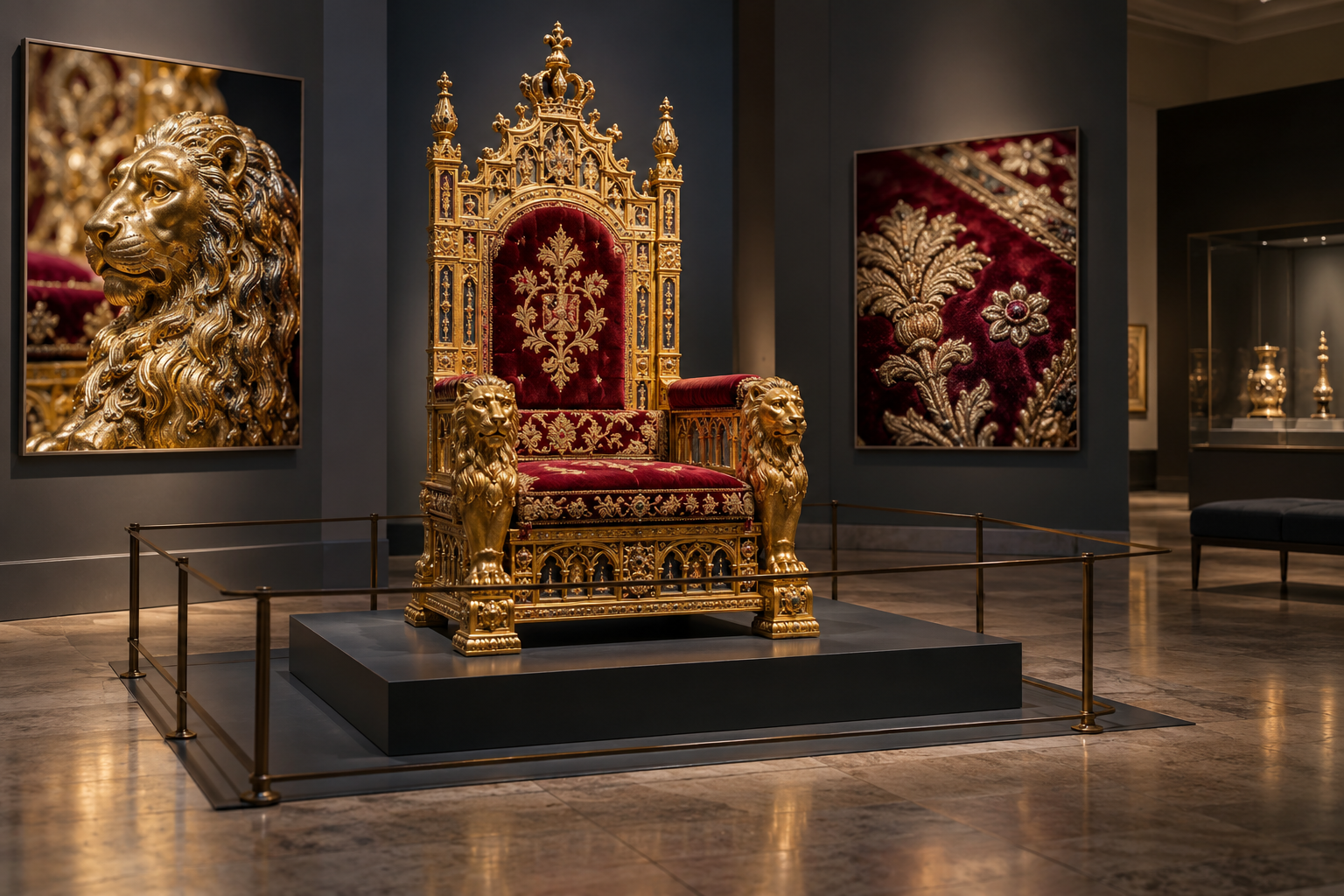
Displaying a throne means presenting both a physical object and an interpretation of its history. Theme Parks, Museums & Exhibitions explores how those responsibilities shape the gallery experience. Begin by identifying what visitors are seeing: an original artifact, reproduction, reconstruction, production prop, or imaginative concept. Clear labels distinguish documented facts from attribution and modern additions. The physical display requires its own care, with supports, lighting, access, barriers, condition records, and installation decisions developed for the particular object. A handling replica can offer a different kind of understanding without exposing an original to repeated contact. This section also considers the voices represented in the interpretation, including makers, caretakers, communities, and the people who approached the royal seat. Look beyond the familiar frontal view to repairs, rear construction, and documented changes in ceremonial use or ownership. A compelling exhibition does more than make a throne appear important. It gives visitors the context to understand why it matters, what evidence survives, and where uncertainty remains, allowing visual impact and careful stewardship to support rather than compete with one another.
Throne Foundations
- Define whether the display presents an original object, reproduction, reconstruction, or imaginative interpretation.
- Build the interpretation around documented context rather than decorative grandeur alone.
- Coordinate mounts and supports with the responsible conservator and exhibition team.
- Distinguish observation-only objects from replicas explicitly approved for visitor interaction.
- Plan clear viewing routes for seated and standing visitors.
- Identify the object's vulnerable surfaces before choosing lighting, barriers, or nearby activities.
- Write labels that separate established facts, attribution, uncertainty, and modern reconstruction.
- Keep installation access and later removal in the exhibition plan.
- Record condition before transport, after arrival, and following installation.
- Agree on care, monitoring, and emergency responsibilities before opening.
Royal Facts
- Provenance concerns an object's history of ownership or custody, not merely its visual resemblance to another throne.
- A reconstruction interprets evidence and should identify where modern decisions fill gaps.
- An object's current upholstery or finish may belong to a later alteration rather than its original manufacture.
- A display mount and a visitor barrier serve different purposes.
- A facsimile can communicate scale or use without exposing an original object to handling.
- An acquisition date and a manufacture date describe different events in an object's history.
- A photograph can reveal decoration while concealing the throne's size, rear construction, and later repairs.
- A label's attribution can be qualified when maker, place, or date remains uncertain.
- A throne's cultural significance may extend beyond the material object visible in the gallery.
- Environmental and lighting requirements depend on the actual materials and condition of the exhibited object.
Royal Picks
- Use a condition report with photographs and a clearly identified inspection date.
- Prepare an object checklist distinguishing originals, replicas, props, and supporting images.
- Request mount drawings reviewed for the specific object and installation.
- Create a label evidence sheet linking each historical claim to its source.
- Include an accessible interpretive alternative when the object's position limits close viewing.
- Provide a materials-and-alterations timeline to explain changes across the throne's life.
- Use a clearly labeled handling replica when tactile interpretation supports the exhibition.
- Plan photography positions that do not interfere with visitor circulation.
- Keep transport and unpacking records with installation documentation.
- Arrange review by relevant cultural specialists when interpretation concerns living traditions.
Behind the Throne
- A display can accidentally imply certainty when a dramatic reconstruction is placed beside an original without clear labels.
- A low platform may improve visibility while changing how visitors perceive the throne's original height and use.
- A throne viewed only from the front can conceal evidence of repair, construction, and later modification.
- A ceremonial object may require interpretation of who could use it and who maintained it.
- An exhibition photograph records one installation rather than the object's permanent historical setting.
- A reproduction's missing wear can help visitors distinguish it from the original when the comparison is explained.
- A borrowed throne introduces lender requirements that should be resolved before mounts and graphics are finalized.
- A label focused solely on royal ownership can overlook the makers and communities connected to the object.
- An interactive station placed too close to an original can create unintended crowding and contact.
- An exit inspection helps separate exhibition-related changes from conditions documented before the loan.
Throne Wonders
- Create a display showing an object's documented alterations through layered drawings.
- Pair a throne with maker tools and material samples that explain its construction.
- Use a digital rotation to reveal a rear surface visitors cannot physically approach.
- Present two labeled reconstructions where surviving evidence supports more than one interpretation.
- Build a timeline connecting ceremonial use, repair, collection, and modern exhibition.
- Compare an original seat with a handling replica at equivalent scale.
- Create an audio interpretation centered on petitioners, attendants, and makers as well as rulers.
- Develop a gallery map showing where royal seating operated within its broader architectural setting.
- Display archival photographs that reveal changes in how the same throne has been exhibited.
- Invite visitors to distinguish documented details from interpretive additions in a clearly explained reconstruction.
Throne FAQs
- Can visitors sit on an exhibited throne? Only on objects explicitly designated and approved for that interaction; never infer permission from an open display.
- How should a replica be labeled? Identify it as a replica and explain its source, maker, date, and any interpretive changes.
- What lighting level should be used? Have the responsible conservation team specify conditions for the object's materials, condition, and exhibition duration.
- Does a throne need a custom mount? Its support requirements should be assessed individually; a generic stand may not suit its condition or geometry.
- How do I describe uncertain history? Use qualified attribution and explain what evidence supports the current interpretation.
- Why document the back of the throne? Rear surfaces can reveal construction, repair, labels, and alterations missing from frontal photographs.
- Can a modern reconstruction look complete? Yes, provided labels clearly identify reconstructed elements and the limits of surviving evidence.
- What belongs in a condition report? Record the identified object, date, materials, observed condition, photographs, and changes relevant to transport or display.
- How can the exhibition include touch? Provide an appropriately designed handling replica or material sample with clear instructions and separation from originals.
- Who should review culturally sensitive interpretation? Involve relevant specialists and community voices alongside the exhibition's curatorial and conservation teams.