
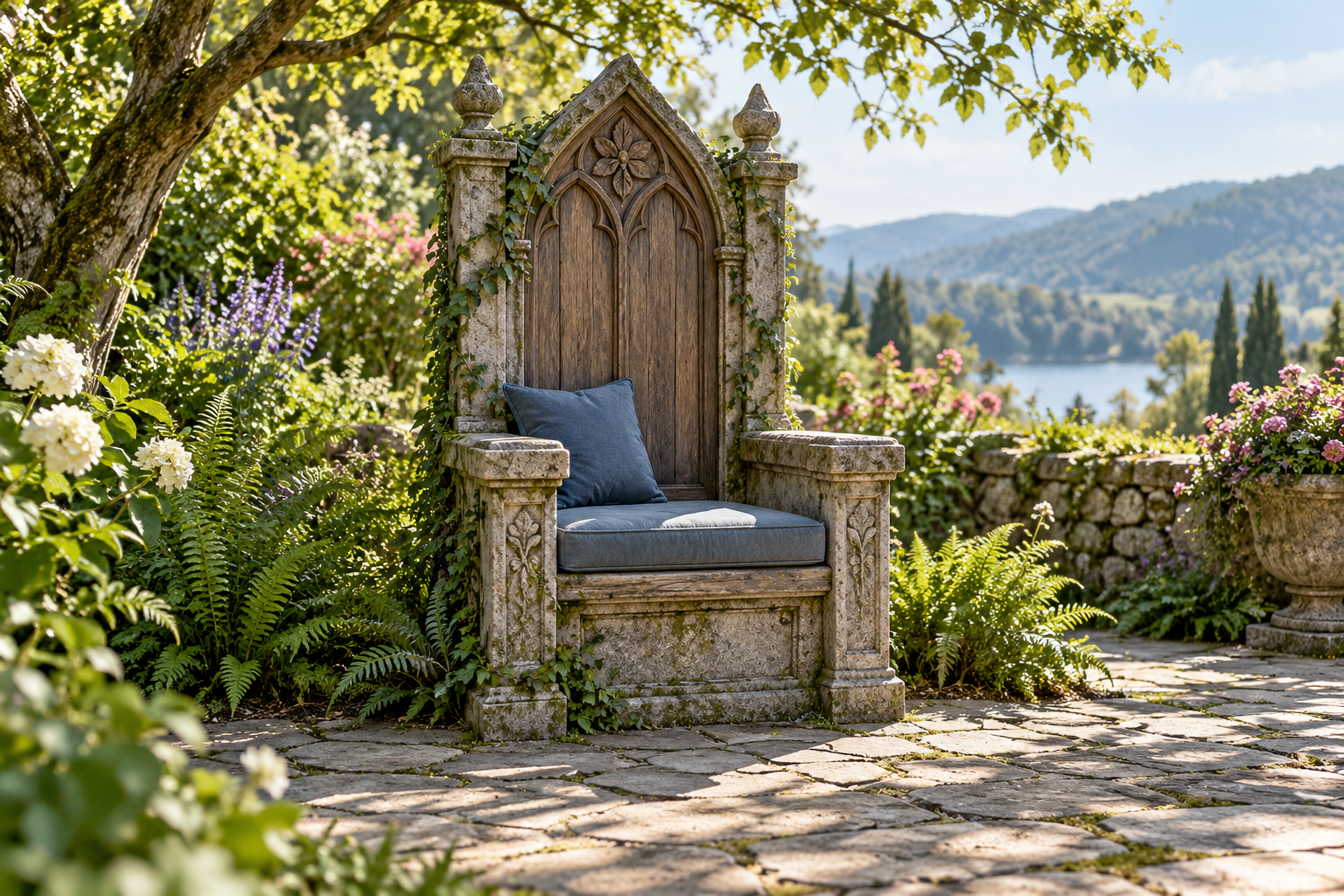
Outdoor seating lives with conditions that a garden photograph cannot fully show. Sun, rain, frost, salt, irrigation, changing ground, and seasonal planting all affect the setting of a throne. Outdoor Statement Seating begins with the site. Explore how materials, fixings, finishes, cushions, support surfaces, and maintenance work together rather than assuming a rustic appearance establishes outdoor suitability. Placement should consider the view and the person's experience at the time they will use the seat: shade, glare, approach, drying, and nearby vegetation can change through the day or season. A vine-covered surround may look enchanting while concealing connections that need inspection. This section considers planting growth, removable textiles, protected storage, drainage, and the appropriate review of installation requirements. Distinguish intentional weathered styling from deterioration that affects use. Whether planning a formal courtyard focal point or a woodland retreat, aim for an arrangement that belongs to its landscape and can be cared for realistically. The rewarding outdoor throne offers a place to experience the garden while preserving access to the practical details that keep it usable.
Throne Foundations
- Describe the site's actual exposure: sun, rain, frost, salt, irrigation, and seasonal storage.
- Choose a stable location with an appropriate supporting surface and clear approach.
- Specify the complete outdoor assembly rather than judging suitability by its rustic appearance.
- Plan drainage and drying around cushions, recesses, and decorative pockets.
- Coordinate the throne with planting growth as well as the garden's current size.
- Check comfort at the time of day the seat will usually be used.
- Separate living plants from attachment points that need inspection and maintenance.
- Plan cleaning access behind the throne and beneath foliage.
- Set a weather-related inspection and storage routine.
- Confirm manufacturer-supported care for every exposed material and finish.
Royal Facts
- Outdoor suitability concerns the frame, fixings, finish, upholstery, and connections together.
- A covered patio can still expose furniture to moisture and changing temperatures.
- A garden surface that appears level may settle or change after rainfall.
- A dense decorative back can catch wind differently from an open framework.
- An outdoor fabric label does not establish the performance of the entire cushion assembly.
- Plants can obscure inspection points as they grow.
- Standing moisture can collect in decorative recesses that remain dry in an indoor display.
- A pale finish and a dark finish can behave differently in direct sun; consult material guidance.
- A seasonal cover still needs a storage and ventilation approach appropriate to the furniture.
- A throne's visual weight does not establish resistance to weather-related movement.
Royal Picks
- Use a site photograph taken after rain when assessing drainage and approach.
- Request exposure guidance for the exact furniture model and finish.
- Prepare a materials schedule that includes hidden hardware and cushion components.
- Test the planned sitting position under representative sun and shade conditions.
- Choose removable cushions when their care and storage plan supports that arrangement.
- Keep access to connections clear of permanent planting.
- Plan a protected off-season destination before purchasing oversized furniture.
- Use a maintenance calendar tied to local conditions and manufacturer instructions.
- Request professional assessment where the installation requires anchoring or foundation design.
- Keep finish samples and repair records for recurring outdoor maintenance.
Behind the Throne
- A throne placed for a beautiful garden view may face uncomfortable afternoon glare.
- A canopy of vines can change the load and maintenance conditions around a previously simple seat.
- A decorative foot can sink differently from a broad base on soft ground.
- A weathered look can be intentional while deterioration of a connection remains a separate concern.
- A water feature nearby can expose one side to more moisture than the rest.
- A removable cushion needs convenient storage or it may remain outdoors despite the intended plan.
- A throne that looks balanced among mature plants may initially overwhelm a newly planted garden.
- A hidden rear surface can deteriorate unnoticed if shrubs prevent inspection.
- A coating repair is easier to plan when the original preparation and product system are recorded.
- A garden throne's approach should remain practical when the surrounding ground is wet.
Throne Wonders
- Design a woodland seat framed by planting without allowing roots or stems to conceal its base.
- Explore a courtyard throne using warm stone tones and removable textile accents.
- Create a moon-garden focal point with pale surfaces and restrained landscape lighting.
- Develop a seasonal planting plan around a permanent sculptural seat.
- Compare a formal garden axis with a secluded discovery-path location.
- Imagine a throne-shaped bench surround that preserves a practical seating center.
- Design a removable crest for seasonal garden celebrations.
- Create a material sample record showing how approved finishes change with exposure.
- Explore an open-backed throne that frames a distant landscape.
- Document the same installation through changing seasons to refine placement and care.
Throne FAQs
- Can an indoor throne be placed outside temporarily? Confirm the maker's guidance for the actual exposure and duration rather than assuming brief use is harmless.
- What makes a throne suitable for a garden? Assess the complete materials, connections, finish, support surface, exposure, maintenance, and intended use.
- Can it stand directly on soil? Have the base and site conditions assessed; appearance alone does not establish stable support on soft ground.
- Do outdoor cushions need storage? Follow the complete cushion system's care instructions and provide practical drying and storage arrangements.
- Should climbing plants cover the throne? Preserve inspection, drying, contact areas, and attachment access rather than allowing uncontrolled growth.
- How do I choose the best location? Evaluate views, approach, sun, drainage, surrounding growth, and maintenance access at the times it will be used.
- Does a heavy throne need anchoring? Determine stability and installation requirements from the actual design and site through appropriate review.
- Can distressed finishes hide outdoor damage? They can obscure visual changes, making documented inspection especially useful.
- What should be checked after severe weather? Follow the operating plan and inspect condition, support, connections, and surrounding ground before further use.
- How can maintenance stay manageable? Select supported materials, retain product records, keep access clear, and establish realistic seasonal care.