
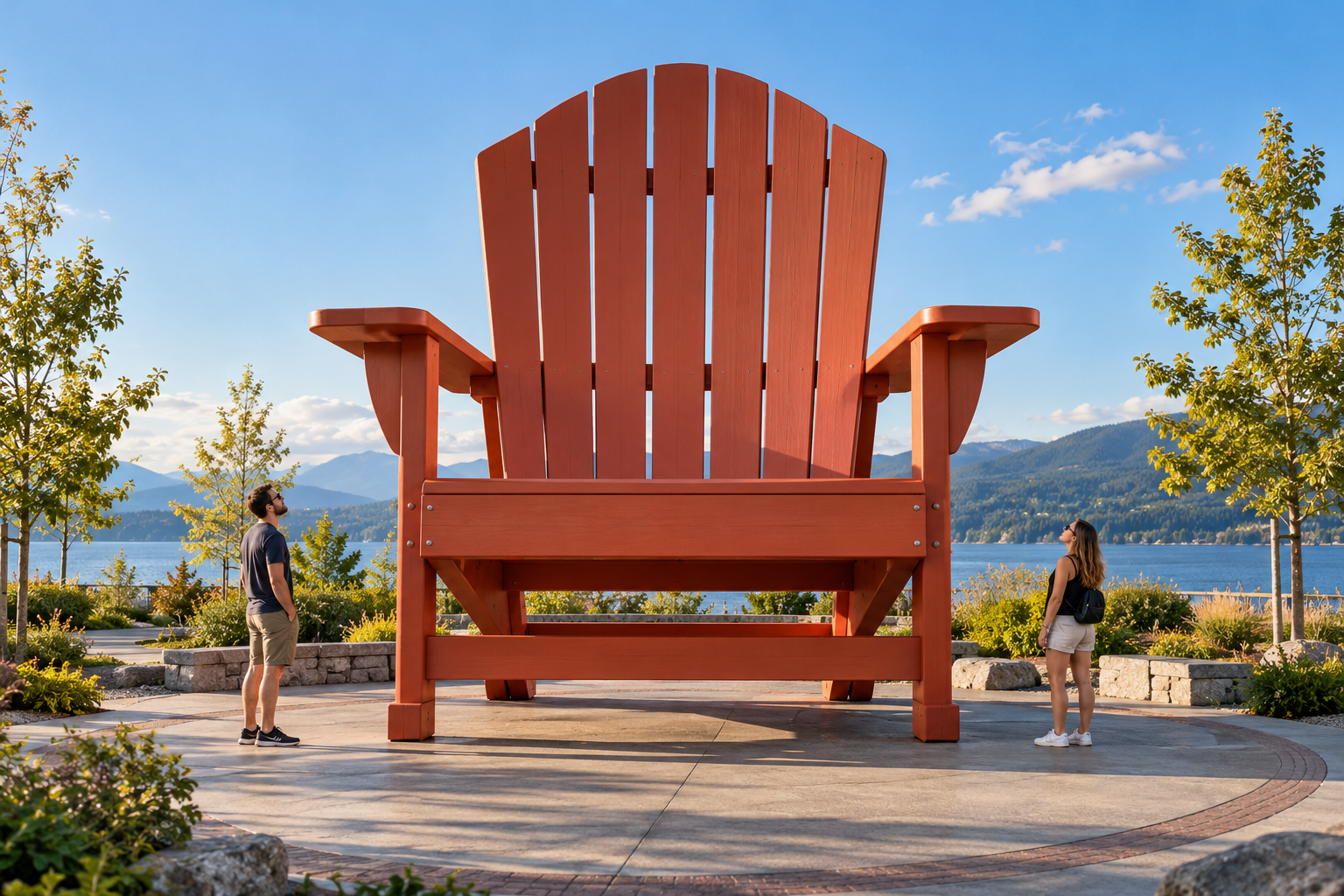
An ordinary chair becomes extraordinary when its scale changes. A familiar armrest rises above a visitor, a back becomes an architectural silhouette, and a simple piece of furniture turns into a landmark. Oversized and giant chairs use that surprise to create memorable encounters in plazas, gardens, shops, exhibitions, and themed destinations. Their appeal begins with recognition: people understand the everyday object before noticing how dramatically it has grown. Designing one involves more than enlarging a drawing. The intended interaction, surrounding space, viewing distance, material expression, and practical installation all need their own decisions. Some giant chairs are sculptures to admire from the ground; others incorporate separately designed places for visitors to sit. This section explores exaggerated proportions, recognizable profiles, photographic scale cues, landscape integration, and the difference between a convincing illusion and usable seating. Discover how color, texture, and context affect the impression of size. From playful roadside forms to elegant destination pieces, oversized seating offers a powerful way to make a place distinctive while keeping the visitor experience at the center of the concept.
Throne Foundations
Decide what the giant chair is meant to be: a landmark sculpture, an installation intended for sitting, or a large visual form paired with a separate usable seat. These are different design briefs.
Begin with a recognizable chair profile, then determine which dimensions create the desired surprise. The seat need not be a uniformly enlarged version of ordinary furniture. Develop any occupied area around its actual users while treating the surrounding giant form as a related but distinct part of the composition.
Royal Facts
Scale needs a reference. People, paving, nearby doors, and familiar landscape elements help viewers understand a giant chair's size. A tight photograph against an empty sky can make an enormous object look like a small model.
Record overall height, width, and depth separately from the accessible occupied area. Also distinguish the assembled form from its transport components. The dimension that makes the chair impressive on site may not be the dimension that determines how it reaches the site.
Royal Picks
Use approach photographs, a measured site elevation, and figures at consistent scale to compare concepts. Make a small physical model to inspect the chair from several directions, then test a full-size outline of any usable seating area.
Include the proposed photograph location in the site study. Select references with clear context instead of only dramatic close views. A simple familiar form can be especially effective when the purpose is immediate recognition from a distance rather than detailed appreciation at close range.
Behind the Throne
An enlarged chair creates new relationships between decorative form, occupied space, support, and installation. A giant armrest may become a major visual volume rather than something a visitor can actually use.
Plan how the sculptural portions divide for transport and where the assembled joints appear. Review the base with the site team, and define maintenance access before enclosing internal components. Technical design must address the real installation and intended interaction; scaling up a furniture drawing does not supply that information.
Throne Wonders
Play with selective exaggeration. An exceptionally tall back, broad curved arms, or a stretched rocker profile can create a memorable landmark without enlarging every feature equally.
Compare the concept with and without people in the view. Then examine its silhouette against the actual background: trees or buildings may conceal the very feature that makes it recognizable. The most effective giant-chair idea is often the one whose visual joke remains clear from the approach, the photograph position, and the surrounding public space.
Throne FAQs
Can visitors climb it because it resembles a chair? Only when climbing is an explicitly intended and appropriately developed use; appearance alone establishes nothing.
Does a giant chair need to seat people? No; it may be a sculpture with a separate visitor experience.
How should its size be described? Use documented dimensions and explain what was measured.
Can it travel? That depends on component sizes, handling, connections, and the route, all of which should be considered before the outer design is finalized.
Oversized Chairs: How Scale Turns Seating into an Attraction
A familiar chair becomes unforgettable when its proportions change. Explore how giant seating uses scale, recognizable silhouettes, landscape, and visitor interaction to create a landmark with a clear physical purpose.