
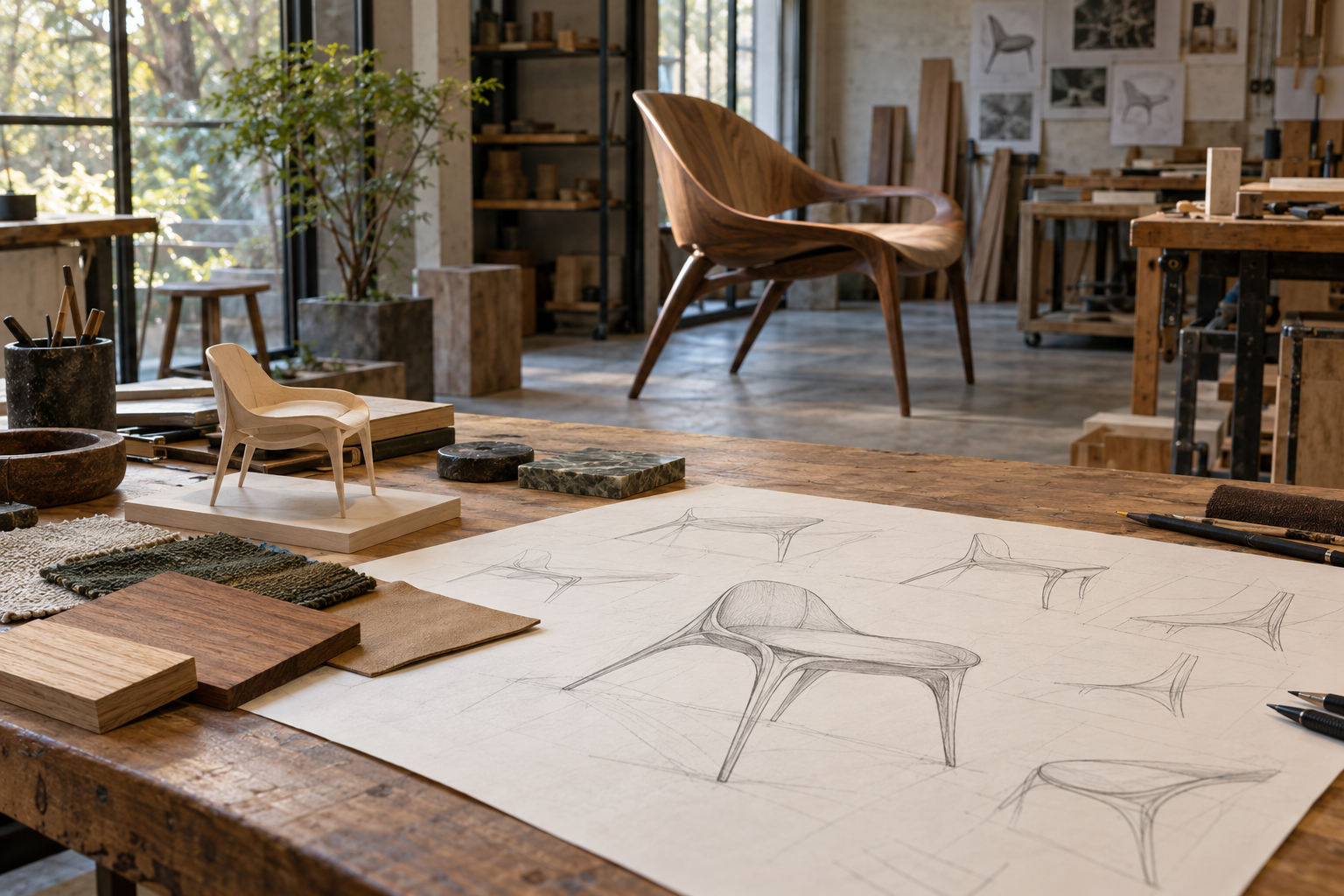
Every distinctive seat has a sequence of decisions behind it. A commission begins with a purpose, a sketch tests an idea, a material changes the possibilities, and a finished object enters a particular setting. Seating design stories follow that sequence rather than stopping at the final photograph. This section explores the people, constraints, experiments, and revisions that shape memorable chairs and installations. We look for the connection between an initial ambition and the physical choices that made it possible. A change in venue may alter the scale; a transport limitation may introduce modular construction; a material sample may transform the entire color direction. Documenting those turns makes a project useful to other designers and curious readers. It also helps distinguish a verified account from an appealing story repeated without evidence. Explore the development of ceremonial seating, statement furniture, themed props, and destination pieces through their specific circumstances. The goal is not to make every project sound effortless, but to show how thoughtful decisions turn an imaginative idea into an object with a clear place and purpose.
Throne Foundations
Build a seating design story around a specific question and a documented sequence. What was the project meant to achieve, which alternatives were explored, and what changed before the finished object appeared?
A useful account connects the brief, concept, development, fabrication, installation, and use without assuming every project followed a perfectly linear path. Identify the people and roles supported by the records. Separate what the maker or client states from your own interpretation of the resulting form.
Royal Facts
A concept date, fabrication date, installation date, and refurbishment date can all belong to the same project. Keep them distinct. A photograph of a polished model does not establish that the full-size chair was built, and a drawing marked approved may have been superseded.
Record the stage represented by each image. Likewise, distinguish a proposed material from the one actually used. These small distinctions prevent a lively narrative from turning an early intention into an inaccurate claim about the completed object.
Royal Picks
Choose a compact set of evidence that explains a meaningful change: an early sketch, a prototype photograph, a revised detail, and a view of the installed seat. Add captions stating what each item shows and why it matters.
Maker interviews are most useful when tied to a specific drawing or decision. For an original project, preserve revision notes as the work develops. They can later explain why a proportion changed, a seam moved, or a particular surface became the final choice.
Behind the Throne
The discarded option often reveals the design problem most clearly. Perhaps an uninterrupted back was divided to travel, or a dramatic arm was reshaped after an occupied mockup.
Describe the constraint and the response rather than treating the final form as inevitable. Credit contributions accurately across design, fabrication, upholstery, finishing, and installation when that information is available. A good project story shows how these roles interacted, giving readers a sense of the decisions hidden beneath the finished photograph.
Throne Wonders
Look for the small decision that became a defining feature. A module break might follow an ornamental border; a removable cushion might establish the chair's color contrast; a service opening might become a deliberate panel.
Such details can connect imaginative design with practical making in a memorable way. A before-and-after comparison is strongest when it explains the reason for change. The interest lies in how the project developed, not merely in presenting the earliest version as inferior to the final one.
Throne FAQs
Can an unrealized concept have a design story? Yes, when it is clearly identified as a concept rather than an installation.
Should every project be described as a success? Discuss the documented outcome and unresolved issues honestly.
Can several makers' work be combined into one example? Keep separate projects and attributions clear.
What makes a transformation account credible? Identifiable stages, consistent dates, specific changes, and images that show the same object or explicitly explain when a different version enters the story.