
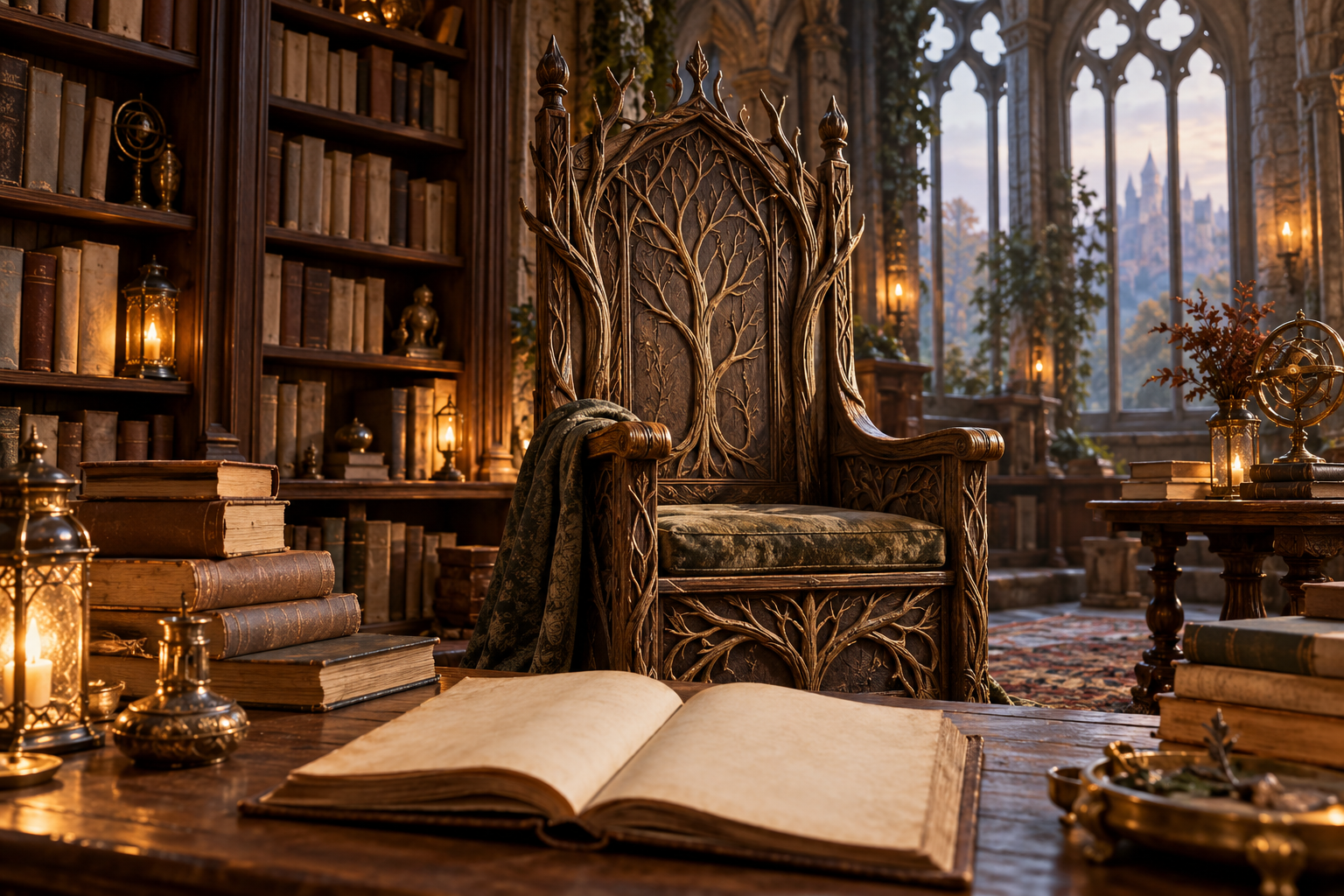
An imagined seat can become a memorable physical design long before it is fabricated. In a novel it may begin with a few precise details; in a game it may appear as a model seen from many angles. Game & Literary Seating explores those designs through shape, scale, material language, and the relationship between the seat and its setting. The focus is the object itself and the opportunities it offers for visual interpretation. Separate what the source actually establishes from details supplied by an adaptation, fan image, or original concept. A description of branches, metal, stone, or woven surfaces can suggest several different fabrication approaches. Costume, posture, and the imagined occupant also affect how a design might translate into a physical prop. This section compares recognizable seating ideas without drifting into gameplay advice, collectible miniatures, or unrelated plot summaries. Explore how a few well-chosen features communicate a world and how those features can remain legible when a person sits down. The most useful inspiration connects the fictional reference with thoughtful decisions about a real silhouette, usable space, and a convincing physical finish.
Throne Foundations
Begin with the exact fictional source: a passage in a particular edition, a game environment, or a documented adaptation. List what it actually establishes about the seat, then separate those details from your own interpretation.
A written description may emphasize atmosphere rather than geometry; a game model may prioritize recognition from one camera angle. For a physical seating concept, choose the essential story cues first. A clear hierarchy of silhouette, material impression, and emblem is more useful than copying every visible texture.
Royal Facts
A digital seat can appear convincing while containing connections that would not work physically. Likewise, an illustration may conceal the rear face, underside, and space required by an occupant.
Versions can differ without either being an error: a book description and a later adaptation may make different choices. Label the version under discussion, and avoid combining features into a supposedly definitive design. Distinguish official reference material, fan interpretation, and an original concept whenever they appear together in a visual study.
Royal Picks
Prepare a concise reference board with attributed source images, your own silhouette sketches, and a seated human outline. Include front and side studies rather than relying on a single dramatic perspective.
For literary inspiration, extract design concepts in your own words, such as a severe outline or weathered surface, instead of filling the board with long quotations. Small finish samples can test how an imagined substance might be suggested through color and texture while leaving the physical construction open for development.
Behind the Throne
Translation is where a fictional seat becomes a workable design. A floating-looking arm may need a concealed support; a jagged back may need different treatment near clothing and hands.
Preserve the visual relationship that tells the story while redesigning the physical interfaces. Review the chair with an occupant and any costume or accessories included in the brief. Also consider the reverse: a prop photographed from several directions needs a resolved back, even if the original game camera never showed one.
Throne Wonders
One evocative phrase can lead to several distinct chairs. A seat described as resembling a frozen wave might become a translucent shell, a carved sweeping back, or painted layered forms.
None should be presented as the single authoritative interpretation unless the source establishes it. Exploring alternatives reveals how much storytelling comes from silhouette and light. A useful exercise is to remove the emblem from a concept and ask whether the remaining shape still communicates the intended fictional world.
Throne FAQs
Is this a section about game strategy or miniatures? Its focus is full-size seating, props, and the design language of fictional furniture.
Must an adaptation reproduce the source literally? No; explain which cues were retained and which physical requirements changed the design.
Can an original chair draw on a general fantasy mood? Yes, while developing its own forms and identity. Specific franchise reproductions raise separate permissions questions that should be resolved before a commissioned design is treated as ready for production.