
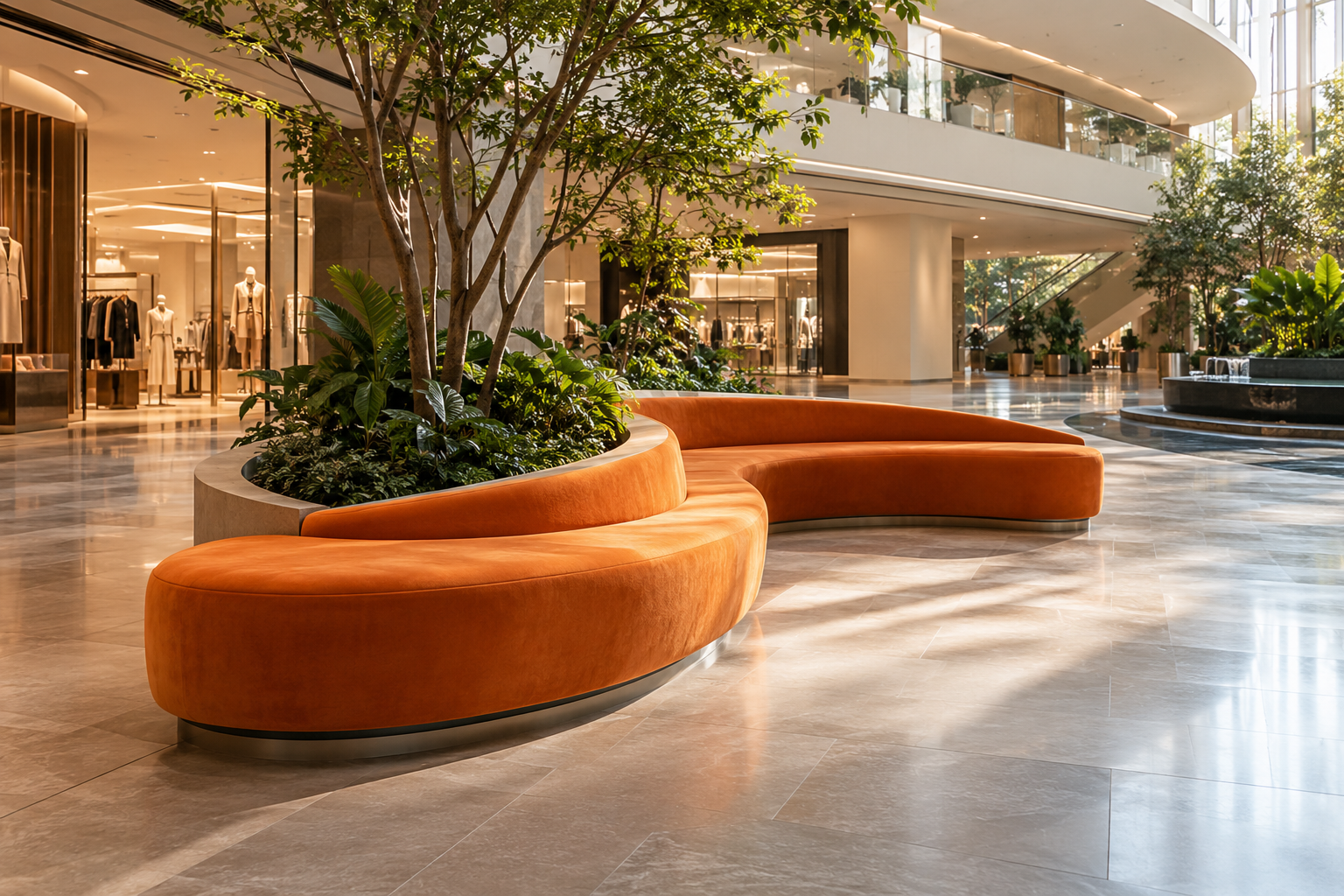
Statement seating can give a retail environment a recognizable meeting point and a memorable pause within the shopping journey. A sculptural chair, playful product-shaped seat, or generous themed bench can connect a physical space with its wider identity. The strongest installations feel integrated with the destination rather than placed in an unused corner. This section explores seating in shops, shopping centers, showrooms, and promotional environments through the relationship between form, visitor experience, and surrounding activity. We consider sightlines from entrances, the balance between circulation and gathering, and how a seat appears in photographs taken from different positions. Brand expression can emerge through shape, material, and color without covering every surface in graphics. Practical decisions matter as well: cleaning, replenishment routes, seasonal changes, and staff visibility all affect the installation's place in daily operations. Discover how distinctive seating can support a welcoming environment, create a shared landmark, and bring a design idea into physical form. The aim is a coherent experience that rewards a closer look while remaining connected to the purpose of the space.
Throne Foundations
Place the seating within the actual shopping journey. Is it a meeting point, a rest stop, a campaign photograph, or an attraction that draws people into a particular area?
That role determines its relationship to entrances, merchandise, staff movement, and nearby displays. Begin with the floor plan and approach views rather than a standalone branded chair. The installation should contribute to the destination's character while leaving the surrounding retail experience understandable and usable.
Royal Facts
Brand identity can appear through form, material, color, and setting as well as lettering. A product-shaped seat may communicate immediately, while a more abstract sculptural form may suit a restrained interior.
Evaluate the occupied view: a visitor can hide the central graphic or change the apparent scale. Also consider changing merchandising around the installation. A chair that stands out against one campaign backdrop may merge into another, so the visual relationship should be reviewed across likely seasonal arrangements.
Royal Picks
Use a measured plan, customer approach views, merchandising references, and operating-team feedback. Test the proposed footprint with a simple outline before committing to a large scenic form.
Include the photograph position and the space companions occupy while waiting. For a recurring campaign feature, compare a fixed core with replaceable styling elements. Choose references that demonstrate a relationship between seating and retail space, rather than assuming that an impressive event display will work unchanged in a store or shopping destination.
Behind the Throne
Coordinate the seating with the people who manage the space. Establish who resets accessories, cleans contact areas, moves temporary fixtures, and reports damage.
If campaigns change frequently, design decorative updates as planned components with known attachment points. Keep access to nearby merchandise and operational routes in the layout study. A memorable chair can become a gathering point beyond its intended photograph function, so consider that everyday behavior when deciding where it belongs and how much surrounding space the installation needs.
Throne Wonders
A distinctive seat can become a meeting landmark: a recognizable place that visitors use to orient themselves. Explore how the form reads from more than one entrance and whether its silhouette remains identifiable among changing displays.
A playful material or familiar product reference can invite discovery, but subtle design can work too. Try expressing the brand without its logo during concept development. If the color, proportions, and material character still feel appropriate, the installation may have a stronger identity than a generic chair carrying a graphic.
Throne FAQs
Must retail seating resemble a product? No; an abstract relationship may better suit the destination.
Should it sit directly at an entrance? Test the visitor flow and operational needs before choosing that position.
Can seasonal dressing be changed easily? Plan the removable parts and their attachment rather than improvising each campaign.
What makes the installation more than a branded prop? A considered place in the customer journey, a clear visual character, and an experience that remains appealing when people actually occupy the scene.