
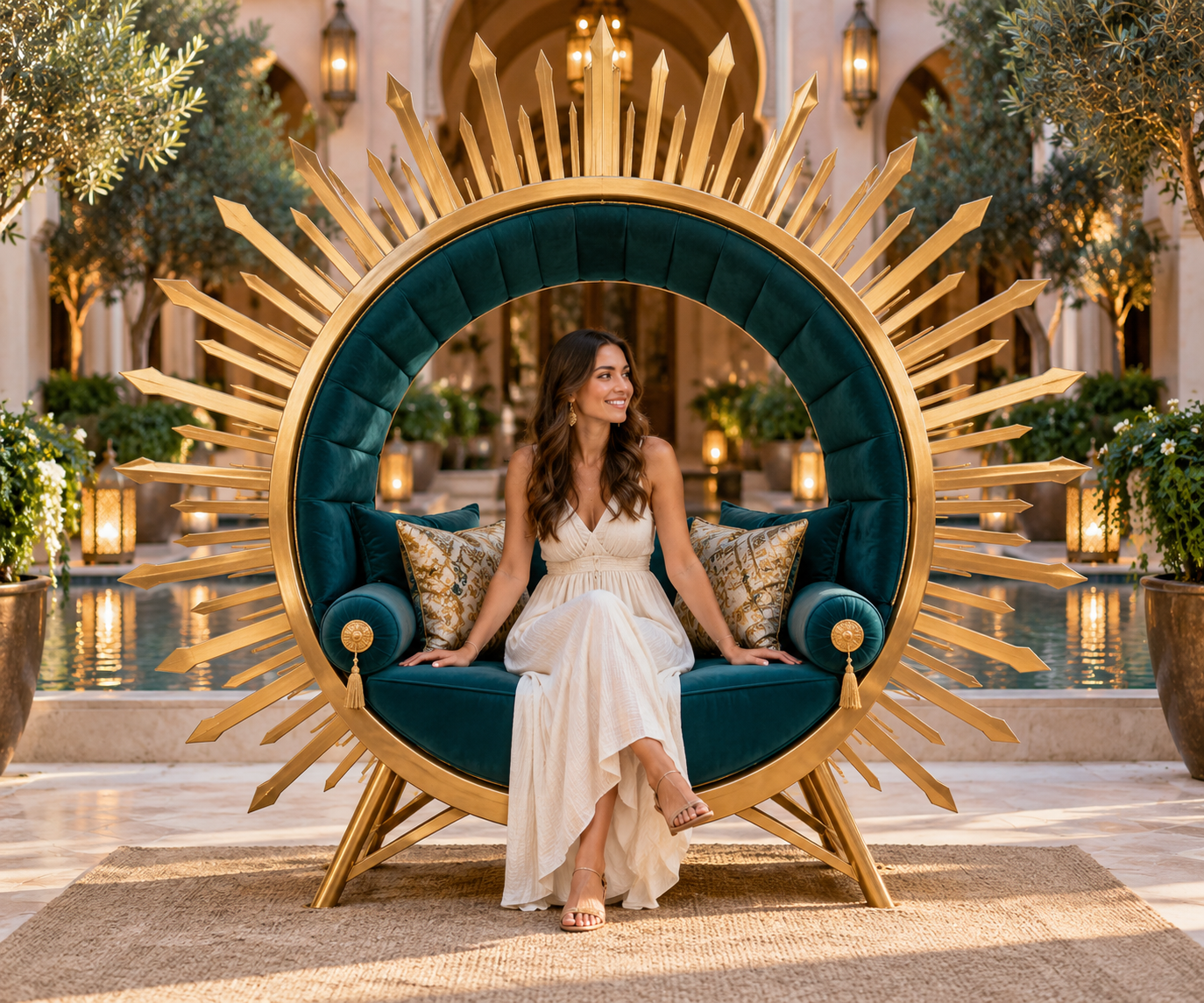
Photo-op seating is designed for the moment when a visitor becomes part of the scene. The chair provides a place to pause, a recognizable focal point, and a frame for a photograph worth remembering. Its success depends on more than an impressive empty-seat image. The design must work with people of different heights, clothing, poses, and group sizes. This section explores the physical seating forms that support that experience, from enveloping shells and playful oversized backs to sculptural benches and theatrical throne shapes. We look at the relationship between the occupied seat and the image visitors take away. Distinctive outlines, well-positioned details, comfortable-looking proportions, and a clear approach can make the interaction feel intuitive. The backdrop, camera position, and lighting belong to the larger composition, but the chair remains the central object. Discover how materials, color, depth, and scale affect its photographic presence. Whether installed for a celebration, a retail destination, or a permanent attraction, a strong photo-op seat helps people feel included in the design rather than merely placed in front of it.
Throne Foundations
Begin with the photograph the seating is intended to create. Define the likely group size, camera position, framing, and visible background before selecting a chair silhouette.
A solo portrait, a couple's photograph, and a family scene need different occupied areas. The seat should invite a clear interaction while leaving the people legible within the setting. Develop the empty and occupied compositions together, because a beautiful vacant chair can produce a disappointing photograph once its central decoration is hidden.
Royal Facts
Portrait and landscape crops reveal different parts of the same installation. A tall crest may fit a portrait image while wide arms disappear; a group landscape photograph may crop the top.
The camera's distance also changes the relationship between foreground arms and the people behind them. Test several realistic phone positions instead of relying on one ideal lens and viewpoint. Strong reflections, deep recesses, and busy patterns can compete with faces, so evaluate surface choices as part of the image.
Royal Picks
Create simple full-size outlines or stand-ins for the seat, back, and major projections. Photograph them with the intended number of people or appropriately scaled substitutes. Review the scene with light and dark clothing and from the likely standing camera height.
Add the actual background early, even as a rough representation. Useful sample reviews include the frame finish, upholstery, and a section of ornament under the proposed light. These checks reveal composition problems before detailed scenic work makes them expensive to change.
Behind the Throne
Plan the interaction around the photograph. Where do companions wait, where is the camera held, and how does the next group approach? Make the intended pose understandable through the seat's arrangement rather than relying entirely on instructions.
Consider the reset between groups, especially when accessories or movable elements are part of the scene. Coordinate lighting and surrounding circulation with the installation team. The chair is only one part of a photo opportunity; its placement determines whether visitors can actually use the composition.
Throne Wonders
A well-framed opening can make a seat feel like an entrance into another world. Broad arms can establish a playful pose, while a shared back can visually connect a group.
Try a design in which the most important ornament sits beside or above the occupants instead of directly behind their heads. Then remove the surrounding styling and check whether the seat still suggests its intended use. A strong photo-op can be both recognizable on its own and richer within the full scene.
Throne FAQs
Is every photo-op chair intended for sitting? No; establish whether it is usable seating, a display sculpture, or a framed standing experience.
Must a photographer be present? Design around the actual operating model, including self-taken photographs if expected.
Should a logo sit in the center of the back? Test the occupied crop before choosing that position.
What makes the scene successful? People, seating, and background should remain clear from realistic camera positions, with an understandable approach and a composition that works across ordinary visitor variations.