
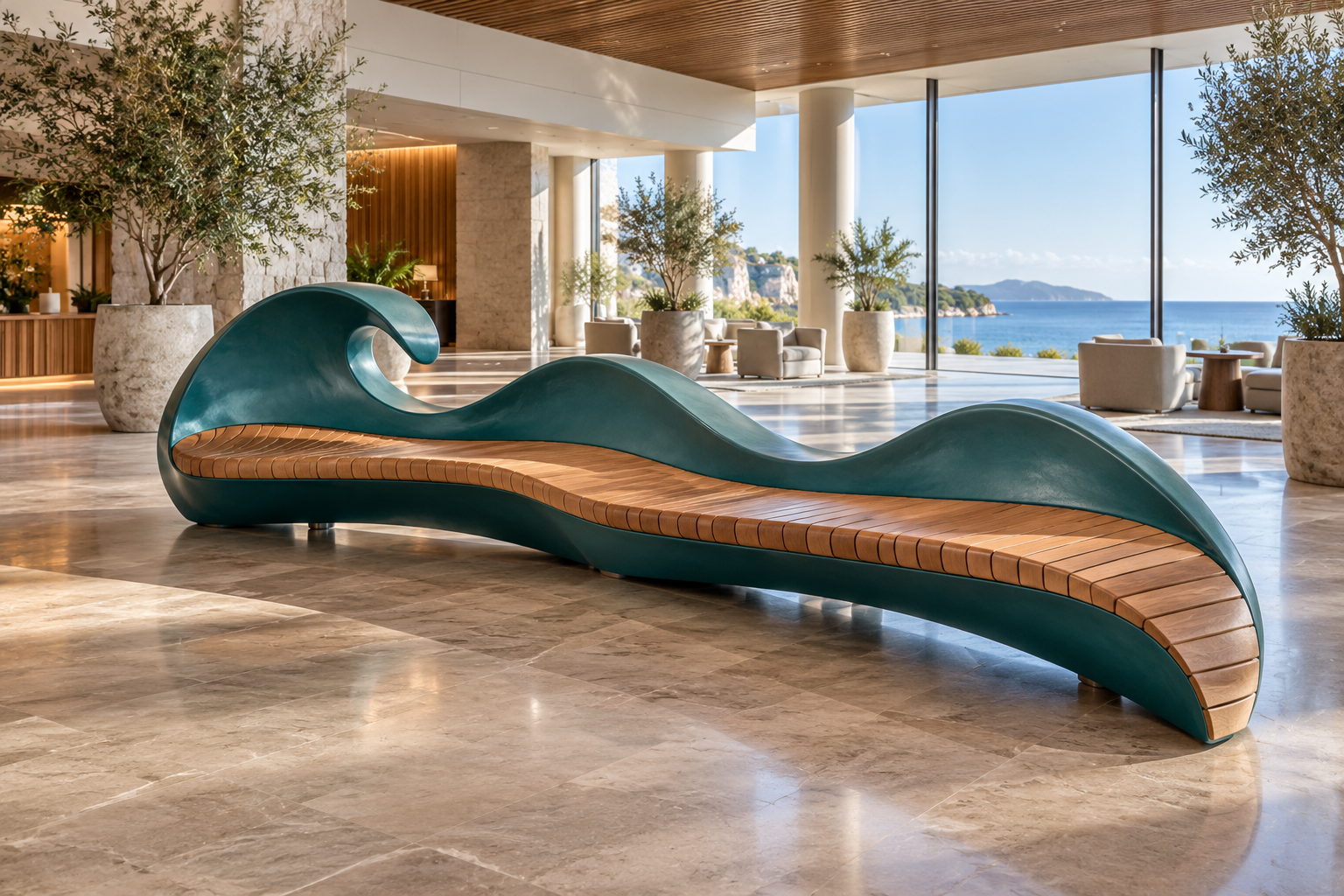
A memorable seating attraction does not have to be a single chair. A sculptural bench, theatrical couch, curved group seat, or shared ceremonial arrangement can bring several people into the same moment. Group seating changes the design problem: the object must feel coherent while allowing different combinations of occupants to use it naturally. This section explores long silhouettes, repeated forms, shared backs, divided cushions, corner arrangements, and seating that becomes part of a larger scene. We consider how people enter and leave, how personal space is expressed, and how the design reads when only part of it is occupied. A family photograph, a wedding party, a museum gathering point, and a hospitality lounge each create a different brief. Materials and details should support that pattern of use as well as the visual concept. Discover ways to make generous seating feel distinctive without losing its practical purpose. From playful themed benches to dramatic destination couches, group seating can turn a furniture piece into a shared experience and a recognizable feature of a place.
Throne Foundations
Define how the group will use the seat. A brief family photograph, a conversation, and an audience-facing ceremony create different relationships between people.
Compare straight, curved, and angled arrangements using that activity as the starting point. A continuous form can unite a group visually, while separated cushions or back elements can suggest individual places. Develop the overall silhouette and the occupied spacing together so a dramatic couch or bench remains understandable at the scale of the people using it.
Royal Facts
Length alone does not establish capacity. Arms, cushion divisions, back shape, and the intended use affect how the occupied area is interpreted. Record usable seating dimensions separately from decorative extensions.
A long form also looks different when only one end is occupied or when the middle is empty. Include these conditions in design studies rather than showing a perfectly arranged full group every time. The visible rhythm should remain coherent when real visitors choose different positions.
Royal Picks
Lay out several occupant positions on a measured plan, then review the front and side views. For a conversation setting, study how people face one another; for a staged photograph, study faces and sightlines from the camera.
Use temporary full-size markers to test the overall footprint. Include an example of partial occupancy and space around the seat for companions or mobility devices as appropriate to the project. References should clarify social arrangement, not merely demonstrate the longest or most ornate furniture available.
Behind the Throne
Long seating brings transport, assembly, and upholstery decisions forward. Decide whether the form arrives as one piece or several modules, and place any breaks where they make visual sense.
A seam through a major ornament may be harder to resolve than one at a cushion division. Consider how a single damaged contact surface is replaced and how staff reach concealed connections. The bench or couch should be designed as an assembly whose practical divisions reinforce its visual rhythm rather than interrupt it.
Throne Wonders
Repetition can give group seating character. A series of modest back shapes may create a ceremonial rhythm, while a single sweeping back can frame everyone as one composition.
Small changes in angle can encourage conversation or turn attention toward a central scene. Try comparing an evenly repeated arrangement with one that gives emphasis to the middle. Neither is universally better; the interesting question is how the form expresses the occasion and remains convincing with different numbers of occupants.
Throne FAQs
Should a group seat always face forward? No; choose the orientation around conversation, viewing, or photography.
Do cushion divisions determine approved occupancy? They communicate visually but do not replace the design's documented intended use.
Can a long seat be modular? Yes, when its connections, installation sequence, and appearance are developed together.
What should be tested before detailed fabrication? The actual occupied layout, partial occupancy, approach space, transport route, and how the proposed group arrangement reads from the important viewpoints.