
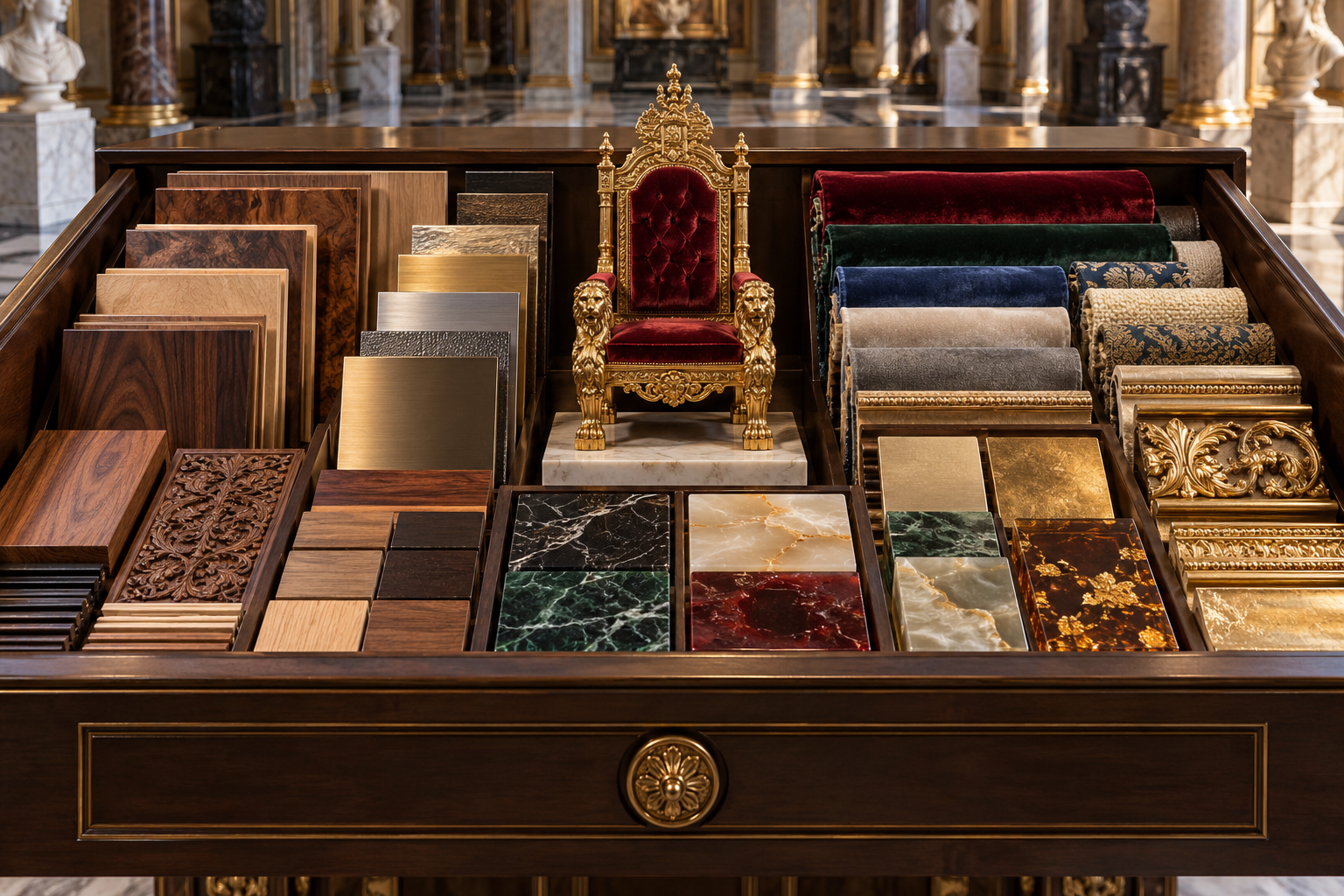
A material description becomes clearer when it separates what an object is made from and how its surface appears. Materials & Finishes Index organizes that distinction for throne research. Explore substrates, veneers, cladding, upholstery layers, coatings, and imitated effects as related but separate entries. A metallic surface can cover timber or resin, while a historic frame may carry later fabric, paint, and repairs. Exact identification depends on evidence; a photograph alone cannot always resolve the layers. This section emphasizes useful records: component location, material name, finish process where known, condition, source, and the qualifications attached to an identification. Modern product codes and technical information can support future repair, while historic terminology may require attention to the source's period and context. Compare samples and documented examples without assuming appearance establishes structural or environmental performance. The purpose is a reference trail rather than a universal buying recommendation. With the layers clearly described, you can understand why two similar-looking thrones may need different care, and why preserving material information matters long after the final color has been chosen.
Throne Foundations
- Identify the substrate separately from every visible coating or covering.
- Record material names at the level supported by evidence.
- Separate solid construction, veneer, laminate, cladding, and imitation effects.
- Use finish terms that describe the actual process where known.
- Distinguish an original surface from later repainting or restoration.
- Note which parts contain each material instead of assigning one label to the entire throne.
- Treat appearance-based identification as provisional when no supporting documentation exists.
- Keep product-specific technical information attached to modern materials.
- Record care guidance from an appropriate source for the particular object.
- Cross-reference materials with components, makers, and documented examples.
Royal Facts
- Veneer is a surface layer and does not identify the underlying core by itself.
- Upholstery combines covering and padding rather than describing fabric alone.
- A metallic paint can create a metal-like appearance over timber, resin, or scenic foam.
- A stain and an opaque paint create different relationships with the visible substrate.
- A clear coating can alter sheen while leaving underlying grain visible.
- A composite description should identify its constituent system where documentation allows.
- A carved stone effect need not be actual carved stone.
- A finish's current appearance can reflect aging, cleaning, repair, and environmental exposure.
- A trade name and a generic material name provide different kinds of identification.
- A sample's appearance alone does not establish its mechanical or environmental performance.
Royal Picks
- Use a record with separate substrate, covering, coating, and condition fields.
- Keep labeled samples from modern fabrication projects.
- Consult identified object records before naming historic materials.
- Request exact product codes for contemporary coatings and upholstery.
- Photograph exposed edges where layered construction is visible.
- Preserve technical data and care instructions with the material entry.
- Use magnified images only alongside normal-scale context.
- Mark suspected identifications as provisional.
- Record later surface interventions in a separate chronology.
- Compare complete material systems rather than color swatches alone.
Behind the Throne
- A realistic finish can make an object difficult to identify from photography alone.
- A repaired area can introduce a second material beneath an apparently continuous surface.
- A common material name may encompass products with very different properties.
- A historic catalog's wording can reflect the knowledge or terminology of its publication date.
- A coating can conceal clues to earlier construction and repairs.
- A sample approved under one light can appear different beside the finished upholstery.
- A material's decorative role should not be confused with a verified structural role.
- A modern replacement may imitate the original appearance while requiring different care.
- A precise material record improves repair planning because it preserves more than the final color.
- An index can explain an identification method without claiming an unexamined object has been conclusively analyzed.
Throne Wonders
- Create a layered sample showing substrate through final finish.
- Compare real metal with several metal-look scenic effects.
- Build a timber reference board with identified species and finish notes.
- Explore upholstery as a system of fabric, padding, support, and trim.
- Document changing surface treatments across a throne's restoration history.
- Compare solid and veneered constructions through exposed-edge illustrations.
- Create a glossary of sheen descriptions with consistent lighting.
- Develop a materials map for one mixed-media fantasy throne.
- Pair tactile modern samples with clearly attributed historical examples.
- Build a repair archive linking each replacement to its material specification.
Throne FAQs
- Can I identify materials from a photograph? Sometimes provisionally, but convincing finishes and concealed layers can prevent reliable conclusions.
- Why separate substrate and finish? Their appearance, construction role, care, and repair requirements can differ substantially.
- Does wood veneer mean solid wood throughout? No. Identify the veneer and underlying construction separately.
- What should a modern material entry include? Record exact product, component use, supporting documents, finish system, and relevant care information.
- How should unknown historic materials be labeled? State the evidence and uncertainty rather than replacing an unknown with a plausible guess.
- Can a finish name establish age? No. Similar appearances can be produced through original aging, restoration, or modern imitation.
- Does a sample prove outdoor suitability? Not by appearance alone; use documentation for the complete assembly and exposure.
- Why record later repainting? It helps distinguish the current surface from earlier states and informs interpretation or repair.
- Can two products share a generic material name? Yes, while differing in formulation, application, and performance; preserve exact identification where possible.
- How does this index differ from material-buying advice? It emphasizes identification, record structure, terminology, layers, and documented cross-references.