
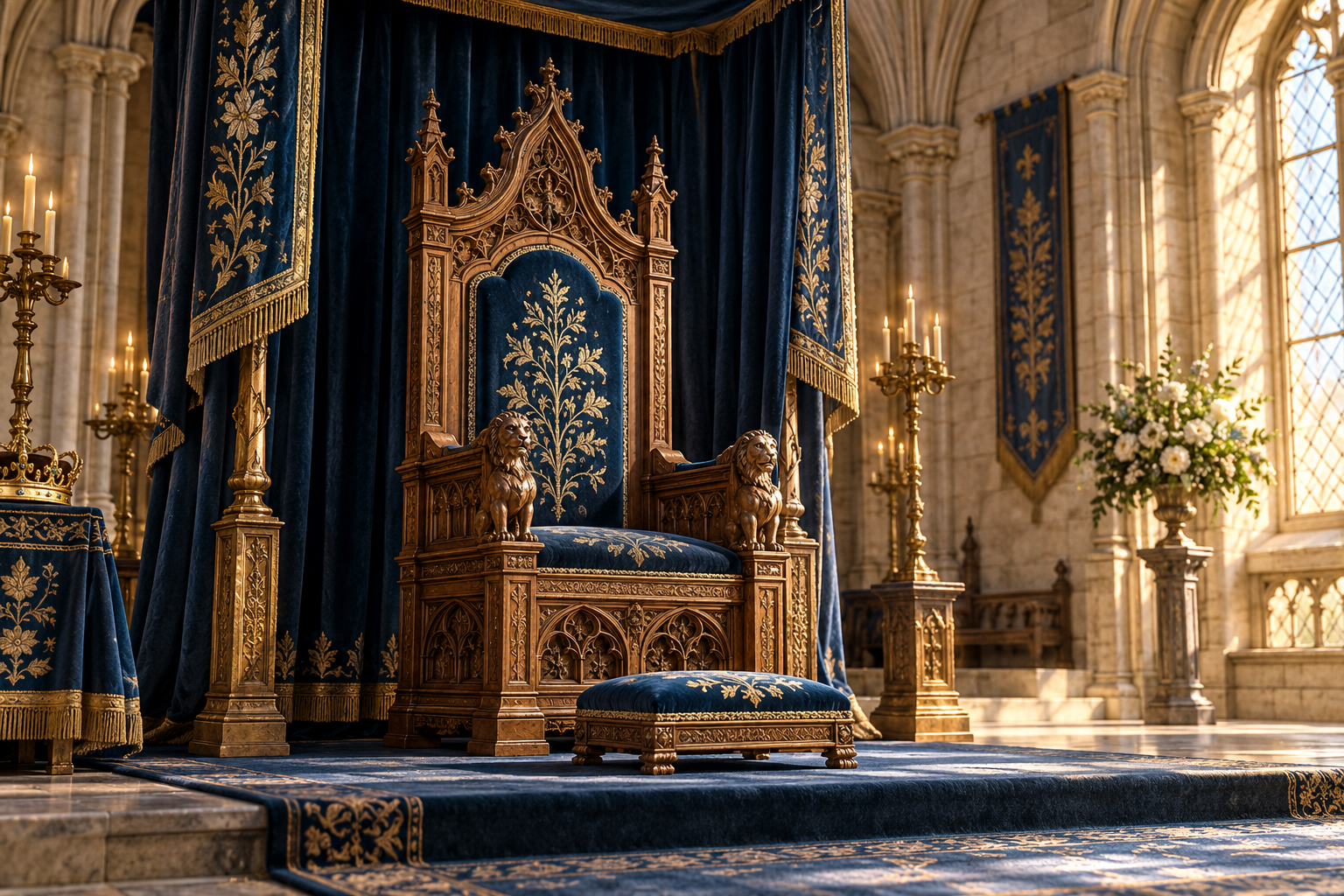
Ceremonial seating expresses a relationship between people, objects, and occasions. A throne may belong to a specific court, institution, community, or tradition, and its meaning cannot be read from ornament alone. Royal Thrones & Ceremonial Traditions explores these seats through their documented settings and physical design. Compare the chair with the platform, canopy, textiles, insignia, and spatial arrangements around it. Notice how approach, visibility, and the seated figure contribute to the ceremony. Traditions from different regions and periods should retain their own identities rather than becoming a single generic royal style. A replacement cushion, altered crest, or later display arrangement can also change what a modern visitor sees. This section connects careful object research with design curiosity. It asks how materials, proportions, symbols, and craftsmanship support a particular purpose, and what contemporary seating designers can learn without stripping references of their context. From restrained forms to elaborate ensembles, the most revealing examples show how a physical seat participates in an occasion. Understanding that relationship creates a richer foundation for inspiration than simply collecting impressive images of decorated chairs.
Throne Foundations
A ceremonial throne belongs to a particular occasion and community. Begin with the role of the occupant, the sequence of the event, and the relationship between the seat and its audience. Then examine the chair itself.
A canopy, textile, platform, or carefully controlled approach may contribute as much as carving. Describe a specific example in its own context rather than treating all royal seating as one decorative style. This approach makes comparison more useful and keeps cultural distinctions visible.
Royal Facts
The same chair may appear differently when dressed for an occasion, displayed in a collection, or photographed without its surrounding ensemble. Separate the furniture from removable furnishings when describing it.
A ceremonial use date may differ from the chair's fabrication date, and later alterations may change the form now on view. When a source identifies replacement upholstery or restored ornament, preserve that distinction. The visible object can contain several periods of work rather than one untouched historical moment.
Royal Picks
Choose references that explain both the object and its use: collection records, dated ceremony photographs, floor plans, and descriptions from the institution responsible for the setting. Compare a full-room view with close views of the seat.
For a contemporary ceremonial design, add clothing references and the actual event sequence to the design brief. These materials help decide what must remain visible, where hands rest, and how the occupant approaches without reducing the project to a search for impressive ornament.
Behind the Throne
Trace the ceremony around the furniture. Where does the occupant pause, turn, sit, and stand? What can observers see from the sides?
A strong front elevation may hide someone from an oblique angle, while a deep seat may complicate formal clothing. Treat emblems and textiles as planned components with their own placement and handling requirements. A removable crest should leave a convincing chair when absent. Practical choreography can shape the finished appearance as strongly as the initial decorative sketch.
Throne Wonders
Explore how authority changes when the surroundings change. Imagine the same restrained seat beneath a broad canopy, alone against a wall, and among several identical chairs. Its physical form remains constant, but its visual role changes.
Repetition can emphasize shared status; isolation can emphasize an individual. A ceremonial design can therefore become memorable through spacing, light, and sequence rather than added bulk. This is a useful creative exercise, not a universal explanation of what every historical tradition intended.
Throne FAQs
Must a throne be elevated? No; visibility and ceremonial purpose can be addressed in several ways, with any platform considered separately.
Can significant symbols be used simply because they look attractive? Research their meaning and seek appropriate cultural guidance before making them central to a design.
Is a royal throne necessarily the largest chair in a room? Size alone does not define its role. Identify the documented function and setting rather than assigning status solely from ornament or dimensions.