
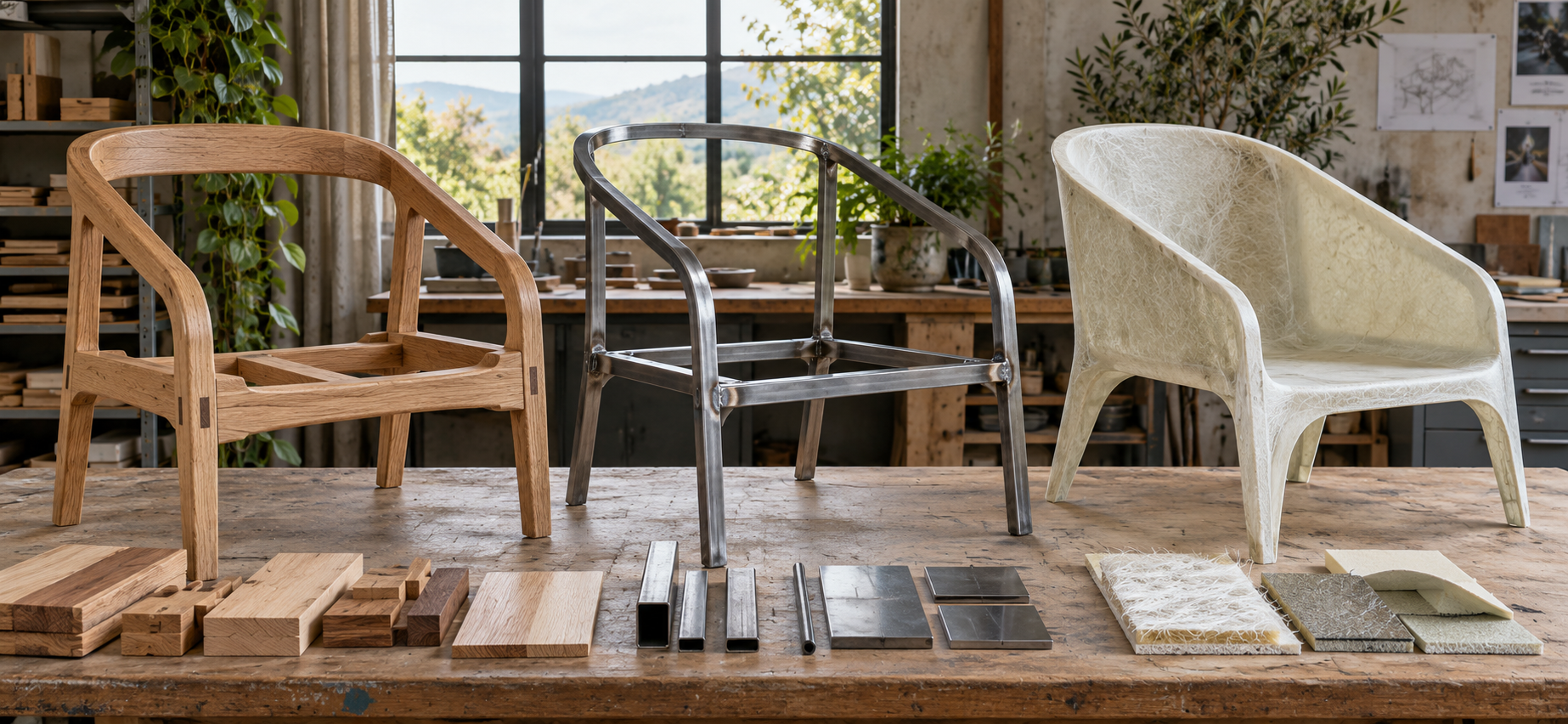
Materials give statement seating both its physical behavior and its visible character. Timber can express grain and craftsmanship, metal can define slender frameworks, and sculpted skins can create forms that appear much heavier or stranger than their underlying construction. Choosing between them starts with the role each material must play. This section compares material approaches for thrones, sculptural chairs, oversized seating, and themed displays. We separate supporting structure, decorative surfaces, upholstery, and finishes so that unlike functions are not confused. Weight, shape, exposure, repairability, handling, and intended contact all influence a sensible comparison. A material that suits a temporary display shell may be inappropriate for an occupied structural component, while a durable framework may still need a carefully developed surface system. Discover how to compare complete construction approaches instead of judging a project by a single material label. Samples, specifications, and relevant fabrication experience help turn broad preferences into useful decisions. The aim is to understand tradeoffs clearly enough to support an imaginative design with a coherent and appropriate material strategy.
Throne Foundations
Assign materials to jobs before comparing them. Structural support, sculptural volume, upholstery, contact surfaces, and decorative finish need not use the same material. A chair that appears metallic may combine a frame, a separate shell, and a surface treatment.
Describe that assembly clearly. Then compare alternatives against the same intended use and setting. The useful question is not whether wood, metal, foam, or a composite is universally best, but which proposed combination serves the particular design and its operating life.
Royal Facts
Material names alone do not predict the finished object's weight or behavior. Geometry, thickness, internal arrangement, connections, and protective layers all matter. A hollow form and a solid form are not equivalent comparisons.
Nor does a stone-like finish establish a stone substrate. Record the specific proposed material and its role rather than treating a broad family name as a specification. Separate documented properties from visual impressions, especially when comparing a scenic decorative component with an occupied supporting assembly.
Royal Picks
Request representative samples of the complete proposed surface system, including the substrate and preparation where relevant. Compare a finished edge or curve as well as a flat face.
Ask for drawings that show which material performs each job and how the interfaces are resolved. Select comparison criteria around the project: transport weight, detailed shaping, repeated handling, finish character, or access for repair. A useful material board combines appearance with enough assembly information to explain what the viewer is actually seeing.
Behind the Throne
Pay attention to interfaces. An upholstered panel meeting a hard shell, a decorative skin attached to a frame, and a removable crest each introduce different connection questions.
Consider how materials are finished before assembly and whether future repair requires separating them. A durable visible surface may still be difficult to restore if its backing cannot be reached. Discuss the actual proposed combination with the fabricator, including care and replacement, rather than assuming independently attractive material choices will automatically work well together.
Throne Wonders
Scenic design can separate visual identity from substance. A large form can suggest carved stone, aged metal, or flowing timber without using those materials throughout.
The creative challenge is to make the illusion coherent at edges, joints, and close viewing distances while keeping the physical assembly appropriate to its role. Compare a literal material approach with a scenic interpretation of the same silhouette. Each offers different possibilities for texture, weight, handling, and repair; neither should be judged from the front photograph alone.
Throne FAQs
Which material should be chosen first? Begin with the function and requirements of each part of the assembly.
Does a heavier chair necessarily have better construction? Weight alone does not establish suitability or workmanship.
Can one material provide the structure and another the visual surface? Yes, when the combined assembly is properly developed.
How should competing proposals be compared? Use consistent dimensions, intended interaction, exposure, finish expectations, and maintenance needs, then examine the documented construction rather than relying on material labels.
Wood, Metal, or Scenic Materials: Choosing a Seating Construction Approach
A carved wood throne, a metal-framed seat, and a convincing scenic prop can look equally dramatic while solving different problems. Learn how to compare their construction as complete systems instead of judging the visible surface alone.