
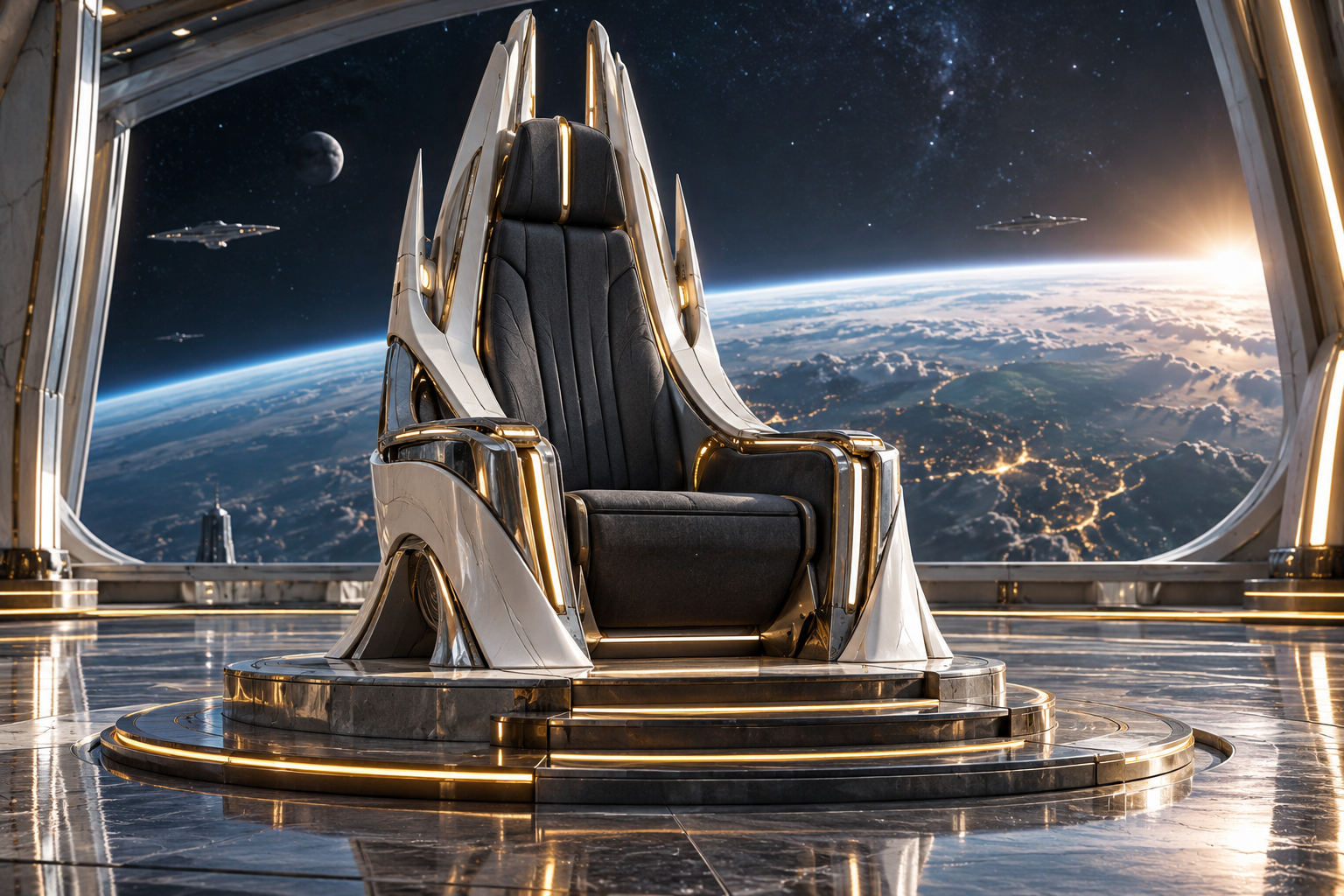
Futuristic seating can suggest a new world through disciplined physical choices. Folded planes, exposed frameworks, metallic surfaces, integrated light, and carefully controlled openings can create a strong identity without filling every surface with imaginary controls. Futuristic & Industrial Seating explores that vocabulary for statement chairs, themed environments, scenic props, and architectural interiors. Begin with the intended occupant and the shape of the seating itself. Then consider which visible details express fabrication, technology, or an industrial influence. A connection can be concealed for a seamless effect or emphasized as part of the design. Lighting can define an edge or reveal a recess, but it should support the composition rather than obscure it. This section connects speculative appearance with practical questions about physical materials, contact surfaces, access, and maintenance. Concepts remain concepts until their construction and intended use are developed. Explore how original forms can feel advanced through proportion and material logic as well as special effects. The most convincing result gives each visible feature a reason to exist, creating a coherent seat that belongs within its imagined or actual environment.
Throne Foundations
Give the concept a consistent design rule: folded planes, continuous shells, exposed assemblies, or a repeated mechanical rhythm. Then decide how that rule shapes the back, arms, base, and occupied area.
Futuristic seating does not need to look like a control station, and industrial seating does not need rough contact surfaces. A strong concept can use one unusual relationship, such as a smooth seat suspended visually within a heavy frame. The other details should explain and support that relationship.
Royal Facts
Distinguish the appearance of construction from actual construction. A bolt-like ornament may be decorative, while a concealed fixing may carry an important assembly role. Brushed, polished, painted, and textured surfaces also read differently under changing light.
Review the finish on the proposed shape rather than by material name alone. Large uninterrupted panels can make small misalignments conspicuous, so edge consistency and panel spacing deserve attention. A convincing machine-inspired object often depends on orderly transitions rather than the number of visible components.
Royal Picks
Useful development tools include a silhouette sheet, a section through the occupied area, and sample panels showing the intended seams and finishes. Add a night or low-light view only if illumination is part of the project.
For exposed-frame concepts, study where hands and clothing approach the frame. For shell concepts, study how the base, cushions, and service panels meet the shell. Select references that answer those questions instead of assembling a board of unrelated vehicles, robots, and glowing screens.
Behind the Throne
Integrate service access before the outer form is finalized. A light source behind a translucent panel needs a reachable replacement path, and wiring should have a planned route through the assembly.
Concealed components still affect panel depth and attachment. Work through the sequence of assembly so that a finished cover does not block the next fixing. If a visible control has no function, decide whether it contributes to the scenic story or simply creates a misleading invitation to press it.
Throne Wonders
Try building a futuristic identity without illumination. A narrow reveal, repeated rib, unexpected support position, or contrast between matte and reflective surfaces can suggest a speculative world in daylight.
Then consider what a restrained light accent adds. This exercise prevents effects from carrying the entire concept. Industrial character can also emerge from repairable, clearly separated components: the way a cushion lifts away or a panel meets a frame can become an intentional visual feature rather than an inconvenience to hide.
Throne FAQs
Does metal have to be the dominant material? No; the visual language can be developed through several materials and finishes.
Are screens necessary? Only when their content and operation support the experience.
Can an industrial chair still be comfortable? Yes; develop the occupant-facing surfaces separately from the expressive outer structure.
How should decorative controls be handled? Make their role clear in the experience brief, especially when visitors may expect a response. A nonfunctional detail should not be mistaken for an essential operating control.