
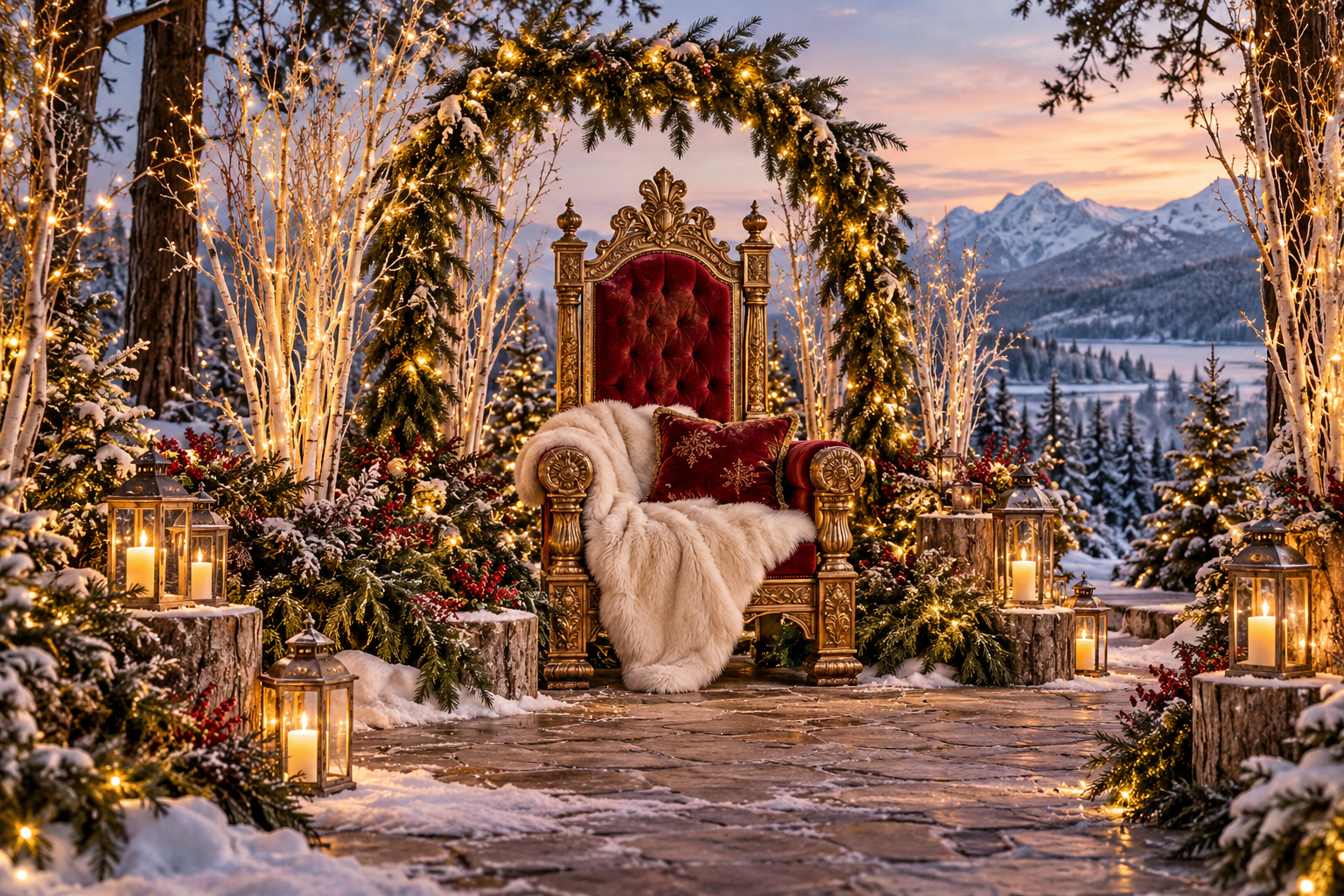
Seasonal styling can transform one familiar throne into a winter court, autumn gathering place, spring garden scene, or summer focal point. Seasonal & Holiday Installations explores how to create those changes around a coherent core. Start with the mood and audience, then choose a limited set of motifs, textures, and colors that carry the theme. A portrait installation needs different decisions from an observation-only window display, particularly around access, contact surfaces, and the occupied composition. This section considers reusable modules, replaceable dressing, daily resets, venue requirements, and the practical life of the display between seasons. Fragile ornament needs protected storage, while labels and setup photographs help the scene return without depending on one decorator's memory. Outdoor-looking imagery also deserves a separate check against actual exposure conditions. Respectful use of cultural symbols keeps the theme meaningful rather than treating traditions as interchangeable decoration. By planning installation, public use, removal, and repair together, you can make seasonal grandeur easier to maintain, allowing the throne to feel newly imagined each time without rebuilding every part of the experience.
Throne Foundations
- Choose the display's seasonal story before collecting ornaments and themed accessories.
- Distinguish an observation-only scene from a throne intended for guest portraits.
- Plan a reusable core with clearly identified seasonal additions.
- Match the palette to the theme without requiring every surface to use a holiday color.
- Coordinate the throne with backdrop, floor treatment, lighting, and approach.
- Keep decorations clear of contact areas and the intended route to the seat.
- Specify the actual indoor or outdoor exposure before selecting materials.
- Build installation and removal dates into the display plan.
- Provide access for cleaning and replacing seasonal elements.
- Document packing and storage so the scene can return in good condition.
Royal Facts
- A seasonal display's working life includes installation, public use, removal, and storage.
- A portrait display and a window display are viewed from different distances and angles.
- Artificial snow, foliage, and textiles can have different care and venue-documentation requirements.
- A festive theme does not establish that every visitor shares the same holiday traditions.
- A large decorative surround can reduce usable circulation even when the throne remains stationary.
- An outdoor-looking prop is not automatically suitable for actual outdoor conditions.
- Repeated assembly can wear attachment points before visible decorative surfaces deteriorate.
- Color and texture can communicate a season without relying on literal symbols everywhere.
- A display reused next year may need replacement materials even when its main structure remains sound.
- A labeled storage photograph can preserve arrangement more reliably than memory.
Royal Picks
- Create a theme board naming the desired mood and the limited set of recurring motifs.
- Use a module inventory that separates permanent components from seasonal dressing.
- Prepare a full setup photograph with numbered component references.
- Keep spare ornaments for details exposed to frequent handling.
- Select cleaning methods supported for the actual decorative materials.
- Plan containers that protect dimensional ornament instead of compressing it flat.
- Use a changeover checklist covering removal, inspection, repair, and the next installation.
- Test the finished scene with a seated person before approving portrait framing.
- Record current venue requirements for materials and installed effects.
- Keep a repair list immediately after removal while damage is easy to identify.
Behind the Throne
- A snow-covered visual effect can obscure the throne's shape unless darker or warmer accents preserve its outline.
- A reusable base is easier to adapt when seasonal ornaments attach to planned interfaces.
- A display viewed through glass may show reflections that were absent during indoor setup.
- A tiny decorative detail can disappear in a wide holiday photograph while still requiring substantial installation time.
- An apparently dry storage room can still contain temperature or humidity changes relevant to the materials.
- A winter-themed throne can feel welcoming through fabric and light without using a conventional red-and-green scheme.
- A seasonal scene may need daily resetting when guests reposition cushions and handheld accessories.
- Fragile ornaments stored attached to a large panel can be damaged when the panel is handled next season.
- A removal crew benefits from the same clear component labels used by the installation crew.
- A thoughtful theme respects the meaning of cultural symbols rather than combining unrelated traditions as generic decoration.
Throne Wonders
- Create a winter woodland throne using pale branches, warm upholstery, and restrained metallic accents.
- Design an autumn harvest seat framed by layered leaf shapes and deep amber tones.
- Explore a spring court with interchangeable blossom panels.
- Develop a summer festival throne using bright textiles and open, airy framing.
- Imagine a storybook holiday seat surrounded by oversized wrapped-book shapes.
- Create a moonlit seasonal display with a seated portrait area and an alternative standing composition.
- Build reversible panels that support two seasonal identities from one scenic module.
- Design a community-created backdrop whose ornaments can be removed and preserved individually.
- Compare a literal holiday scene with a subtler palette-led interpretation.
- Document a year's seasonal transformations around the same identifiable throne silhouette.
Throne FAQs
- Can one throne serve several holidays? Yes. Plan a neutral or adaptable core with documented removable dressing.
- Should every decoration match the holiday palette? No. Contrast and restrained accents can make the theme clearer than uniform color coverage.
- Can guests sit in a seasonal display? Only when the throne and installation are explicitly intended and approved for that interaction.
- What changes for an outdoor installation? Specify actual exposure, anchoring or support needs, material suitability, maintenance, and venue review before installation.
- How do I simplify next year's setup? Label components, photograph the arrangement, preserve the inventory, and record repairs before storage.
- Why does the display look crowded in photographs? Decorations may compete with the sitter and throne; test the occupied scene through the intended crop.
- Should fragile pieces remain attached in storage? Choose packing based on their vulnerability and handling; removable protected storage may be more practical.
- How often should the scene be checked? Establish an inspection and reset routine appropriate to guest use, materials, environment, and the operating plan.
- How can seasonal themes remain inclusive? Use clear context, respectful symbolism, and thoughtful participation choices suited to the audience.
- What should happen at removal? Inspect, clean appropriately, document damage, separate components, and pack them with updated labels and repair notes.