
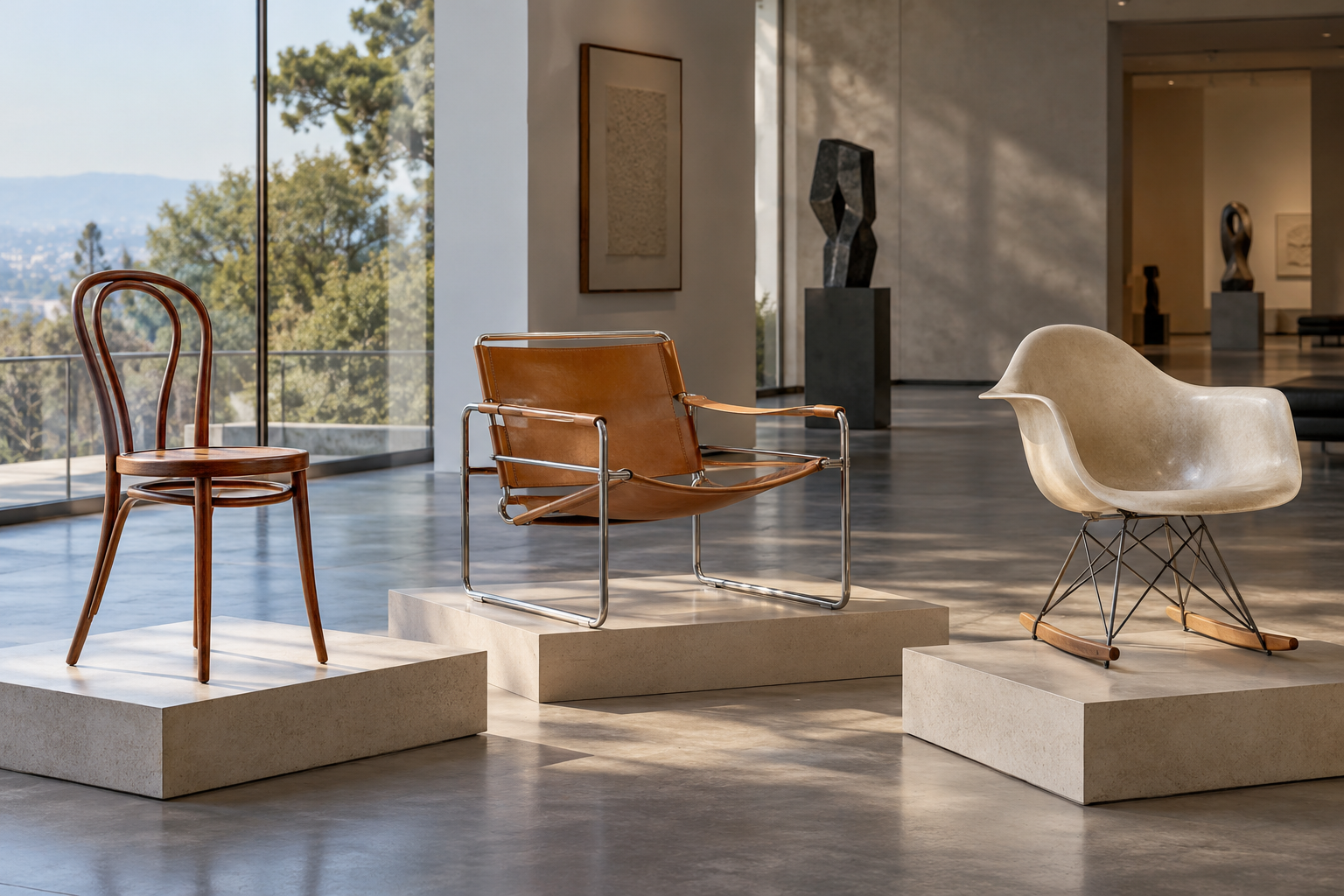
A famous chair can become recognizable through a single outline. Its reputation may come from an inventive construction method, a memorable setting, a designer's distinctive approach, or the way people have encountered it over time. Looking closely at iconic furniture reveals more than a list of celebrated names. It shows how proportions, materials, manufacturing, and cultural context combine to give an object lasting identity. This section approaches famous seating as a source of design understanding. We distinguish an original object from a later edition, reproduction, adaptation, or fictional interpretation, and we look for documentation before repeating a familiar story. A photograph can reveal the profile while concealing changes in scale, upholstery, or construction. Those differences matter when drawing lessons for a new project. Explore the relationships between recognizable forms and the environments that made them memorable. Rather than treating an icon as a shape to copy, consider the design problem it addressed and the choices that made its solution distinctive. That approach opens a richer path toward original statement seating.
Throne Foundations
Identify the particular chair before describing why it is famous. A design name can refer to an original object, a later authorized edition, a variation, or an imitation.
Record the attributed designer, maker, date, and version using reliable documentation. Then examine the problem the design addresses: posture, material use, production, visual expression, or a particular setting. This separates the chair's documented story from the familiarity of its outline and gives readers something more useful than a list of recognizable silhouettes.
Royal Facts
Design date and production date are not interchangeable. A later example may carry a well-known design while using different materials or details from an early version. Dimensions can also vary across editions.
Labels such as original, vintage, and inspired by should therefore be examined rather than repeated uncritically. When comparing images, check whether they actually show the same version. A familiar shape alone cannot establish attribution, authenticity, condition, or the construction of the particular object in view.
Royal Picks
Start with museum collection records, established maker archives, and exhibition documentation that identify the object precisely. Look for dimensions, material descriptions, and views beyond the standard front photograph.
Pair a polished presentation view with a close look at a joint or underside when available. For a design study, choose references that explain a specific achievement, such as a continuous form or economical assembly. A small, well-documented set is more informative than a broad collection of unattributed images carrying the same famous name.
Behind the Throne
Look beneath recognition to the choices that made the form possible. A broad curve may relate to a material process; a particular joint may allow assembly or replacement; an upholstered section may conceal a more restrained supporting form.
Explain those relationships only as far as the evidence supports them. Also consider how display and photography shape perception. A chair isolated in a gallery can read differently from the same design within a crowded room, where its intended relationship to surrounding furniture becomes clearer.
Throne Wonders
Try viewing an iconic chair without its name attached. Describe its proportions, repeated shapes, material contrasts, and occupied posture before reading the attribution. Then compare those observations with the documented design story.
This exercise helps distinguish what is visible from what fame encourages us to assume. A memorable piece may depend on a surprisingly small number of decisions. Studying that economy can inspire an original project without reproducing the recognizable outline or treating an admired design as a universal answer.
Throne FAQs
Does a familiar silhouette prove who made a chair? No; attribution needs documentation for the specific object.
Can different editions share a design name? Yes, so state the version and recorded details.
Should an iconic chair be judged only by appearance? Consider its intended use, construction, and historical context as well.
How can it inform a new seating concept? Study the underlying design question and the clarity of its solution, then develop a distinct form suited to the new project's own requirements.