
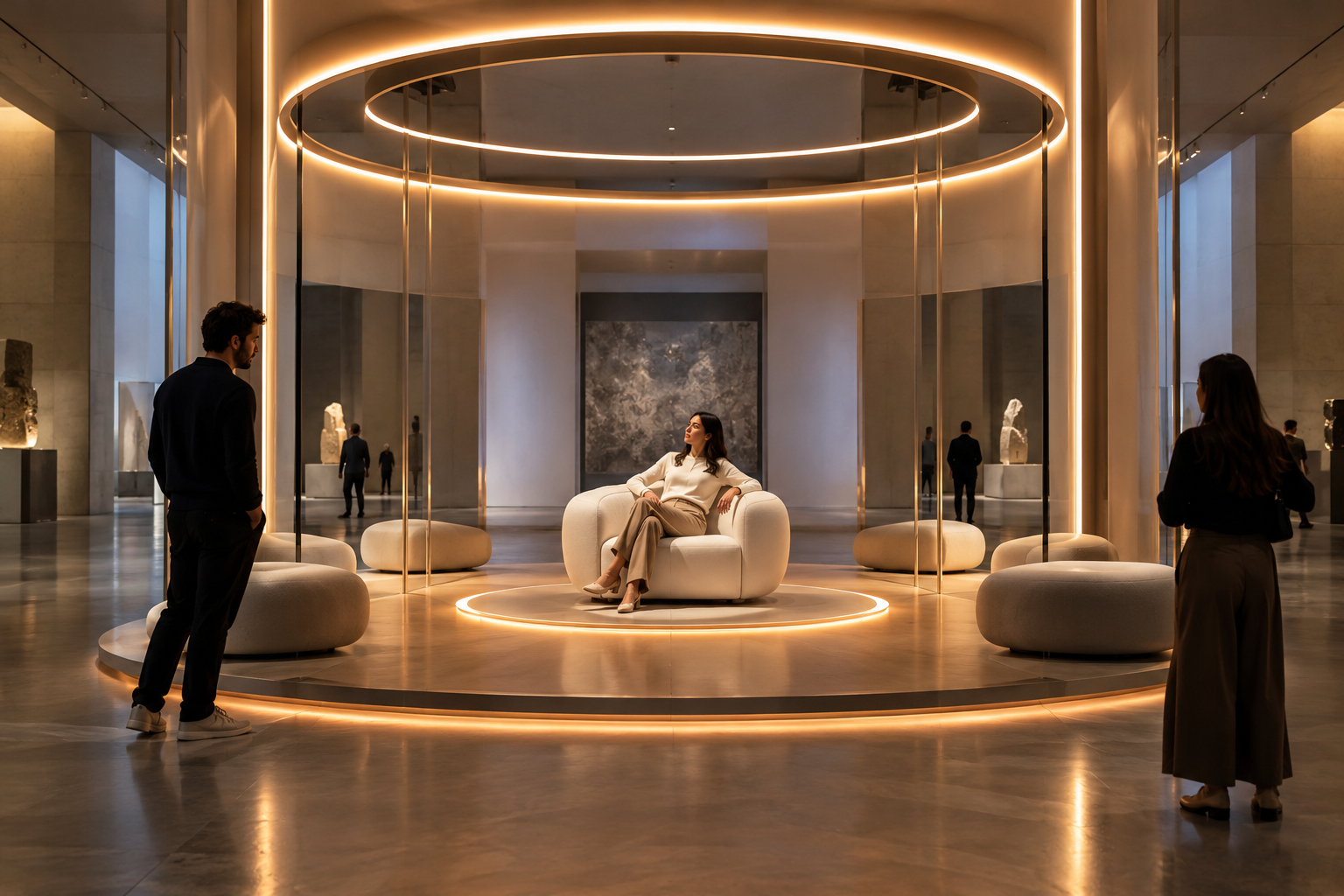
Interactive seating gives visitors something to discover through their own presence or actions. A chair might reveal a hidden view, frame a playful pose, respond with light, or place people within a shared scene. The interaction can be simple and physical; it does not need a screen or a complicated mechanism. This section explores how seating becomes an experience through a clear invitation, an understandable response, and a satisfying moment of participation. We consider the relationship between the seated person, surrounding visitors, and the object itself. A successful concept should make sense before a long explanation is required. Timing, reach, visibility, sound, and reset behavior all influence whether the encounter feels natural. Maintenance and operation matter too, especially when many people use the installation in succession. Discover ways to connect sculptural seating with storytelling, sensory detail, and collective play. From a carefully framed optical effect to a responsive themed environment, the strongest interactions support the chair's central idea and remain enjoyable when viewed by companions as well as by the person taking part.
Throne Foundations
Describe the experience as an invitation, an action, and a response. What tells the visitor that participation is possible? What do they do, and how do they recognize the result?
A change of viewpoint, a shared pose, or a framed reveal can be interactive without electronics. Begin with that simple sequence before choosing sensors or effects. The seating form should make the intended encounter understandable, while its physical design must support the actual activities included in the brief.
Royal Facts
The participant and the observer may experience different things. A seated visitor can see a nearby control while companions notice a larger visual change.
Timing matters as much as appearance: a response that arrives too late can seem unrelated to the action, while a sequence still running may confuse the next person. Define the starting state, active state, and reset. Also distinguish a feature that visitors may touch from decorative elements that merely resemble controls or moving parts.
Royal Picks
Draw a short storyboard showing approach, participation, response, photograph, and departure. Test it with a rough stand-in before investing in detailed scenery.
Include someone unfamiliar with the concept and observe whether the invitation makes sense without a lengthy explanation. For a group interaction, show where each person stands or sits and what companions can see. Choose technology only after identifying the response it must deliver, the operating conditions, and the staff who will maintain or supervise it.
Behind the Throne
Plan for overlapping visitors. One person may linger while another approaches, or a group may try the action at once. Establish how the experience handles those ordinary variations.
Controls and service access should have deliberate locations, and any moving or powered system needs appropriate specialist development. Also define an unavailable state: the seat should not issue a confusing invitation when its interactive element is out of service. A coherent fallback can preserve the visual attraction while staff address the feature.
Throne Wonders
Participation can come from composition alone. Two seats might create a shared visual illusion when occupied together, or a viewpoint through the back might reveal a hidden scene.
Try designing an experience that works without a screen, then consider whether an effect adds something essential. The most engaging moment may be the discovery itself. Observers can become part of that discovery by helping frame a photograph or noticing a detail the seated participant cannot see directly.
Throne FAQs
Does interactive mean mechanical or electronic? No; movement through a space, shared positioning, and changing viewpoints can also create participation.
Should every visitor receive exactly the same experience? Define which variations are intended and which create confusion.
How is the reset handled? Include it in the storyboard and operating plan.
What should be tested first? Whether a newcomer understands the invitation and recognizes the response, before polishing the scenic details that surround the interaction.