
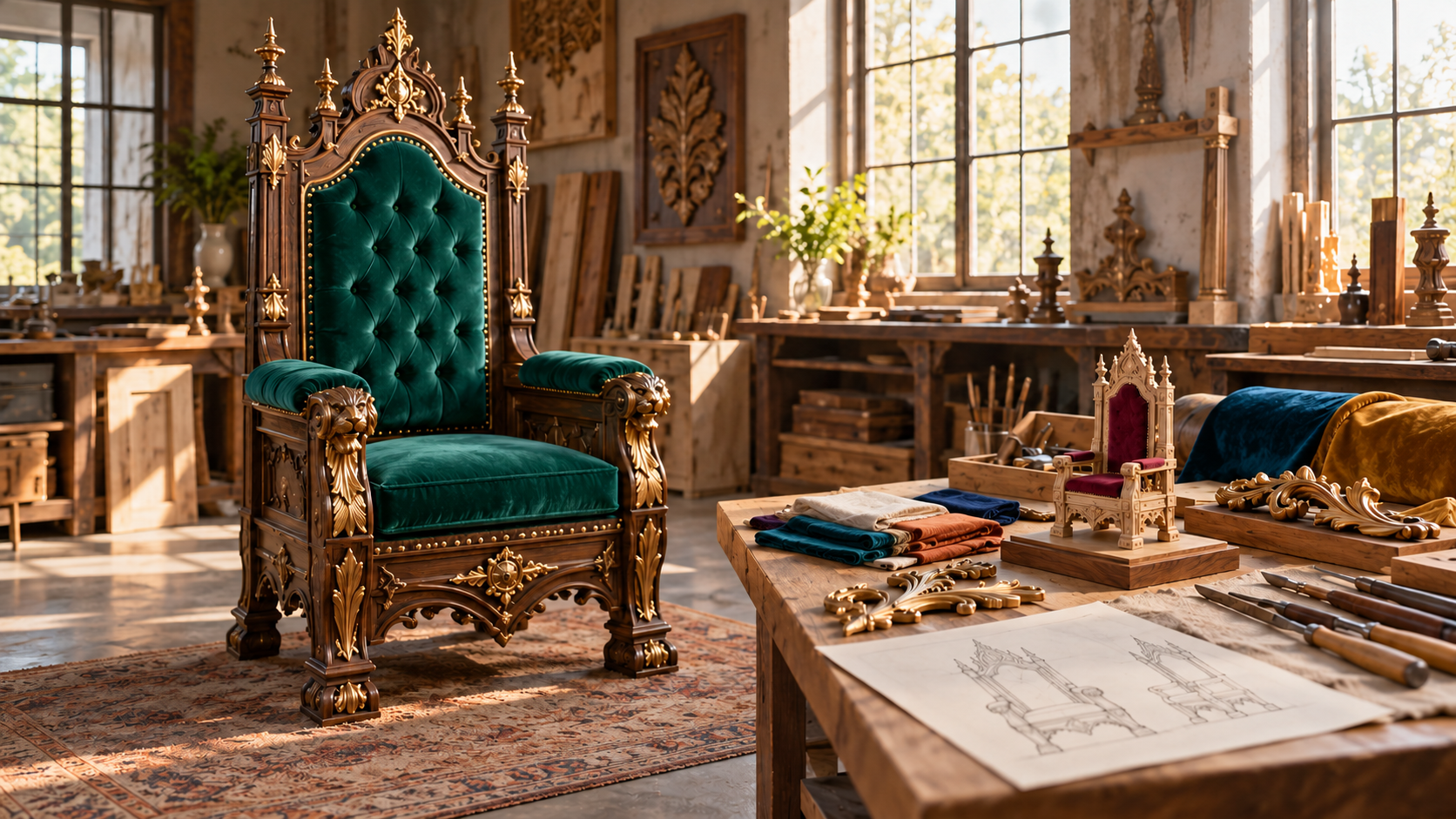
Extraordinary seating takes shape through ordinary physical decisions made with imagination and care. A frame supports a form, a shell creates a surface, upholstery defines contact, and a finish gives the object its final character. Materials & Fabrication explores how those layers work together in thrones, statement chairs, oversized seating, and scenic installations. We look at timber, metal, foam, composite skins, digital modeling, upholstery, and surface treatments as parts of a complete construction approach. The visible material does not always reveal what lies beneath it. A convincing stone-like surface may be scenic, while a lightweight-looking form may conceal a substantial support system. Understanding those distinctions helps turn visual inspiration into better questions for makers and designers. Explore how joints, connections, samples, access, and assembly influence a finished piece. This section offers context for fabrication choices rather than treating a photograph as a build specification. Whether a project is carved, welded, sculpted, upholstered, or digitally developed, the goal is a coherent relationship between the intended use, the physical structure, and the appearance that makes the seating memorable.
Throne Foundations
Separate supporting structure, decorative volume, contact surfaces, and finish layers. Each has a distinct job within the complete assembly.
Royal Facts
A material name does not establish performance. Geometry, connections, product specifications, exposure, and fabrication quality all affect the result.
Behind the Throne
Samples should reproduce the actual combination of substrate, preparation, adhesive where applicable, and finish. Testing isolated colors can hide compatibility problems.
Throne Wonders
Scenic techniques allow appearance and underlying construction to differ. That freedom can create imaginative forms while making clear design review especially important.
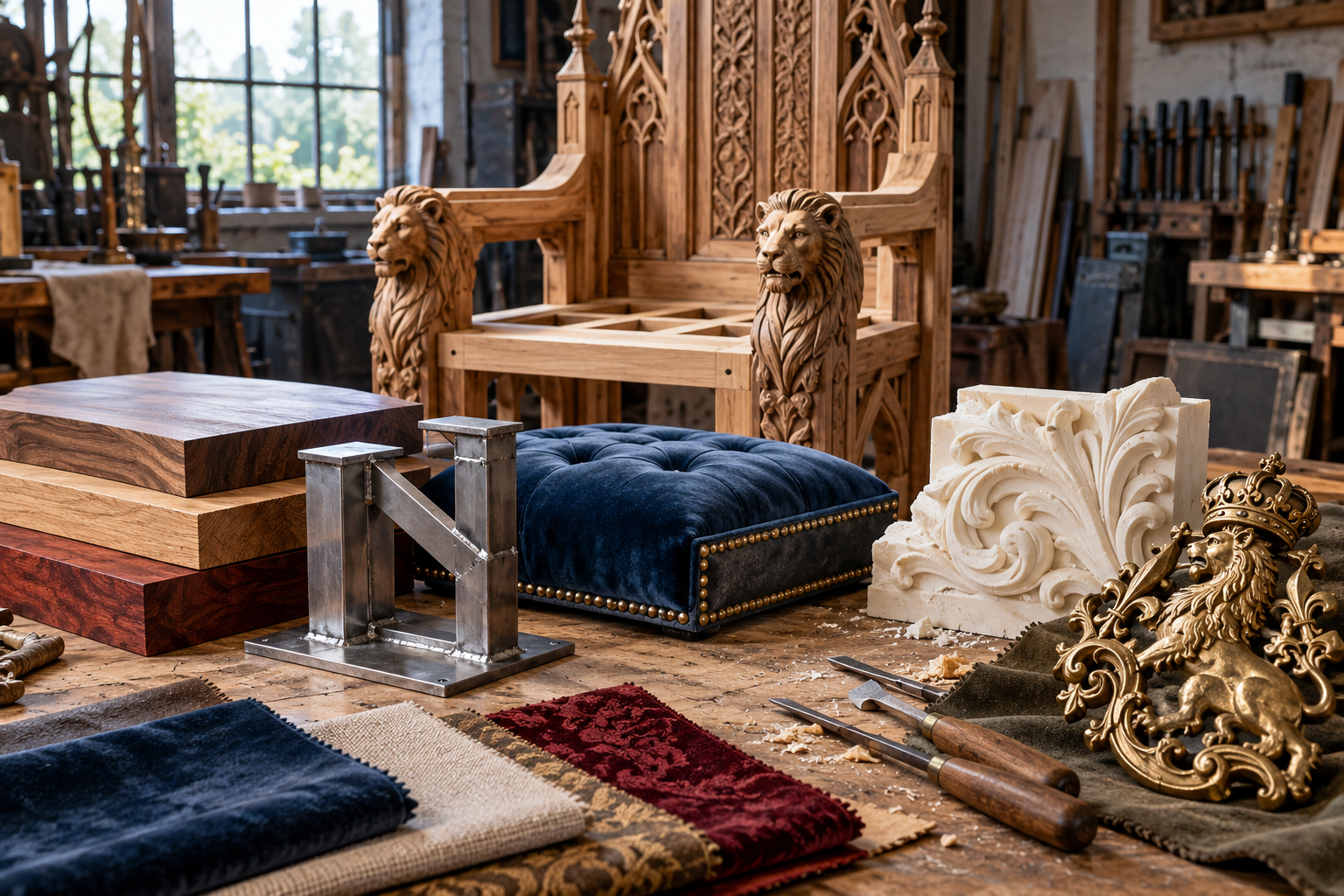
Materials & Structural Concepts
What looks like carved stone may be a lightweight scenic shell, and a gleaming gold surface may cover timber rather than precious metal. Throne materials deserve a closer look than their first impression allows. This section explains how solid wood, metal frameworks, upholstery, foam, resin,…
Read More »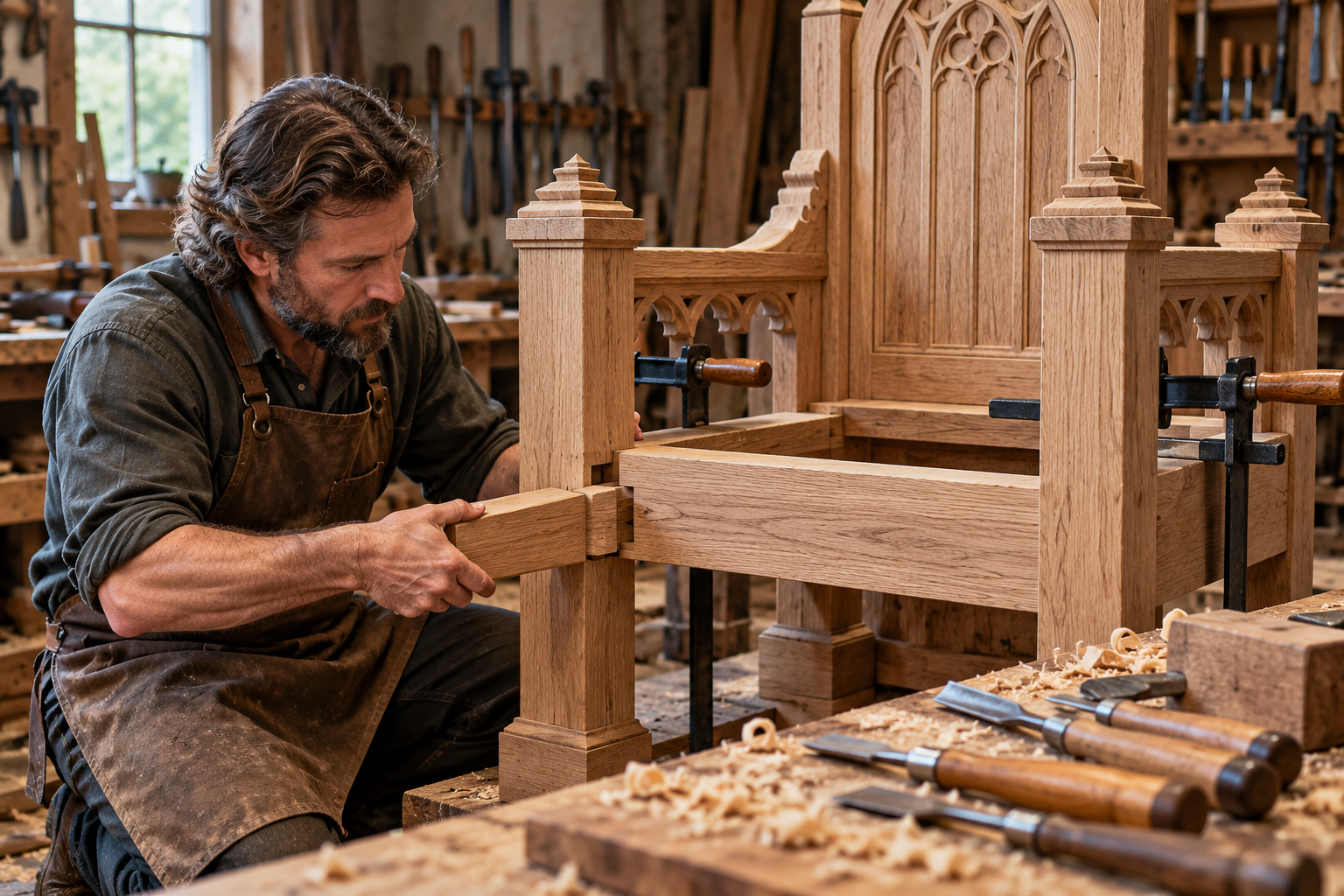
Woodworking & Joinery
The visible carving may define a wooden throne's character, but the frame beneath it determines how its parts work together. Woodworking & Joinery follows that relationship from selected stock to a documented assembly. Examine grain direction, leg and rail connections, curved components, panel movement, and…
Read More »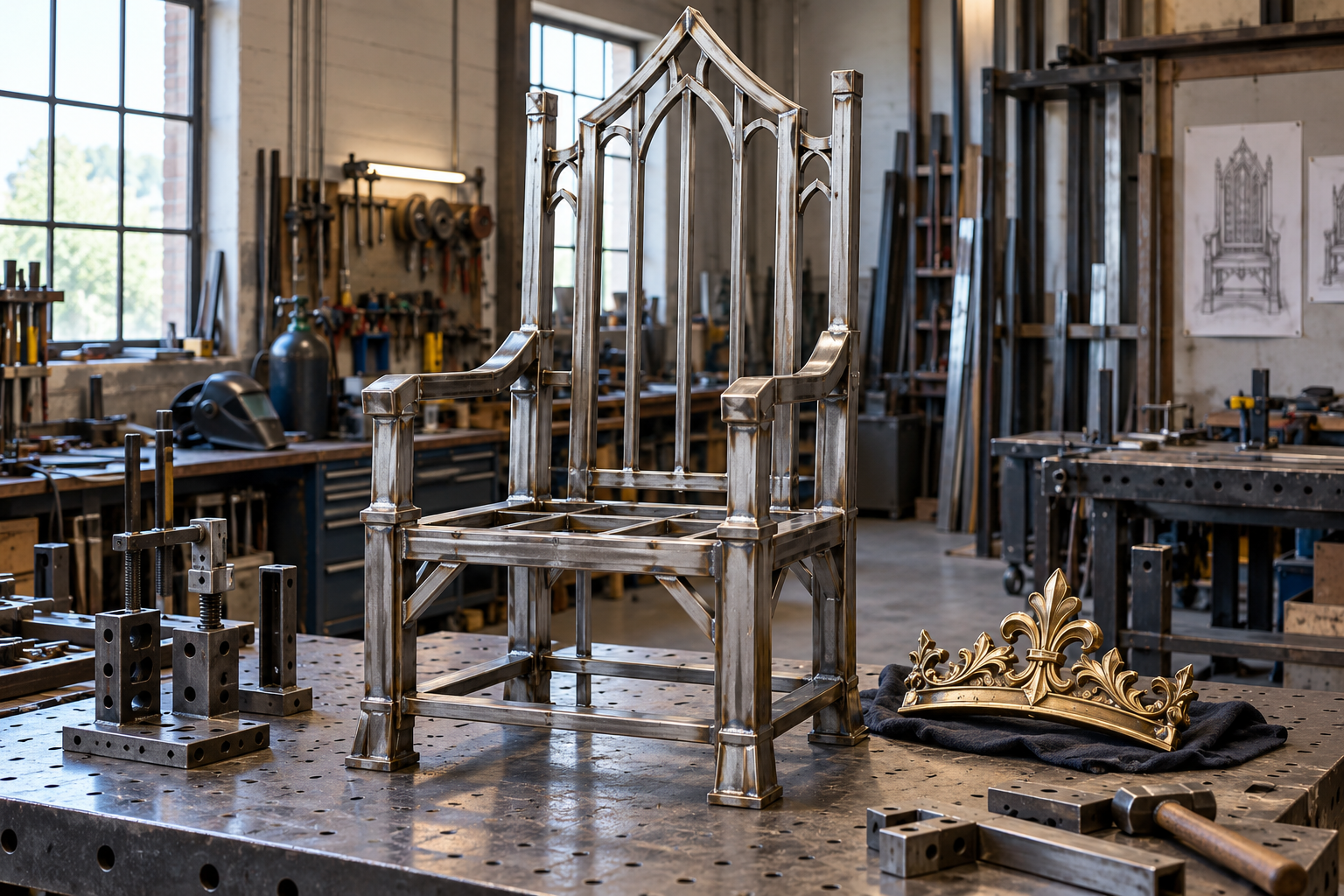
Metal Frames & Supports
An ornate throne can conceal a spare metal framework. Understanding that frame means looking beyond its finish to the material sections, connections, geometry, and intended use. Metal Frames & Supports explores the decisions that turn a sculptural outline into a fabrication brief. Compare welded, bolted,…
Read More »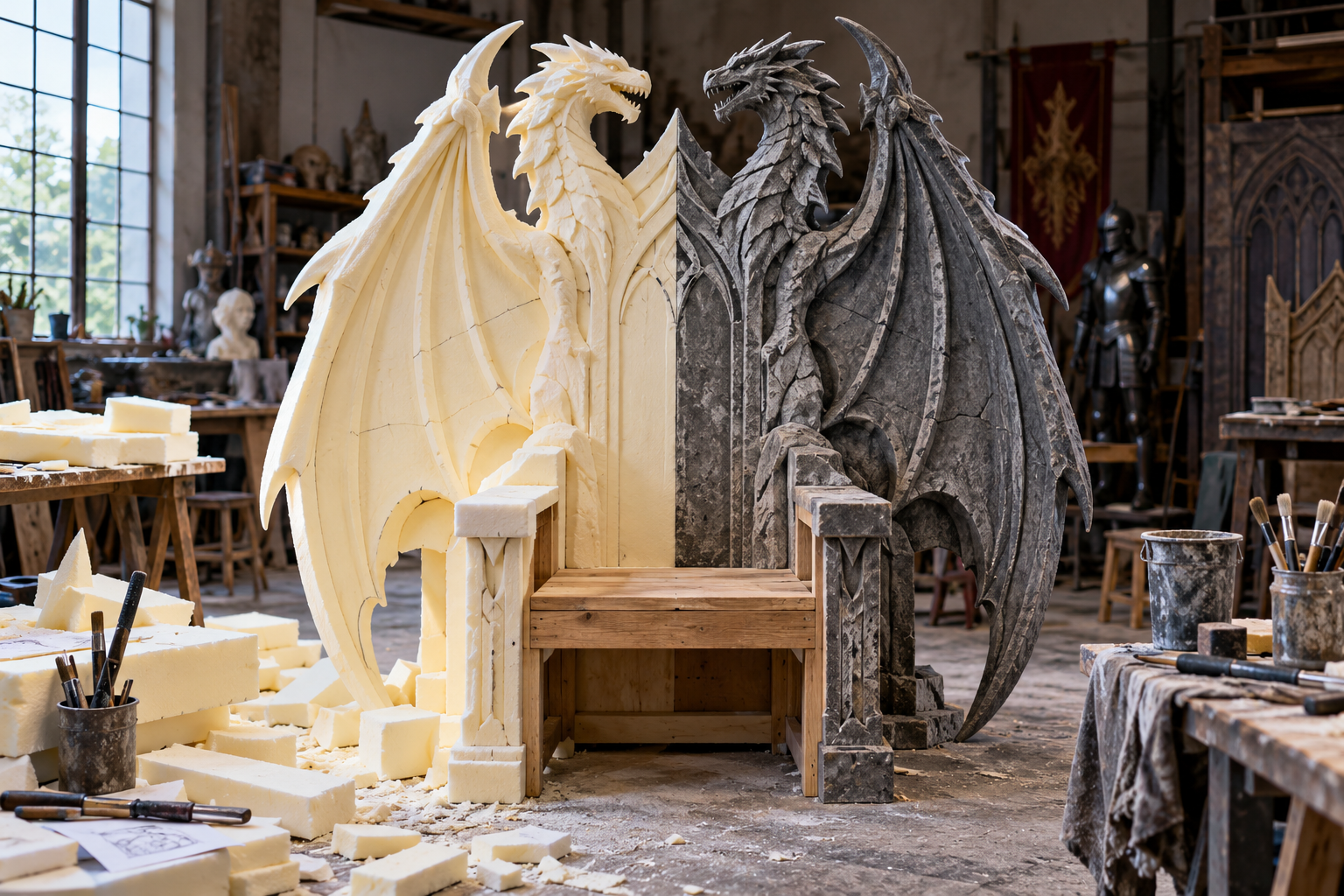
Foam & Scenic Construction
Scenic foam makes it possible to suggest monumental stone, tangled roots, enormous wings, or deeply carved ruins without reproducing the original material's mass. Foam & Scenic Construction explores how that illusion is developed through large forms, texture, coatings, and paint. Start by separating decorative volume…
Read More »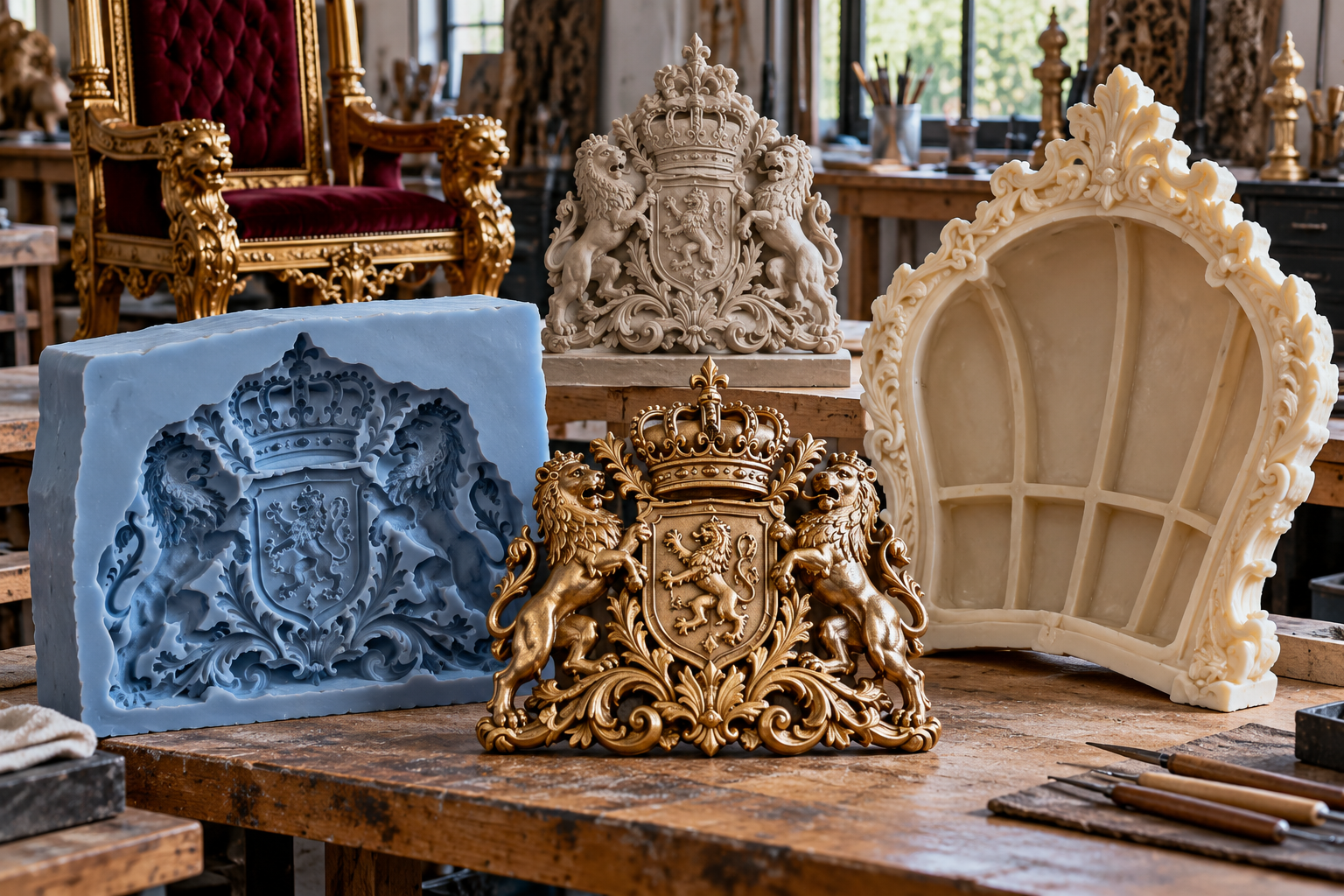
Resin, Fiberglass & Composite Skins
Repeated crests, sculpted creatures, elaborate borders, and translucent-looking accents can all begin with a carefully prepared master and a planned mold. Resin, Fiberglass & Composite Skins examines the choices behind those parts. Distinguish the master, mold, casting material, reinforcement, and finish rather than describing the…
Read More »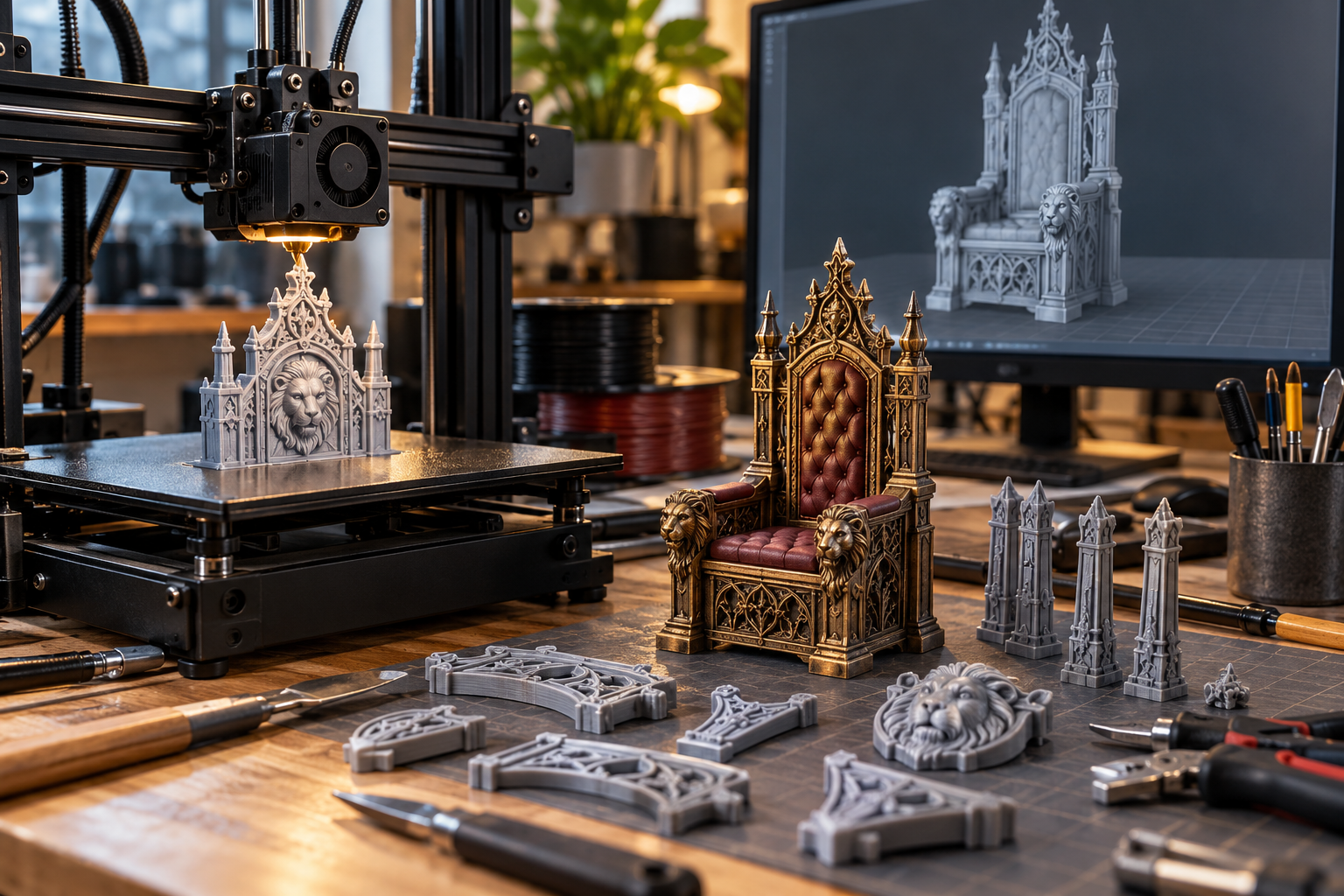
3D Modeling & Digital Fabrication
A digital throne can look complete long before it is ready to print. Thin ornament, hidden intersections, unsupported features, and perfectly fitting virtual connections can all become practical problems in the physical result. 3D Modeling & Digital Fabrication explores the route from visual concept to…
Read More »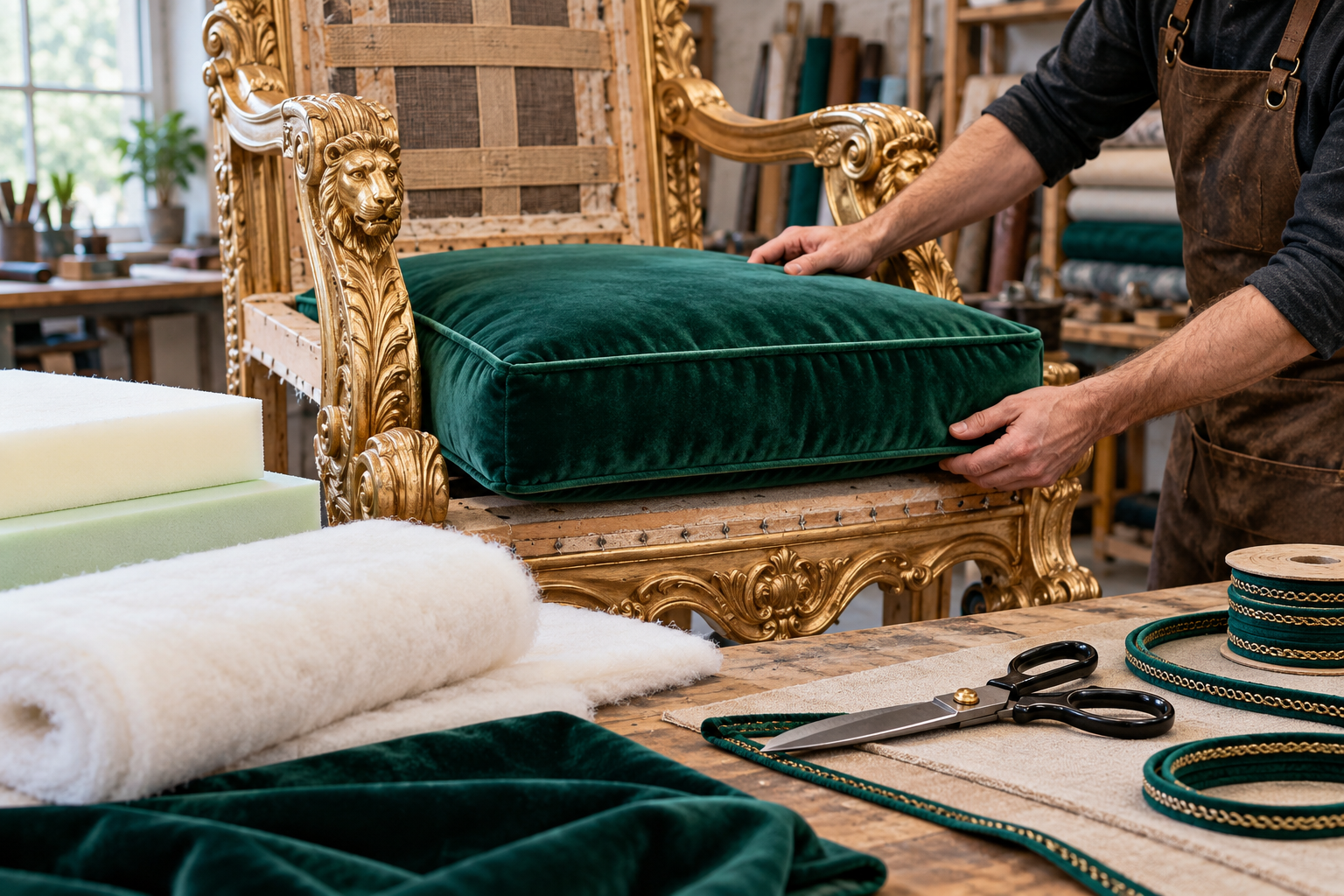
Upholstery & Cushion Making
A throne's fabric is only the visible face of its upholstery. Beneath it, support, foam, wrap, seams, and attachment determine how the seat feels and how it can be maintained. Upholstery & Cushion Making follows that complete system, from an irregular seat template to a…
Read More »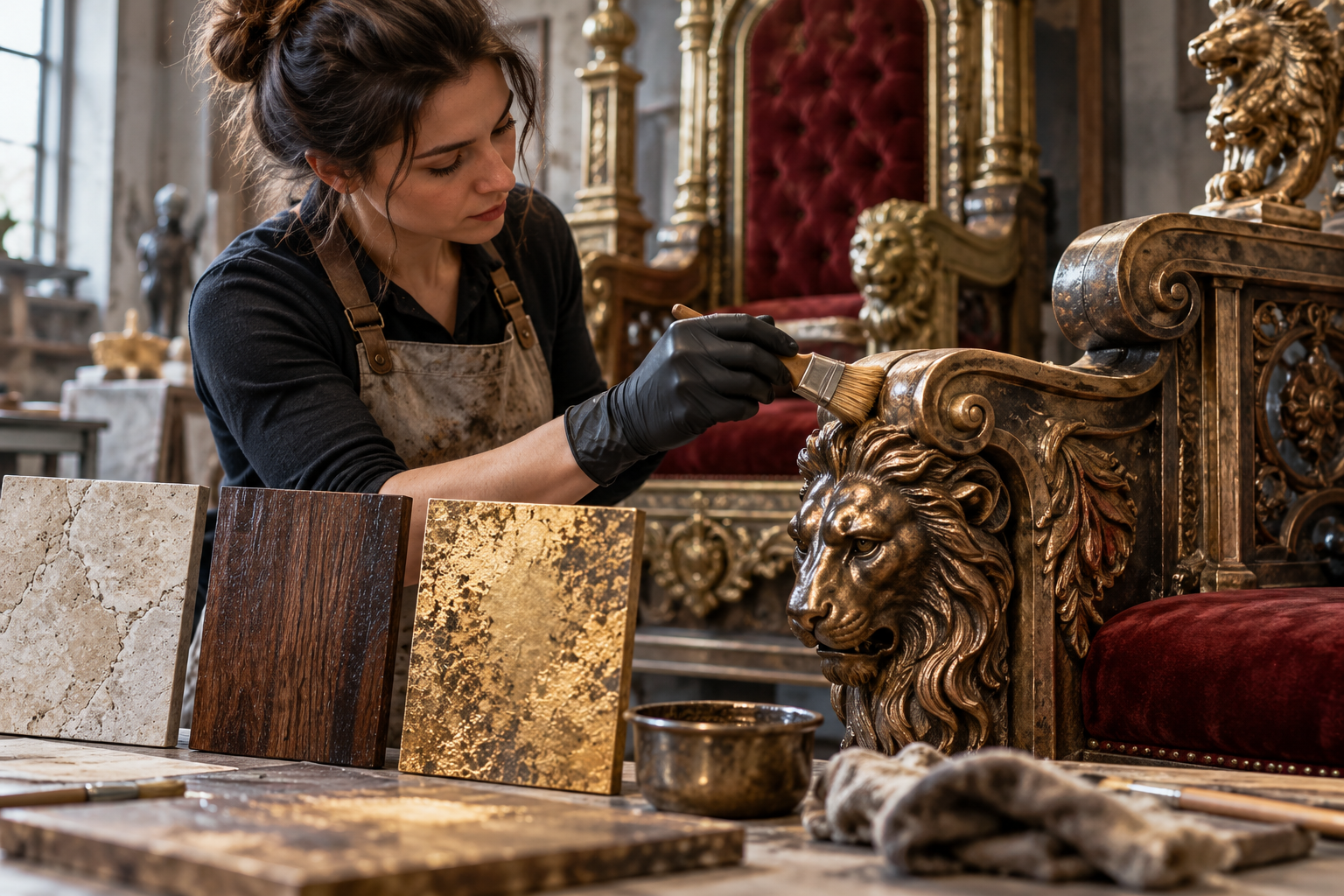
Painting, Texture & Surface Finishes
A finish does more than add color. It can suggest aged bronze, pale stone, polished timber, worn lacquer, or a material that belongs entirely to an imagined world. Painting, Texture & Surface Finishes explores how preparation, layered effects, texture, and sheen create that appearance. Identify…
Read More »