
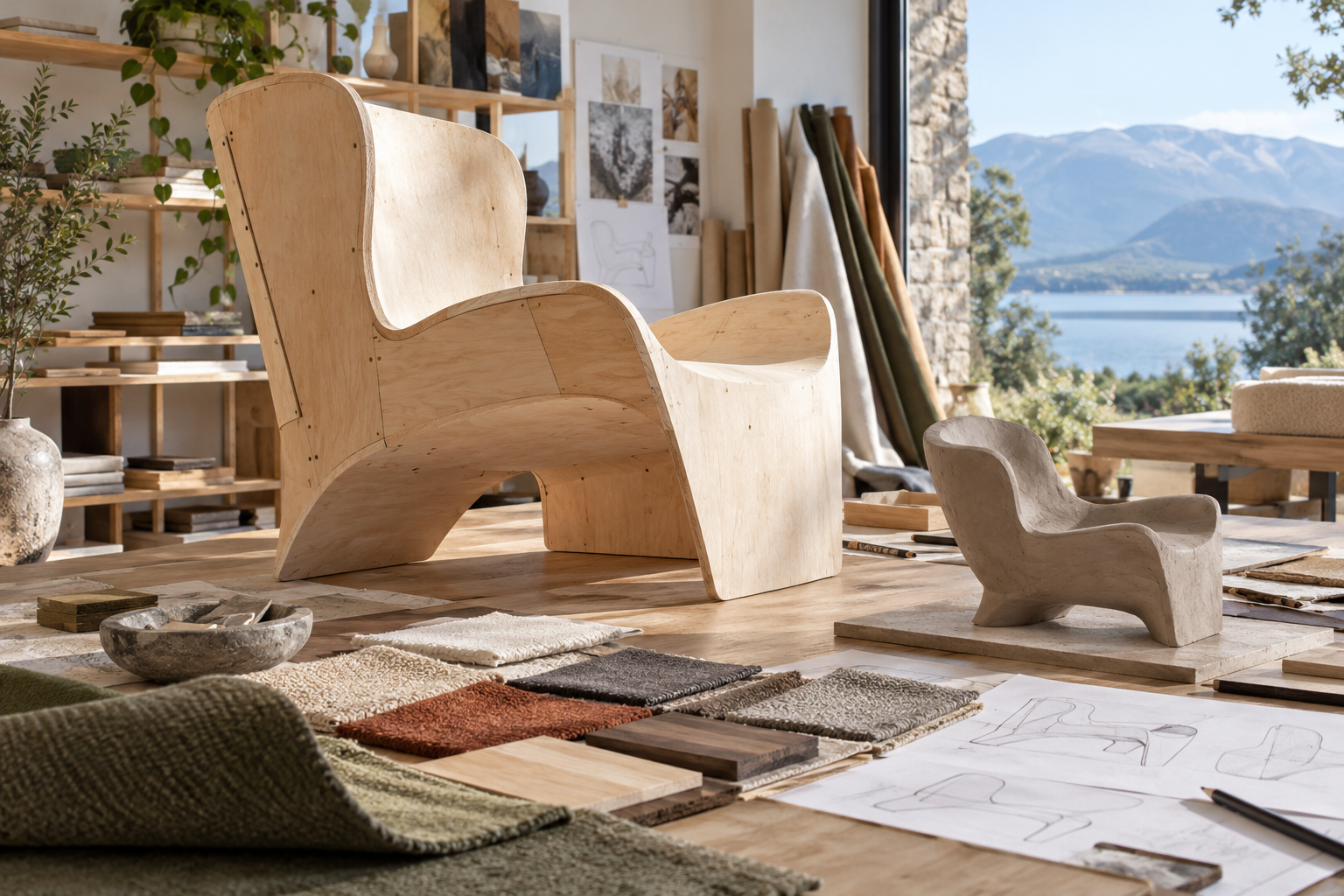
A prototype gives a design idea something to argue with. The curve that looked elegant on a screen may feel too deep at full size, a finish may change under real lighting, or a decorative panel may interfere with assembly. Those discoveries are valuable when they happen before the final piece is made. This section explores prototypes and development studies for statement seating, themed chairs, oversized forms, and scenic installations. We distinguish between models that test appearance and mockups that answer questions about use, fit, construction, or process. One prototype rarely needs to do everything. A small silhouette study can guide proportions while a simple full-size seat tests occupant relationships. Material samples can resolve texture independently of the complete form. Discover how to choose the right question, build an appropriate test, record the result, and carry the decision into the next revision. The purpose is not endless experimentation. It is a clearer route from an appealing concept to a resolved design, with fewer assumptions hidden inside the final drawings and a better understanding of the object being created.
Throne Foundations
Give each prototype a question to answer. A scale model can explore silhouette, a full-size seating buck can examine fit, and a sample panel can compare a finish.
These are different studies, so one polished mockup should not be expected to prove everything. Identify the uncertainty, choose a suitable test, and record the decision that follows. Development becomes more useful when a prototype is judged by what it resolves rather than by how closely it resembles a finished promotional image.
Royal Facts
Scale changes what a model can demonstrate. A small maquette may communicate proportions without establishing full-size structure, material behavior, or occupant experience. Likewise, a temporary mockup can reveal a layout problem without representing the final construction.
Label each study's purpose and limitations. Keep revisions identifiable so a decision made on one version is not accidentally applied to another. An approved finish sample and an approved geometry model may represent separate decisions that still need to be coordinated in the final documentation.
Royal Picks
Choose the simplest useful study: a taped footprint for placement, a cardboard silhouette for framing, an adjustable seat for occupied geometry, or a representative corner for a difficult material transition. Add only the detail needed to answer the question.
Photograph the setup from the important viewpoints and note the conditions. When comparing alternatives, hold the rest of the test reasonably consistent. This makes the result easier to interpret than changing size, finish, lighting, and seating position all at once.
Behind the Throne
Turn observations into explicit revisions. Instead of recording that a mockup feels wrong, note which relationship caused the problem and what should change.
Mark the revised drawing, identify the sample being approved, and make sure the next stage uses the same information. Involve the relevant maker when a visual change affects assembly or material thickness. A prototype is a bridge between ideas and instructions; its value is lost if the useful decision remains only in a conversation or an uncaptioned photograph.
Throne Wonders
An intentionally rough study can expose a problem a polished rendering hides. A full-size outline may show that the crest disappears behind the occupant, while a simple assembly mockup may reveal an unreachable fixing.
Try making separate studies for appearance and access, then bring the conclusions together. The most impressive prototype is not always the most informative one. A small, inexpensive test that resolves a costly uncertainty can have a greater effect on the final chair than a highly finished display model.
Throne FAQs
Must every project use a complete full-size prototype? The appropriate studies depend on the questions and risks in the design.
Does a successful scale model prove a usable chair will work? No; it answers only the aspects it can represent.
When is a prototype approved? State the specific features and conditions being accepted.
When can development move forward? Once the agreed questions are resolved sufficiently for the next stage and the relevant decisions appear in the drawings, samples, and specifications used by the team.