
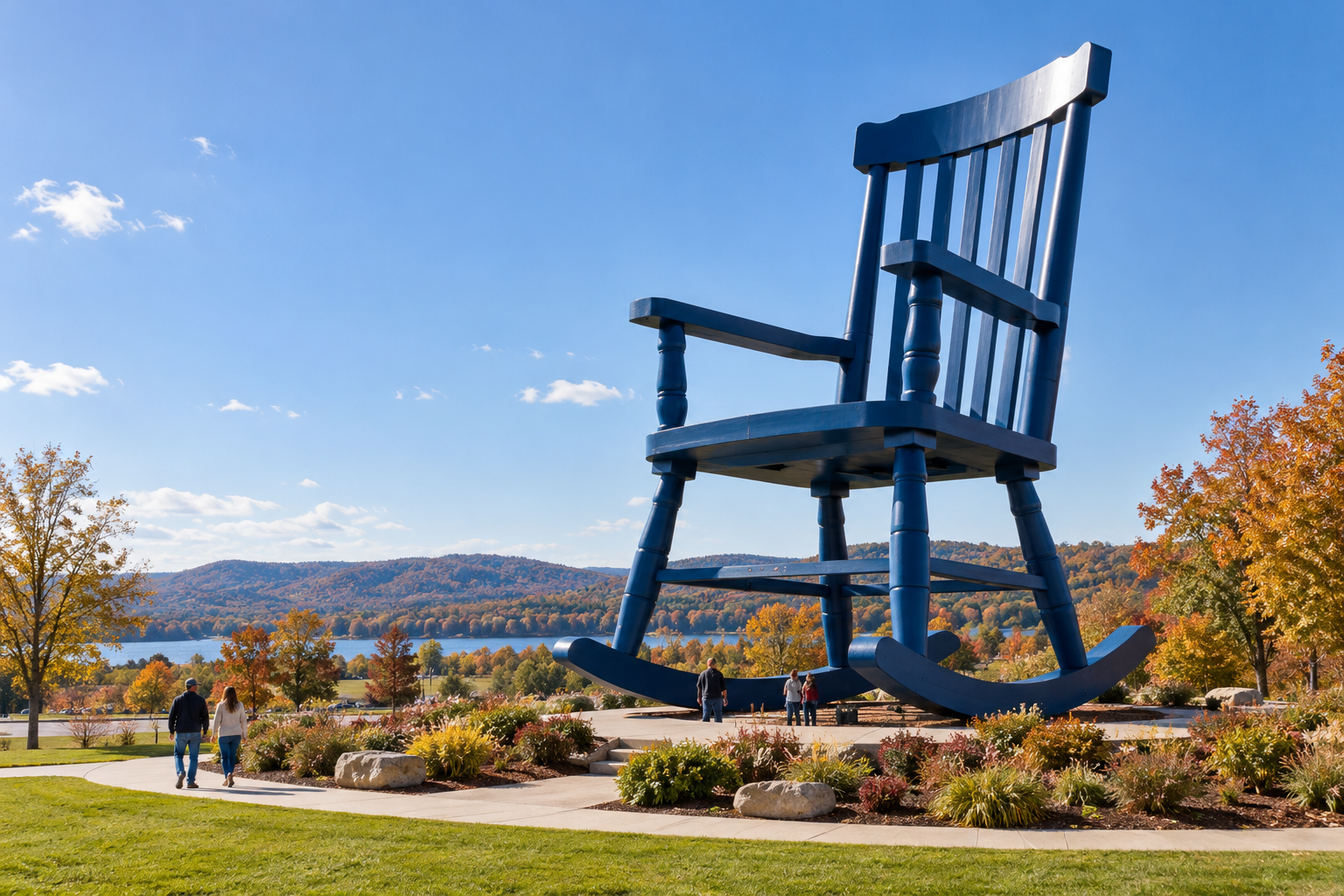
A giant chair can become a shorthand for a destination. Travelers remember its silhouette, visitors photograph themselves beside it, and a familiar furniture form becomes part of the identity of a place. Landmark seating combines scale with setting: the approach, landscape, surrounding buildings, and available viewpoints all influence the experience. This section looks at oversized chair installations as physical attractions and place-making objects. We explore why some forms remain legible at a distance, how ordinary surroundings reveal extraordinary dimensions, and how a landmark can invite a visit without depending on an elaborate explanation. The stories behind real installations deserve careful documentation, including their location, creators, purpose, and changes over time. Concept imagery can inspire new work, but it should never be mistaken for a photograph of an actual destination. Discover ways to connect a large seating sculpture with its site, from roadside stops and town plazas to gardens and visitor centers. The strongest landmarks offer more than size: they create a clear encounter between an object, a place, and the people who come to see it.
Throne Foundations
A landmark giant chair is an object and a destination setting. Read it from the approach route, the nearby gathering area, and the photograph position.
Its recognizable silhouette needs a relationship to the surrounding buildings, planting, and open space. Establish whether it is a sculpture, an occupied attraction, or a visual marker with a separate visitor experience. This distinction keeps the discussion focused on what the installation actually offers rather than assuming that every enlarged chair is intended to be climbed or used as seating.
Royal Facts
Claims such as tallest or largest need a defined measurement, a date, and a reliable source. Height, width, overall volume, and usable seating area are different comparisons. Promotional photographs can also exaggerate or hide scale through perspective.
Use recorded dimensions alongside contextual views. If an installation has moved, been rebuilt, or changed surroundings, identify which version the description concerns. A current photograph and an older project account may not describe exactly the same object or visitor setting.
Royal Picks
Collect approach photographs, a site layout, recorded dimensions, and information from the organization responsible for the landmark. Include ordinary viewpoints, not only the most dramatic promotional angle.
Seasonal views can reveal how vegetation or background color changes the silhouette. For a proposed landmark, use scaled people and familiar surroundings to test recognition. A reference is especially useful when it explains how visitors encounter the object, where they pause, and how the chair remains visually distinct within its actual environment.
Behind the Throne
The photograph position is part of the installation's design. Identify where a visitor stands to include the entire chair and whether companions can gather there without disrupting other movement.
Review how maintenance staff approach the object and how any integrated elements are reached. For a design story, distinguish the original concept from later site changes. A landmark can remain recognizable while its setting evolves, but those changes may substantially affect the experience that made the first photographs convincing.
Throne Wonders
The appeal of a giant chair often begins with recognition: people know the ordinary object and immediately notice the changed scale. Explore how little detail is needed to preserve that recognition.
A clear back and arm profile may communicate more from a distance than elaborate carving. Then examine the chair close up, where texture and craftsmanship become visible. A compelling landmark can offer both an immediate visual surprise and a more considered experience for visitors who spend time beside it.
Throne FAQs
Does landmark status imply record-breaking size? No; a memorable relationship to a place can matter more than a superlative.
Can visitors sit on it? Describe the actual permitted use from site information.
What if dimensions are unavailable? Avoid inventing them or estimating a record claim from a photograph.
How should a landmark be compared with another? Use a stated question, such as recognition from the approach or integration with its setting, rather than reducing every example to a competition in height.