
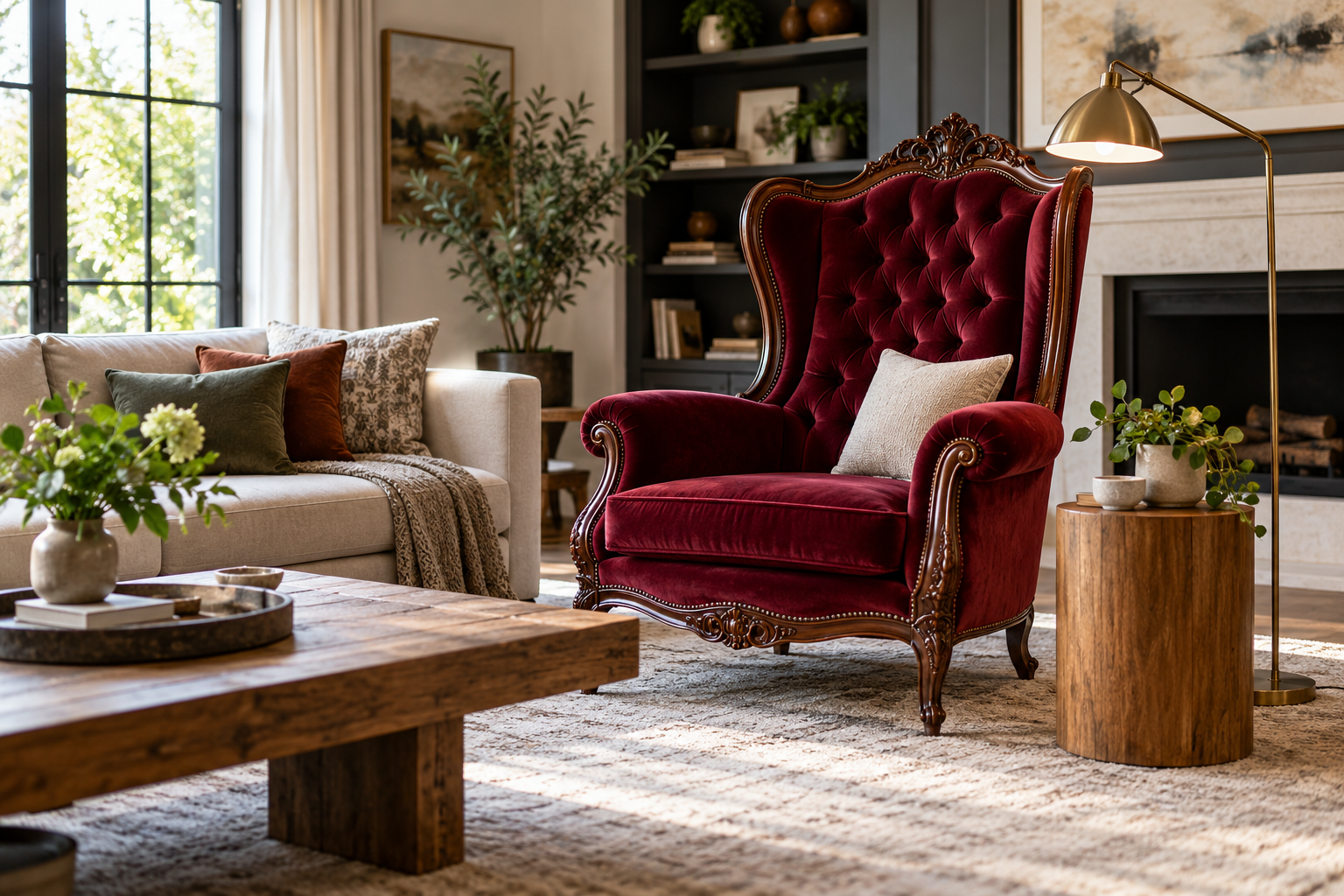
A throne at home becomes part of everyday life, even when its silhouette is anything but ordinary. Homes, Gardens & Private Spaces explores how to give a bold chair a place in a room. Begin with its role: reading, conversation, occasional portraits, or a visual focal point. Then consider seat comfort, nearby surfaces, lighting, circulation, and the view from neighboring furniture. A high back can frame a corner or interrupt the connection between people. Palette and material offer ways to relate an ornate seat to a contemporary interior without making every furnishing imitate it. This section encourages full-height mockups, fabric comparisons, occupied trials, and attention to the rear view when the chair stands away from a wall. Care belongs in the design too, from cleaning around carved details to reaching windows behind the seat. A successful statement chair feels deliberate within the household's activities. It can remain theatrical, elegant, or wonderfully eccentric while still offering a comfortable destination, allowing its character to enrich the room rather than forcing the room to function around a photograph.
Throne Foundations
- Decide whether the throne is everyday seating, an occasional chair, or a visual focal point.
- Measure the room and delivery route before selecting an oversized back.
- Choose proportions that relate to nearby doors, ceilings, and furniture.
- Test comfort for the activity you expect to do there.
- Use one connecting element, such as timber tone or fabric color, to integrate a bold chair.
- Keep circulation clear around projecting arms and ornament.
- Consider the view from the room entrance and from neighboring seats.
- Place lighting where it supports reading or conversation without excessive glare.
- Select upholstery with practical household care requirements in mind.
- Plan cleaning access behind and beneath the throne.
Royal Facts
- A statement chair can create a focal point without becoming the room's largest object.
- A high back can interrupt conversation sightlines in an open seating arrangement.
- A photograph does not communicate compressed cushion height or usable seat depth.
- A bright fabric can appear more dominant on a large upholstered back than on a small swatch.
- A chair's rear view matters when it stands away from the wall.
- A decorative cushion can change effective seat depth and posture.
- A tall silhouette can compete with artwork placed immediately above it.
- A rug helps define a seating group but does not solve awkward circulation.
- A visually delicate finish may still require demanding care.
- An occasional portrait chair need not meet the same comfort expectations as a daily reading seat.
Royal Picks
- Mark the chair's footprint on the floor before purchase.
- Use a vertical mockup to represent its full back height.
- Compare upholstery swatches beside existing curtains, flooring, and sofas.
- Request side and rear photographs as well as a frontal image.
- Try the chair for a realistic sitting period when possible.
- Keep care instructions for the actual fabric and frame finish.
- Choose a nearby surface sized for the intended activity.
- Test lighting from the seated position, especially for reading.
- Prepare two furniture layouts before committing to one focal wall.
- Retain material references for future reupholstery or repairs.
Behind the Throne
- A dramatic throne can feel balanced when surrounding furniture uses quieter outlines.
- A corner placement can emphasize height while limiting the visible rear ornament.
- A pair of matching thrones can become visually heavy in a small conversation group.
- A deep seat may need a considered back cushion rather than a decorative pile of pillows.
- A dark back against a dark wall can disappear unless texture or light separates them.
- A highly reflective frame may pick up distracting reflections from nearby windows.
- A throne near a dining table needs a different reach and arm relationship from a lounge chair.
- A favorite statement piece can guide the room's palette without requiring every furnishing to imitate its style.
- A seat placed mainly for a photograph may turn its occupant away from everyday social activity.
- A practical room plan considers vacuuming, window access, and moving other furniture as well as the finished view.
Throne Wonders
- Create a reading nook with a sculptural throne and a restrained surrounding palette.
- Explore jewel-toned upholstery against warm timber and pale walls.
- Design a fantasy-inspired study using one bold chair rather than a fully themed room.
- Compare a Gothic silhouette with contemporary art and simple lighting.
- Build a material board linking a vintage throne to modern furnishings.
- Create a symmetrical salon around two coordinated but distinct statement seats.
- Explore a botanical throne beside a window with appropriate exposure considerations.
- Design an entry portrait corner that preserves everyday passage.
- Develop seasonal cushion changes around one durable fabric palette.
- Photograph the chair from several lived-in room positions before final placement.
Throne FAQs
- Can a throne work in a small room? Yes, if its actual footprint, height, circulation, and visual weight fit the space.
- Does the room need matching royal furniture? No. Shared colors, materials, or proportions can connect different styles.
- How do I check scale before buying? Mark the footprint and mock up the back height, then view it from normal room positions.
- Can it be an everyday reading chair? Evaluate posture, cushion support, arm placement, lighting, and comfort for that intended duration.
- Should it sit against a wall? Choose placement according to circulation, conversation, rear appearance, and the room's focal points.
- Why does my fabric look louder at home? Large area, surrounding colors, daylight, and room lighting change its perceived impact.
- How do I soften an ornate throne? Use restrained surrounding forms and a considered textile palette while preserving the chair's character.
- Can a throne double as a dining chair? Check table clearance, reach, posture, and intended use before adopting it for meals.
- What care information should I request? Obtain instructions for the specific upholstery, frame finish, decorative details, and removable cushions.
- What should guide final placement? Prioritize useful seating, clear movement, balanced views, and practical maintenance alongside appearance.