

Turn the Dream into Something a Maker Can Build
A custom throne often begins with an image in the mind: a particular crest, a sweeping back, an unexpected textile, or a seat that makes an important occasion feel complete. The challenge is translating that image into decisions another person can develop. 'Grand,' 'magical,' and 'comfortable' are useful starting feelings, but they leave a maker with many unanswered questions.
A design brief connects imagination to a shared project. It explains what the throne should do, which visual features matter, who will use it, where it will stand, and how decisions will be reviewed. A strong brief does not need to solve every construction detail before the maker becomes involved. It needs to distinguish the client's priorities from the areas where professional development is welcome. This guide follows that collaborative process from the first conversation to handover.
Throne Foundations
- Begin with a plain-language description of the throne in use.
- Identify the intended occupants and seating duration.
- Separate essential requirements from flexible preferences.
- Explain what each reference image contributes.
- Record usable seat, room, and access requirements separately.
- Discuss budget through the defined scope.
- Agree on useful drawing and sample review stages.
- Keep approvals tied to identifiable versions.
- Make revision feedback specific and coordinated.
- Include delivery and handover in the original project plan.
Royal Facts
- A visual reference can explain one feature without defining the whole chair.
- A sketch and a finish sample answer different design questions.
- The assembled throne and its packed form may have different dimensions.
- Changing a decorative feature can affect other parts of the proposal.
- A custom price depends on the specified object and services.
- Approval of a silhouette does not automatically approve an unseen fabric.
- A room photograph can reveal context absent from a dimension list.
- A future use is easier to accommodate when discussed early.
- A versioned drawing creates a clearer approval record.
- Handover documentation can support later maintenance and alteration.
Royal Picks
- Prepare a one-page purpose and priority summary.
- Annotate a small reference board instead of collecting unexplained images.
- Provide photographs of the destination room.
- Keep a measured access-route record available.
- Compare a known comfortable chair's usable dimensions.
- Request representative material and finish samples.
- Record the agreed scope alongside the quotation.
- Use a shared revision list for each design review.
- Retain approved drawing and sample references.
- Create a handover folder for the finished throne.
Behind the Throne
- The reason behind a priority can help the maker suggest a better solution.
- Too many equally ranked requirements can make the brief harder to interpret.
- A reference image may communicate mood rather than construction.
- An access limitation can influence the design before it becomes a problem.
- A clear budget direction can make alternatives more productive.
- A model can reveal proportions that a polished rendering disguises.
- Coordinated feedback is easier to act on than scattered comments.
- A changed material should be reviewed in the full design context.
- The final care record preserves information that appearance alone cannot reveal.
- A successful brief defines the destination without dictating every fabrication decision.
Throne Wonders
- Create a personal crest that grows from the throne's main silhouette.
- Develop a modern throne around a room's existing architectural rhythm.
- Translate a meaningful landscape into an original carved pattern.
- Commission paired chairs that share proportions while retaining individual details.
- Use a scale model to explore a dramatic fantasy concept.
- Combine a quiet frame with a deeply personal textile choice.
- Design a removable ceremonial element for changing occasions.
- Let a maker propose an unexpected material interpretation of the brief.
- Document the commission's development as part of the finished object's story.
- Create an extraordinary chair whose personal purpose remains clear in everyday use.
Throne FAQs
- How detailed should the first brief be? Clear enough to explain purpose and priorities, with room for professional development.
- Do I need a final drawing before contacting a maker? No. Explain what is known and what needs design work.
- How many reference images should I include? Use a focused set with notes about the relevant feature in each.
- Should I provide a budget direction? Yes. It helps the maker discuss realistic scope and alternatives.
- What dimensions belong in the brief? Usable seating, the destination space, and the delivery route.
- Can the design change during development? Yes, with clear review of the effect on scope, choices, and schedule.
- Why keep versions of approvals? They identify which drawing or sample the decision actually refers to.
- Can I request an exact copy of a recognizable design? Develop an original commission with appropriate research and attribution instead.
- What should arrive with the throne? The agreed object and services plus useful material, assembly, and care documentation.
- What makes the collaboration work? A current brief, specific feedback, and a shared understanding of the intended result.
Write a Purpose Statement in Plain Language
Begin with a short description of the finished throne in use. For example: a statement chair for daily reading in a living room, a coordinated wedding pair for portraits and reception seating, or an original scenic throne for a filmed conversation. Include the intended occupants and expected duration of use. If the object is display-only, say so clearly.
This purpose statement becomes the reference for later decisions. When a proposed ornament changes the usable seat, or a beautiful finish complicates the expected use, the team can return to the brief rather than debate taste in isolation. If several uses are planned, describe each and identify the primary one. A throne commissioned for one occasion may remain valuable afterward, but that future role is easier to accommodate when it is considered at the beginning rather than discovered after delivery.
Describe Priorities and Leave Room for Development
Separate essential features from preferences. The essential feature might be a particular seating arrangement, a maximum outside size, a meaningful emblem, or compatibility with a room. A preference might be a fabric direction or a carved motif that can evolve. This distinction allows the maker to propose alternatives without accidentally removing the feature that matters most to you.
Keep the list focused enough to guide choices. If every reference detail is equally important, the brief can become a collection of competing demands. Rank the most meaningful ideas and explain why they matter. A maker may find a simpler or more coherent way to express them. Collaboration becomes more productive when the client protects the intended outcome while allowing the design process to discover the best form for it.
Use References to Explain Ideas, Not Demand Copies
A useful reference board includes comments. One image may illustrate the back's proportion, another a textile texture, and a third the mood of a room. Without those explanations, the maker cannot know which parts of the images attracted you. A board of ten unrelated ornate chairs can be less informative than three carefully annotated references.
Develop an original design rather than asking for an uncredited copy of a recognizable work. For culturally specific or historical references, identify what the source actually documents and distinguish inspiration from a claim of authenticity. Include images of the intended room or event setting as well. They help the maker see the context that an isolated throne photograph omits. The aim is a shared visual conversation, not a test of how closely someone can reproduce an image found online.
Gather Dimensions from the Person, Room, and Route
A throne has several sets of dimensions. The occupant needs a usable seat. The room needs a workable footprint and height. The delivery route needs an object and packing arrangement that can reach the destination. Record those requirements separately so a change in one area does not quietly undermine another.
Use a familiar chair as a comparison point for personal fit, while leaving the actual seating design to appropriate development and review. Provide room photographs, a measured plan where practical, and information about relevant doors, turns, stairs, or elevators. Ask who confirms the access plan and which components are intended to detach. These details are not a distraction from the creative work. They help protect the design from an avoidable compromise when a completed throne arrives at a difficult entrance.
Discuss Budget Through Scope and Choices
A custom price depends on the defined object and service. Design development, detailed carving, material selection, upholstery, finish samples, revisions, transport, and installation can all affect the proposal. Give the maker a realistic budget direction and ask which parts of the concept have the greatest influence on scope. This allows alternatives to be considered while they still belong to the design process.
Compare proposals on equivalent terms. A lower starting figure may cover a different level of development or exclude important services. Ask what is included and how changes are handled. Avoid treating the first conversation as a demand for a universal cost per throne; the purpose of the brief is to define the particular project. A clear scope allows you to make deliberate choices about where the visual and practical value should be concentrated.
Review Drawings, Models, and Samples at Useful Stages
Different review tools answer different questions. A sketch communicates the main idea. A dimensioned drawing clarifies size and relationships. A model can reveal how the form reads in space. A fabric or finish sample helps evaluate material appearance. Do not ask one kind of reference to answer every question, and do not assume approval of a sketch confirms an unseen finish.
Agree on the decisions needed at each stage. Review the full silhouette before becoming absorbed in a small crest detail. Compare upholstery and frame finish together. Include an occupied view or appropriate fit review when seating experience matters. Keep a written record of approved choices, including the relevant drawing or sample version. This gives both client and maker a common reference as the project moves from flexible ideas into increasingly committed stages of making.
Make Changes Clear and Specific
A useful revision identifies the concern and the desired direction. 'The back feels too dominant beside the room's window' gives the maker a clearer problem than 'make it less strange.' A comment about seat depth should remain separate from a comment about crest shape. Group related feedback so a new version can respond to a coherent set of decisions.
Ask what a proposed change affects. A smaller back may alter the ornament, a new fabric may change availability, and a detachable component may require further design work. Confirm the revised scope and schedule before assuming that every adjustment is a small cosmetic edit. The goal is not to avoid revisions; it is to make them productive. Clear feedback allows the design to improve without losing track of what has already been agreed and what still requires development.
Plan Delivery and Handover as Part of the Commission
A finished throne is not the end of the project until it reaches its intended setting in the agreed condition. Confirm the delivery arrangement, placement, assembly, packaging, and any installation responsibilities. For an event, coordinate with the venue schedule and the team receiving the object. For a home, review the actual route and room readiness.
Ask what documentation accompanies the throne. Useful information may include the material specification, fabric reference, approved assembly details, care guidance, and photographs of important components. Clarify whom to contact about a concern or a later change. These records make the commission easier to live with and maintain. They also preserve the decisions that make the object personal, so its story does not depend entirely on the memory of one conversation during the making process.
Create a Brief That Supports the Collaboration
A complete brief brings together purpose, occupants, setting, dimensions, visual priorities, references, budget direction, review stages, and delivery expectations. It leaves room for the maker's expertise while making the client's priorities understandable. It can begin simply and become more detailed as the design develops; the key is keeping it current and connected to the decisions being made.
Commissioning a custom throne is an opportunity to create something particular rather than select from familiar royal shorthand. The result can be lavish or restrained, fantastical or domestic. What makes the process successful is the quality of the shared understanding. When the idea, specification, and practical plan agree, the finished seat can feel exactly as intended: a distinctive object made for a real person, place, and purpose.
Related Articles
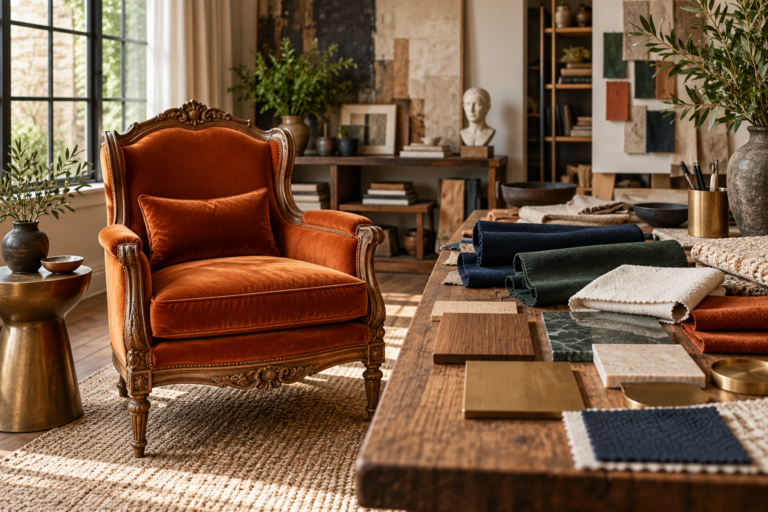
Color and Upholstery for Statement Seating
Color and upholstery can transform the character of statement seating. Explore palettes, texture, pattern scale, seams, trim, and real lighting to create a coherent seat for interiors, events,…
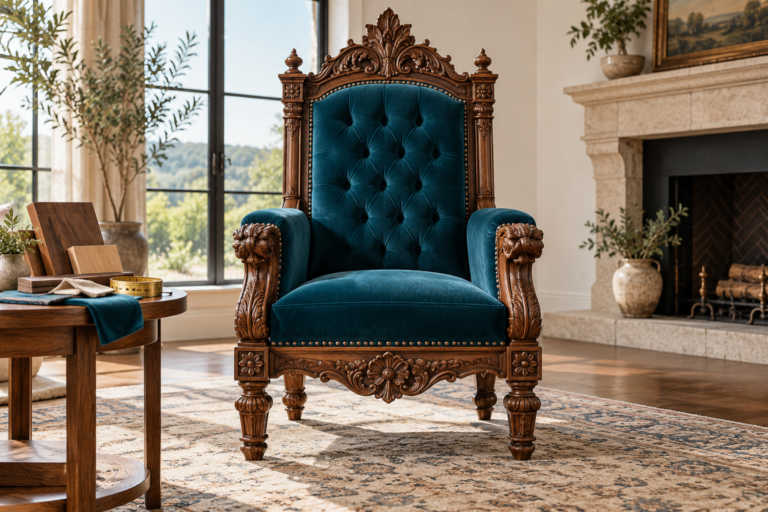
Designing Statement Seating: Form, Comfort, and Fit
A memorable seat needs more than a striking silhouette. Explore how form, usable dimensions, comfort, materials, and setting work together to turn an imaginative chair into a convincing…
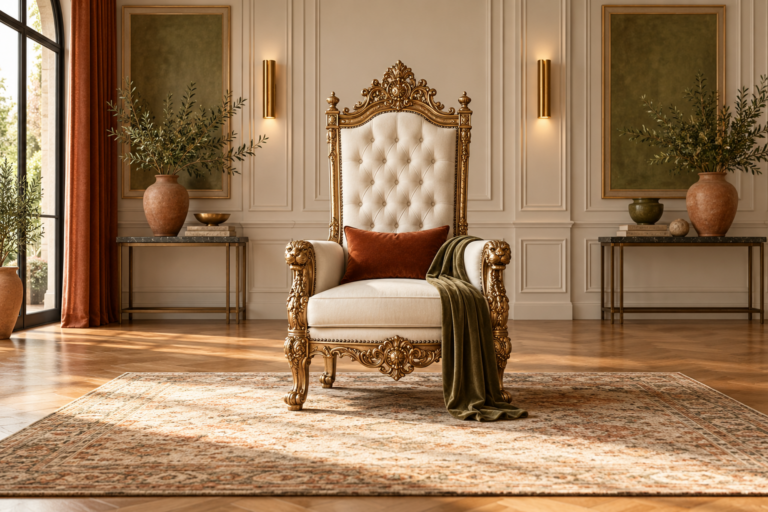
Designing a Seating Focal Point: Backdrops, Lighting, and Space
Turn a remarkable chair into a complete scene. Discover how backdrops, lighting, scale, surrounding furniture, and clear circulation give statement seating a strong place within an interior, event,…