
Give the Seating a Clear Place in the Scene
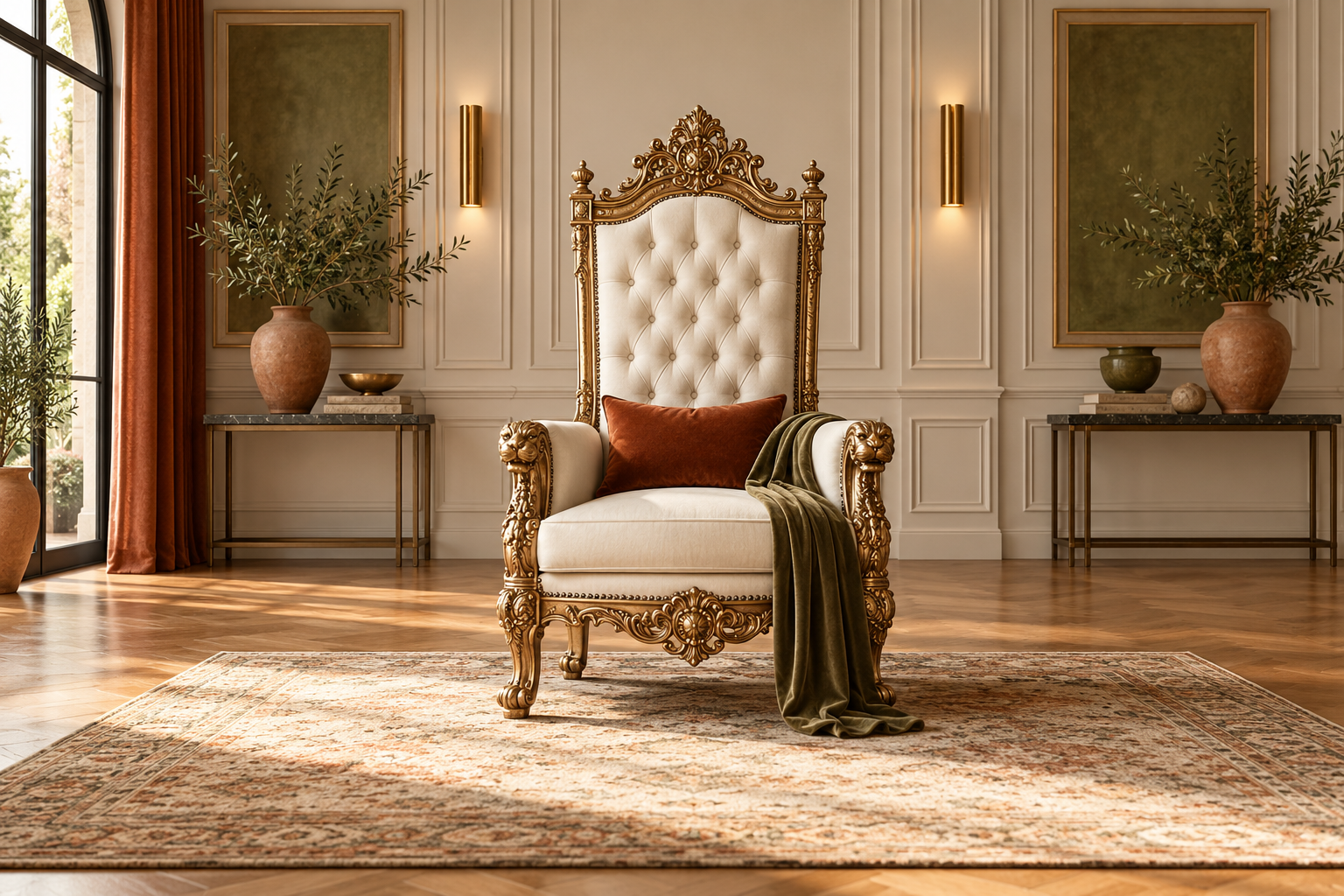
A seating focal point begins with a relationship between an object and the space around it. The chair may be ornate, sculptural, oversized, or deliberately simple. What makes it commanding is the way a backdrop frames its outline, light reveals its surfaces, and surrounding space gives people a clear view. This approach works in a home, a destination lobby, an event installation, or a themed display.
Start with the view visitors actually encounter, then test the scene with someone seated. The empty-chair composition is only half the design. The person's head, clothing, posture, and companions change the image, while approach and departure routes determine whether the attractive arrangement also works as a physical place.
Throne Foundations
- Choose the room's primary viewing position before styling the throne.
- Review the chair occupied as well as empty.
- Compare the full back height with nearby architecture.
- Keep ordinary movement routes central to the layout.
- Select a backdrop that makes the silhouette readable.
- Develop color through the room's existing materials.
- Test lighting on the occupant and furniture together.
- Give supporting furniture a useful role.
- Plan temporary installations from arrival through removal.
- Edit competing decorative details before adding more.
Royal Facts
- A focal point can be created through placement without a raised platform.
- Visual weight depends on color, texture, and shape as well as size.
- A background pattern can obscure a carved outline.
- An unoccupied chair does not reveal all portrait overlaps.
- Metallic surfaces may produce strong highlights under accent lights.
- Fabric sheen can change between daylight and evening lighting.
- A tall back can affect the light reaching a seated face.
- A room's best entrance view may differ from its best camera angle.
- Symmetry creates one kind of order; balanced layouts can use other arrangements.
- Removable styling can help a multipurpose room change between occasions.
Royal Picks
- Use a measured floor plan to compare seating arrangements.
- Try a simple height mockup before selecting a large crest.
- Review actual frame and fabric samples against the wall finish.
- Use occupied test photographs to assess the backdrop.
- Consider a reachable side table for an everyday throne chair.
- Choose a rug that relates to the whole seating group.
- Compare lighting options in the actual room when practical.
- Use a material board to limit competing finishes.
- Keep a setup reference for a temporary photo corner.
- Select suitable floor protection for the furniture and surface.
Behind the Throne
- Study the ordinary approach to the chair, not only the ideal photograph.
- A slightly smaller throne may read more confidently with breathing room.
- Check whether a window changes the composition at different times of day.
- Separate the wish for drama from the need for a large footprint.
- A plain wall can allow complicated carving to become legible.
- Coordinate a companion chair through scale rather than matching ornament.
- Place flowers with the seated person's head and shoulders in view.
- Consider how a curtain or backdrop is maintained between uses.
- Evaluate an installed lighting scheme through actual tests, not fixture appearance alone.
- A room should remain understandable when its ceremonial styling is removed.
Throne Wonders
- Warm wood and pale plaster can create a quiet royal atmosphere.
- An ocean view can act as the backdrop for a contemporary throne.
- A single bronze detail can connect a chair to an existing room palette.
- A botanical setting can frame the seat without covering its silhouette.
- A geometric wall panel can echo the chair's proportions.
- A reading corner can borrow throne-room presence at domestic scale.
- A pair of angled chairs can feel ceremonial and conversational together.
- Textured fabric can provide richness without a strong pattern.
- A carefully chosen shadow can reveal carving more clearly than another ornament.
- The most dramatic feature may be the space left around the seat.
Throne FAQs
- Do I need a large room? No. Choose a throne and composition appropriate to the available space.
- Must the throne be centered? Centering is useful for some designs, but the architecture and use should guide placement.
- Does every throne need a platform? No. A clear focal point can be established at floor level.
- What palette feels royal? Many palettes work; relate frame, fabric, and background to the room.
- Should the wall be darker than the chair? Test the silhouette rather than following a fixed contrast rule.
- How can I check a photo backdrop? Photograph someone seated in the intended camera position.
- Can the throne face a sofa? Yes, when the arrangement supports conversation and workable access.
- How much clearance is necessary? Review the actual furniture, users, movement, and applicable venue requirements.
- Can a room have two focal points? It can, but decide which should lead from each important view.
- What is the final design test? The occupied room should look intentional and function comfortably in real use.
Start with the View People Actually See
Choose the main viewing position before arranging decorative details. A room seen first through a doorway may benefit from a throne that is readable from that approach. A conversation space might work better with the chair turned toward other seating. A photo setting has another priority: the camera position should allow the occupant, chair, and backdrop to form a coherent frame.
Sketch several arrangements rather than committing immediately to a perfectly centered layout. Symmetry can create formality, but it is a tool rather than an obligation. In a room with an offset fireplace or an irregular window, a carefully balanced asymmetrical arrangement may suit the architecture better. Keep the chair itself visually coherent, then use surrounding objects to connect it to the room. The useful question is whether the composition feels deliberate from the places people naturally occupy.
Use Scale to Create Presence, Not Congestion
A throne needs space around its outline to be understood. If its crest nearly touches a shelf, its arms crowd a sideboard, and its base overlaps a circulation route, the object may feel squeezed rather than grand. Compare the outside width and full height with the architectural frame that surrounds it. Consider the visual weight of the upholstery and carving as well as the measurements.
Try a simple mockup before ordering furniture or constructing a backdrop. Mark the footprint on a measured plan and use a paper elevation or temporary outline to judge the back height. A room does not need to accommodate every dramatic feature in the reference image. Sometimes a lower crest, narrower side ornament, or quieter finish gives the seat more presence because the surrounding space can finally support its shape. Good scale creates confidence without demanding that everything else retreat.
Protect the Room's Everyday Routes
The most impressive view is only one part of a working room. People still need to approach the seat, turn nearby, reach other furniture, and move through the space without navigating a decorative obstacle course. Think about the chair occupied, not just empty. A person leaning forward, a long dress, an accompanying mobility aid, or a nearby table can change the practical arrangement.
Plan circulation with the actual users and venue requirements in mind rather than relying on a universal clearance figure. Where access needs are important, involve the people who will use the space in reviewing the layout. Keep decorative platforms and separate footstools within a clearly considered plan. If the throne is primarily a display object, make that role understandable. An attractive composition should help people understand where they can go and how the focal area is intended to work.
Let the Backdrop Support the Silhouette
A backdrop gives a throne an outline to read against. Dark timber can disappear against a similarly dark patterned wall, while a pale textile might lose definition against bright drapery. This does not mean every chair needs high contrast. It means the relationship should be examined at the intended viewing distance and under the light that will actually be used.
Choose one principal background idea. Architectural molding can establish order; fabric can soften a tall back; a landscape view can become part of the story. Avoid placing a small picture directly behind a crest unless the overlap is intentional. For a photo corner, check the background with someone seated so flowers, branches, or wall details do not appear to emerge awkwardly from their head. The backdrop succeeds when it makes the throne and occupant clearer together.
Build a Palette from Real Materials
A royal room does not need a predetermined purple-and-gold palette. A warm wood throne with blue upholstery can feel composed beside pale plaster. An ivory chair with bronze details can sit comfortably among olive textiles and terracotta. A charcoal sculptural seat can become the focal point through shape while the surrounding room remains light and natural.
Begin with the largest existing surfaces: walls, flooring, windows, and any furniture that will stay. Then review the throne's frame, upholstery, and trim as a small material family within that setting. Physical samples are valuable because sheen, texture, and fabric direction influence appearance. Repeat a selected color or material elsewhere sparingly, perhaps in a cushion or lamp base. Repetition can connect the throne to the room without turning every object into another matching royal accessory.
Light the Person and the Chair Together
Lighting can reveal carving, soften upholstery, and separate the throne from its background. Yet a dramatic beam that makes an empty chair look magnificent may leave a seated face in shadow. Review the occupied scene whenever the seat is intended for portraits, ceremonies, or conversation. Pay attention to the back casting shadows and to bright metallic surfaces reflecting a distracting highlight.
Think in layers: the room's general light, the light around the occupant, and any accent that reveals the chair or architecture. Test the result at the time of day the space will be used. A window that is gentle in the morning may create a very different image later. For installed fixtures and temporary event lighting, use equipment and mounting arrangements suitable for the setting. The creative aim is readable depth and atmosphere, not maximum brightness or the largest possible spotlight.
Choose Supporting Furniture with a Purpose
A side table, rug, bench, or adjacent chair can help a throne belong to an actual room. Each should have a clear role. A reachable table supports everyday use. A rug can gather a seating composition visually. Another chair can turn a solitary statement piece into a place for conversation. These practical relationships often make a room feel more convincing than additional ornamental props.
Avoid arranging everything as if visitors must face the throne from a distance. A domestic room can acknowledge the chair's drama while remaining welcoming. Try angled companion seating or a shared table that creates a social relationship. Check rug edges, table placement, and floor protection against actual movement and furniture use. The room should still make sense when no one is taking a photograph and the throne is simply one unusually expressive seat among the activities of the day.
Adapt the Idea to Small and Temporary Spaces
A compact throne setting can rely on a carefully chosen vertical feature rather than a broad stage. A distinct back, a quiet wall, and controlled lighting may provide the whole composition. In a multipurpose room, removable styling can support special occasions without permanently occupying the floor. A large backdrop is not automatically more effective than a small architectural frame that fits the chair precisely.
For temporary installations, design the arrival and removal as part of the room plan. Confirm what the venue permits, which objects can be moved, and who restores the space afterward. Decorative drapery, lighting, and rental furniture should be reviewed together. It is easier to simplify the concept while planning than to discover during setup that its most impressive component blocks access or cannot be installed as intended.
Make the Setting Work Beyond the Photograph
Review the complete scene from the entrance, the seated position, the camera location, and the routes around it. A backdrop should support the silhouette without hiding useful space; lighting should reveal both the person and the object; supporting furniture should earn its place in the arrangement.
A coherent focal point does not require a palace-like room. One strong seat, an intentional background, and well-considered light can create a memorable encounter in a modest space. The aim is a setting that feels complete when people use it, not only when the camera finds one flattering angle.
Related Articles
Color and Upholstery for Statement Seating
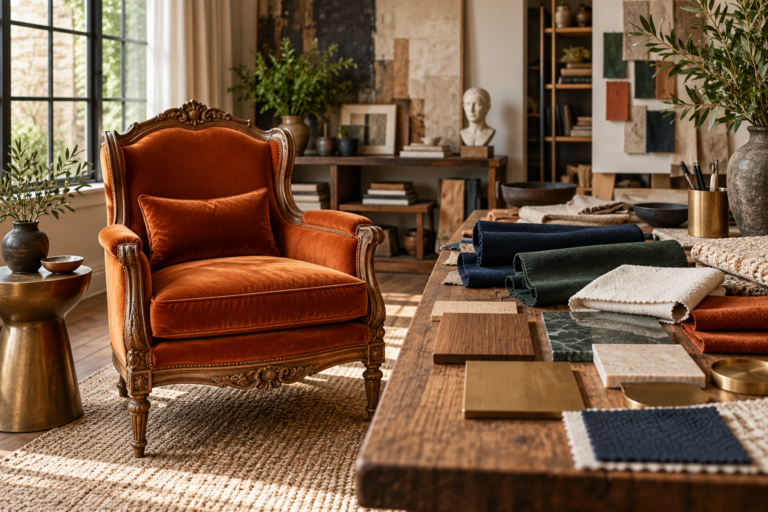
Color and upholstery can transform the character of statement seating. Explore palettes, texture, pattern scale, seams, trim, and real lighting to create a coherent seat for interiors, events,…

Commissioning Custom Seating: Turn an Idea into a Clear Design Brief
A striking idea becomes a successful commission through clear decisions. Learn how to turn inspiration into a practical throne design brief, collaborate with a maker, review samples and…
Designing Statement Seating: Form, Comfort, and Fit
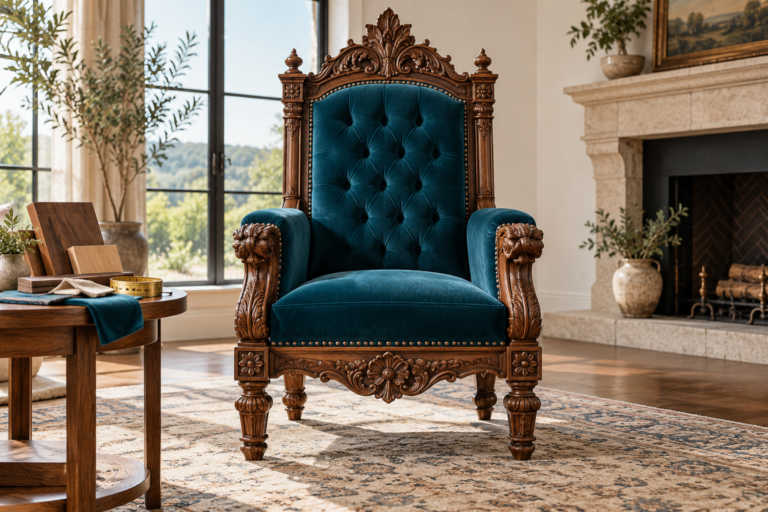
A memorable seat needs more than a striking silhouette. Explore how form, usable dimensions, comfort, materials, and setting work together to turn an imaginative chair into a convincing…