
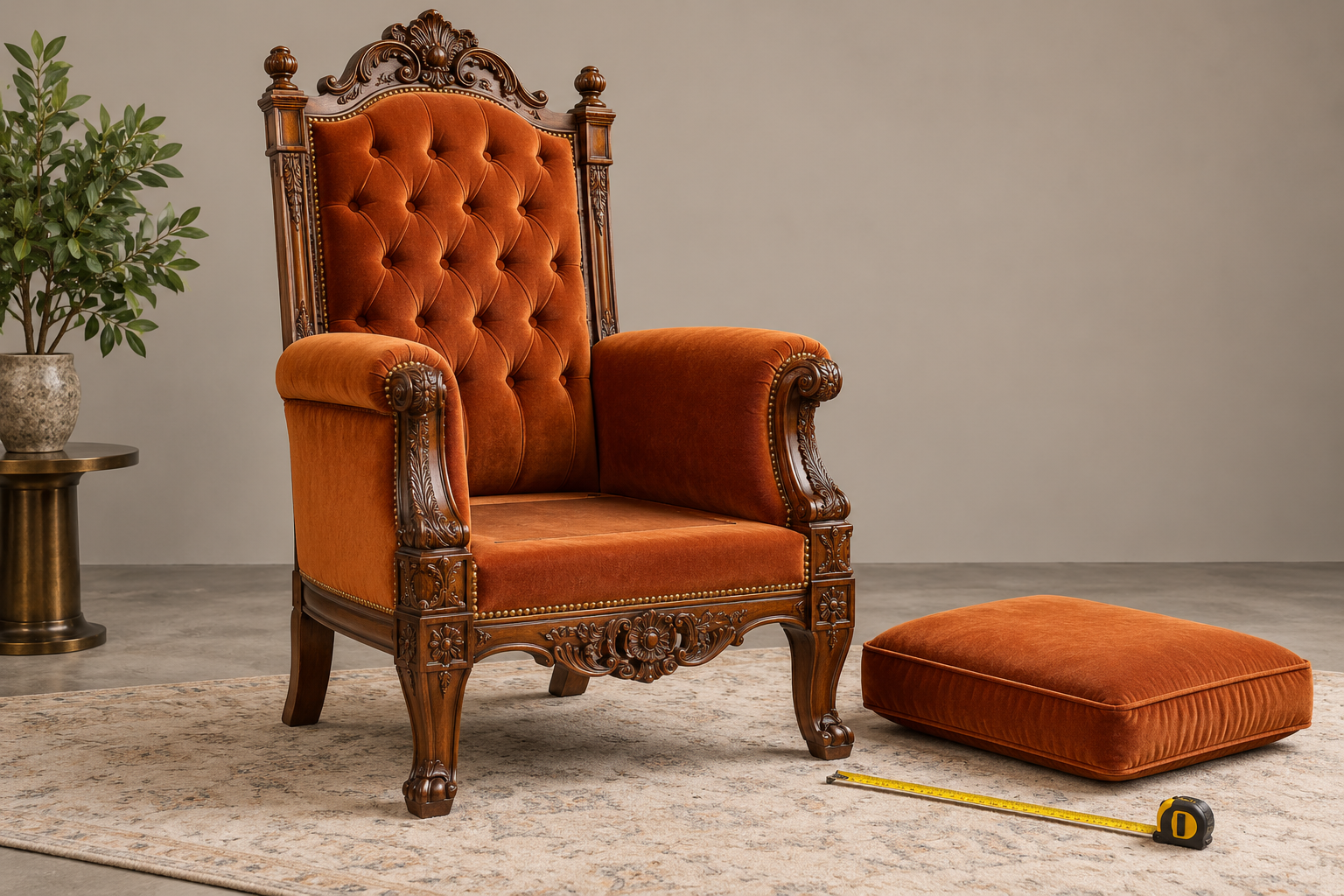
Scale changes how a seat is understood, while format changes how people use it. A single ceremonial chair, a paired arrangement, a shared bench, and a giant landmark can all create presence through very different relationships with the occupant. Scale & Seating Format Comparisons explores those choices before a design becomes committed to one silhouette. Compare the actual activity: a portrait, a group photograph, a formal appearance, a short pause, or an extended conversation. Overall dimensions describe the visual object, but usable seating dimensions describe the human experience. A towering back can frame an ordinary-height seat, and a large sculpture may incorporate a separate place to sit. This section looks at the effect of width, height, depth, repetition, spacing, and surrounding room or landscape. We also consider how the design reads when partly occupied or seen from a distance. The goal is a clear comparison of approaches, not a ranking of products. By relating scale and format to purpose, you can choose a physical concept that feels distinctive while giving the intended people an appropriate place within it.
Throne Foundations
Start with the encounter the seating must support: one person's portrait, a couple's ceremonial moment, a family photograph, or a group conversation. Compare a single chair, a pair, a bench, and a couch within the same setting. Each distributes people differently across the scene.
Then consider scale separately from format. A monumental back can frame a normal occupied area, while a wide bench can hold a group without becoming tall. Increasing every dimension is rarely the only way to create presence.
Royal Facts
Overall width includes decorative arms and projections; usable width describes the space available to the occupant. Record both. Seat depth, back position, and the route into the seat matter as much as the front view.
Two separate chairs also require space between them and around their approaches. In photographs, people provide scale cues, so an empty installation may appear less dramatic than an occupied one. Compare arrangements with the intended group represented rather than judging isolated furniture cutouts on a blank background.
Royal Picks
Use the same site plan and human-scale figures for every option. Add front and side views, then test the proposed photograph crop. A full-size floor outline can show whether paired chairs separate a couple too far or whether a group bench leaves little surrounding room.
Include clothing volume when relevant. Review at least three occupancy states: empty, partially occupied, and occupied by the intended group. A format should remain visually coherent across the situations visitors will actually create.
Behind the Throne
Format changes introduce different practical questions. Paired chairs can be moved independently but need consistent placement. A long couch may arrive as one awkward package unless its construction allows separation.
A continuous bench needs an intentional relationship between its apparent capacity and its documented use. Examine where people pause while others sit down, and whether the focal ornament remains visible. These details turn a scale comparison into a useful design decision rather than a contest between the largest silhouettes.
Throne Wonders
Try making several versions with the same usable seating area but different outer profiles. A tall narrow back, broad wings, and a low sweeping frame can produce very different impressions without changing where the person sits.
Then keep the outer frame constant and alter the grouping within it. This reveals how scale and social arrangement interact. A shared frame can visually unite two people, while separated seats can emphasize individual roles within a ceremony or staged portrait.
Throne FAQs
Is the widest format best for group photographs? Not necessarily; compare the actual group, camera position, and available space.
Must a giant chair have a high seat? No; its recognizable outer form and occupied geometry can be developed separately.
Should every bench have cushion divisions? Only if they support the intended use and composition.
How can options be compared fairly? Use the same audience, setting, viewpoint, and required activity for each, and record both overall dimensions and usable seating dimensions.