

Sometimes the next step in exploring thrones is a lookup rather than another broad guide. A catalog mentions an unfamiliar part, a photograph raises a material question, or a famous name turns out to describe several different seats. Thronepedia provides a reference route through those discoveries. Start with terminology, components, materials and finishes, symbols, or named historical and fictional thrones, then follow the relationships between them. A definition is different from an object record, and a decorative interpretation is different from evidence about an artifact. This section helps preserve those distinctions while making unfamiliar subjects easier to approach. Notice alternate names, qualified attributions, source dates, and version information rather than smoothing them away. A fictional throne may need separate records for its book and screen appearances; a surviving chair may contain later replacements alongside original work. The aim is a foundation for further investigation, not an answer that pretends every uncertainty has disappeared. Use the index to clarify language, locate the relevant context, and carry questions into histories, design studies, galleries, or conversations with makers.
Throne Foundations
- Use Thronepedia as a reference gateway to terms, components, materials, symbols, and named thrones.
- Choose the reference section that matches the question before following broader inspiration links.
- Treat a definition, an object record, and a design interpretation as distinct entry types.
- Identify historical period or fictional version when a name has several meanings.
- Follow cross-references to compare related concepts without assuming they are synonyms.
- Read attribution notes before using an entry as historical evidence.
- Separate documented surviving objects from legendary and invented seats.
- Use component references to interpret descriptions without mistaking them for construction plans.
- Check material entries for the actual substrate beneath decorative effects.
- Keep source and revision information attached to reference notes you reuse.
Royal Facts
- An encyclopedia entry organizes knowledge around an identified subject rather than a single buying decision.
- An alternate name can describe the same object without proving the names were used contemporaneously.
- An index points toward records; it does not replace the evidence within them.
- A term's meaning can change between furniture description, ceremony, and fantasy fiction.
- A named throne may refer to a physical seat, an institution, or a narrative object.
- A material label and a finish label describe different aspects of construction.
- A symbol's interpretation depends on context rather than its shape alone.
- A reconstruction can contain well-supported details alongside explicit modern additions.
- A source's authority depends partly on the kind of claim being checked.
- A reference record can preserve uncertainty without becoming unhelpful.
Royal Picks
- Start with Seating Terminology for unfamiliar words in a description.
- Use Seating Parts & Features to locate named components.
- Consult Materials & Finishes Index when identifying surfaces and substrates.
- Use Symbols & Motifs Index to investigate contextual meanings.
- Choose Iconic Seating Index for named-object research.
- Keep a comparison note with entry names and the distinctions that matter.
- Prefer identified collection records for claims about surviving artifacts.
- Use the original narrative or an identified edition for fictional details.
- Record alternate spellings when following names across sources.
- Preserve dates and version information when saving references.
Behind the Throne
- A broad reference hub works best when its sections answer different lookup needs.
- A concise definition may need a context note when everyday and specialist meanings diverge.
- A familiar fictional image can influence assumptions about a historical term unless the categories stay clear.
- A record's missing information should remain visible rather than filled with plausible guesses.
- Cross-links can expose relationships between a material, component, symbol, and named example.
- An old photograph can support appearance research without resolving an object's complete provenance.
- A modern label can simplify a complex tradition, making original terminology useful alongside it.
- An entry should distinguish an object's original state from later restoration or adaptation.
- A correction becomes easier when its source and affected claim are both identifiable.
- An index remains useful through consistent record structure and thoughtful distinctions, not sheer entry count.
Throne Wonders
- Trace one throne through component, material, and symbol references.
- Build a glossary for reading a museum object description.
- Compare historical and fictional uses of one seating term.
- Explore alternate names attached to a single documented object.
- Create a reference trail from a carved motif to its contextual interpretation.
- Map the difference between a surviving artifact and its modern replicas.
- Compare descriptions of the same throne before and after restoration.
- Develop a study sheet combining labeled parts with material notes.
- Explore where a familiar fantasy design departs from its source text.
- Create a personal research list that preserves unanswered questions alongside findings.
Throne FAQs
- Where should I begin in Thronepedia? Choose terms, parts, materials, symbols, or named thrones according to the information you need.
- Is every indexed throne a real object? No. Check whether the record describes a surviving artifact, legend, fictional design, or modern interpretation.
- Can a definition serve as a building instruction? No. Reference terminology explains concepts without supplying a complete fabrication design.
- Why do entries include alternate names? Different sources and periods may use different labels; recording them helps research without erasing distinctions.
- How should uncertain information be used? Retain the qualification and consult the supporting evidence rather than turning an attribution into certainty.
- Which source is best for fictional details? Start with the identified work and version, separating later adaptations and fan interpretations.
- Can symbols have several meanings? Yes. Interpret them through the relevant object, culture, period, and use.
- Why separate materials from finishes? A metal-looking or stone-looking surface may cover an entirely different substrate.
- How can I compare entries effectively? Use a defined question and record relevant differences instead of collecting names alone.
- What makes a useful reference correction? Identify the entry, disputed detail, supporting source, and the specific change the evidence supports.

Seating Terminology
The right word can turn a vague impression into something you can investigate. A crest rail, finial, splat, stretcher, dais, and canopy describe different features, even when they appear together in one dramatic image. Seating Terminology helps connect those names with form, location, and context.…
Read More »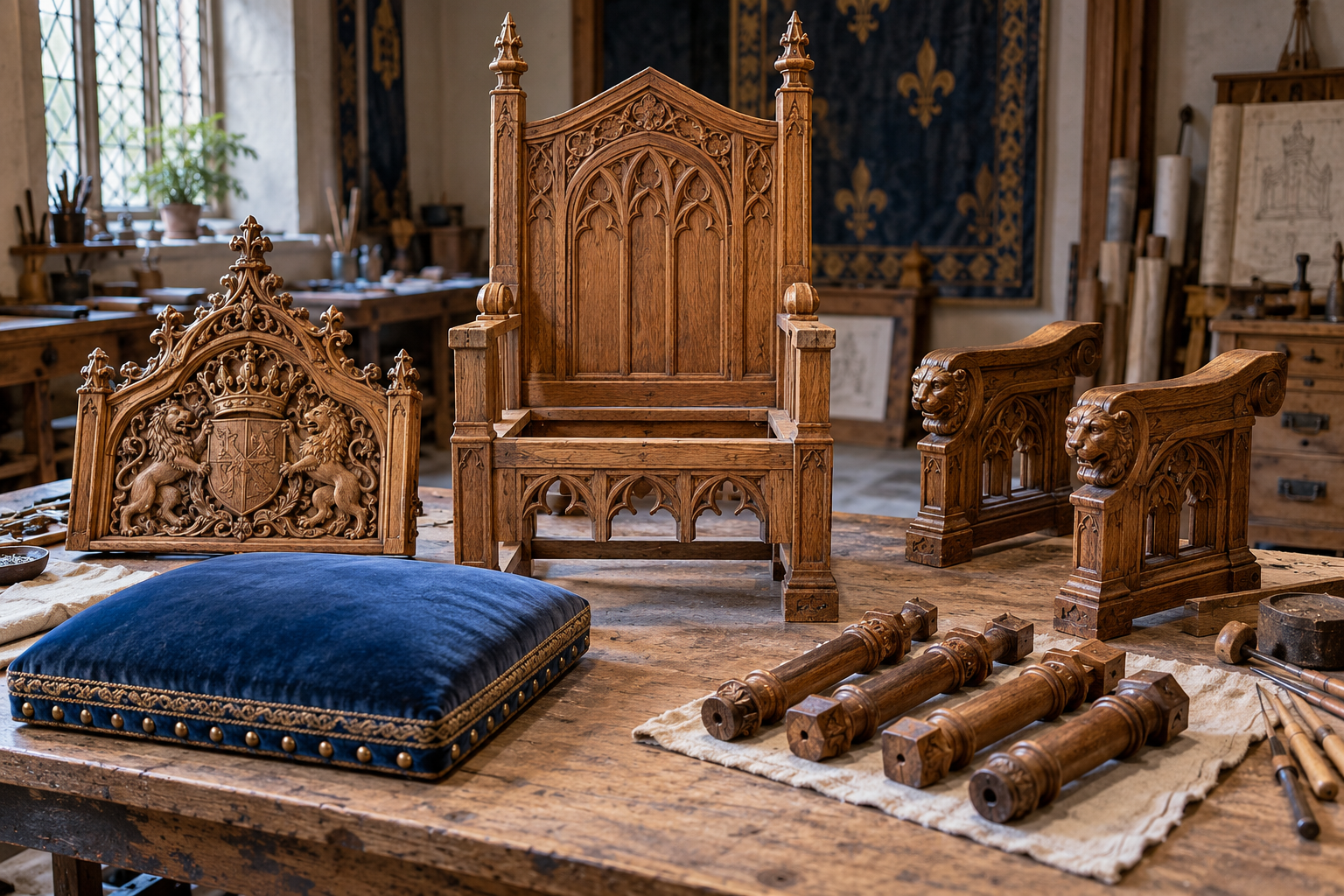
Seating Parts & Features
A close-up of a carved arm can be beautiful and still leave you unsure how it belongs to the throne. Seating Parts & Features connects that detail with its position, material, attachment, and role. Use this index to distinguish frame members, seat supports, upholstery, applied…
Read More »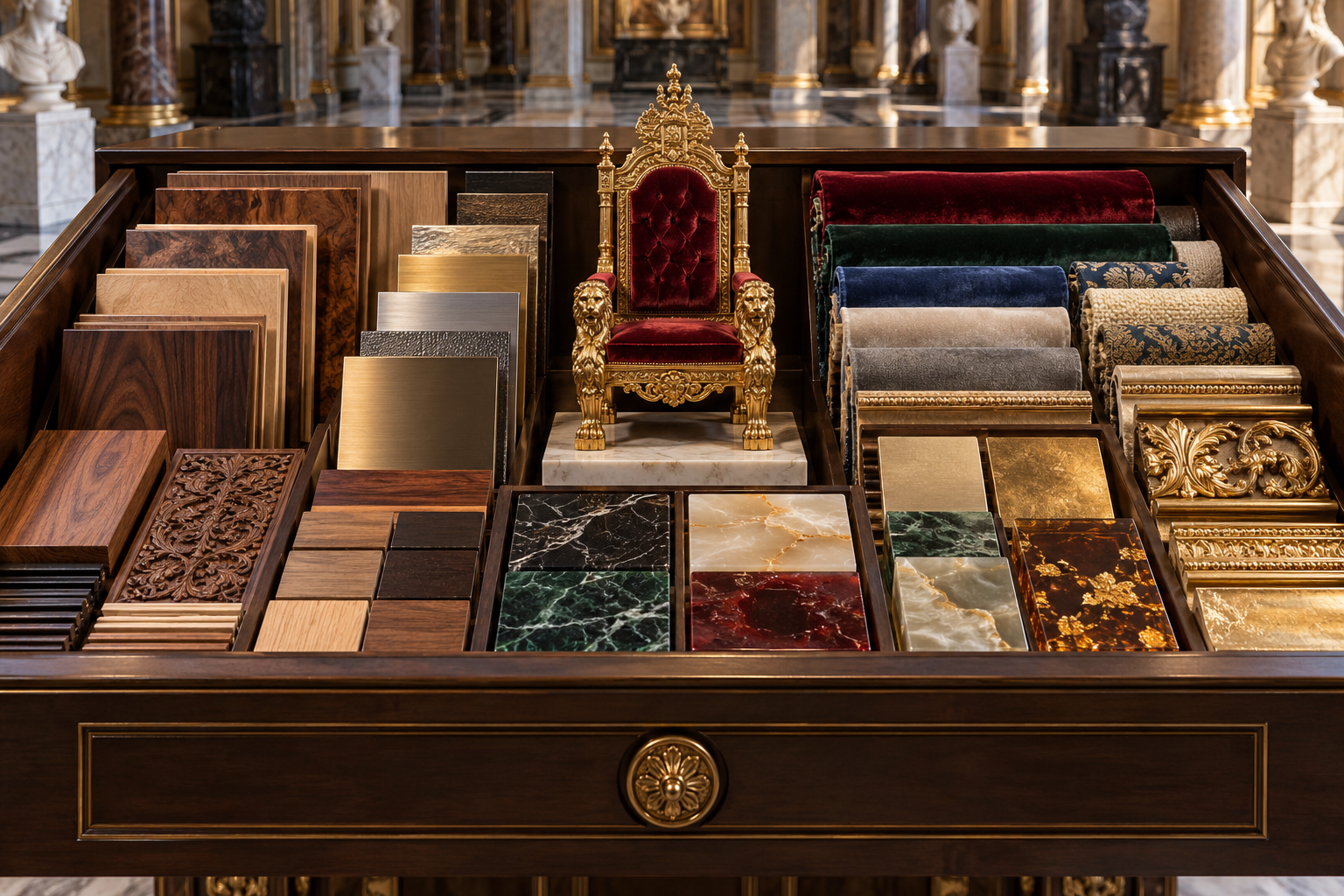
Materials & Finishes Index
A material description becomes clearer when it separates what an object is made from and how its surface appears. Materials & Finishes Index organizes that distinction for throne research. Explore substrates, veneers, cladding, upholstery layers, coatings, and imitated effects as related but separate entries. A…
Read More »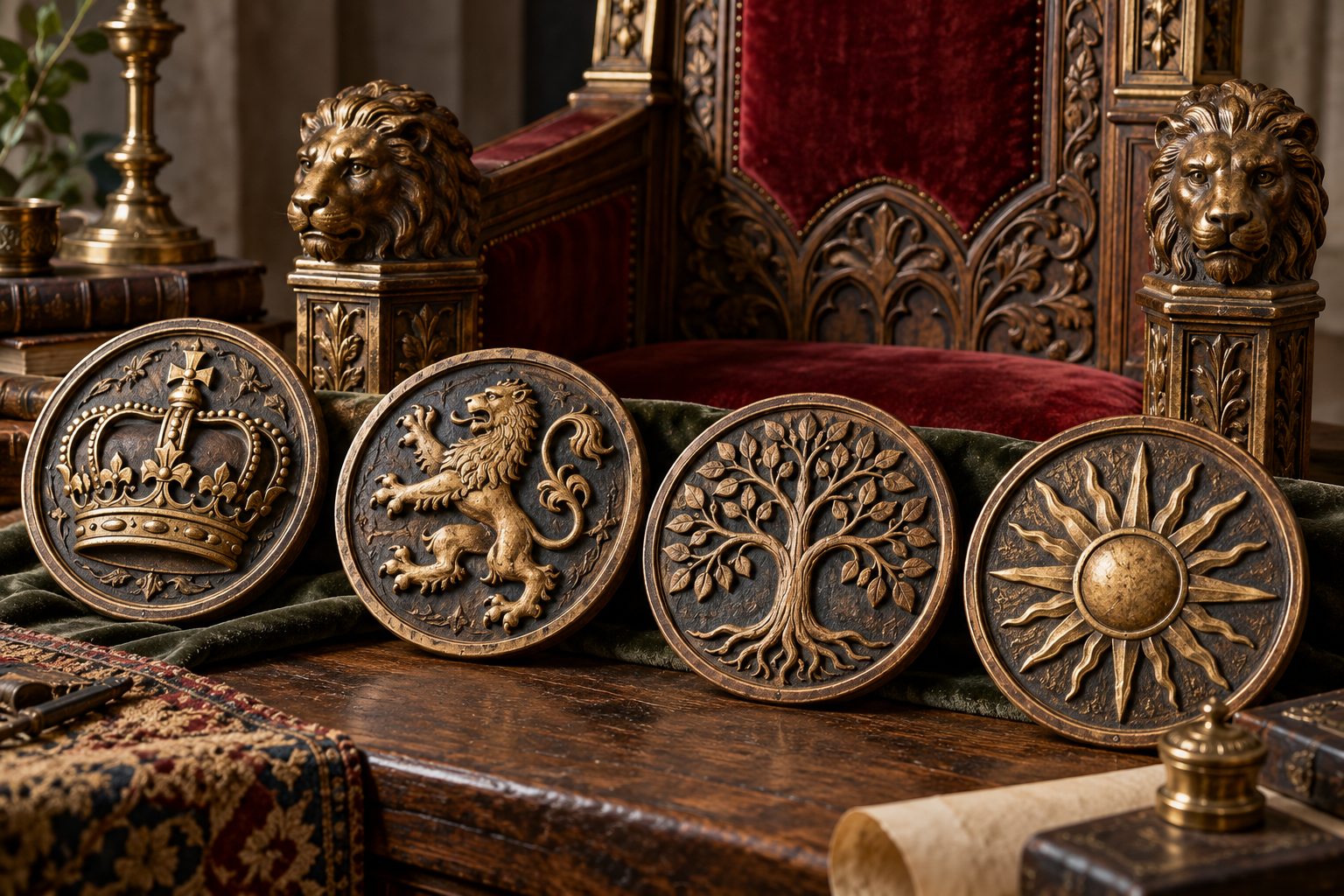
Symbols & Motifs Index
A lion, crown, monogram, branch, or celestial shape becomes meaningful through its place in a particular design and tradition. Symbols & Motifs Index starts with that context rather than assigning every motif a universal definition. Identify the object, period, culture, user, and location of the…
Read More »
Iconic Seating Index
Famous throne names do not always identify one straightforward object. A title can refer to an institution, several ceremonial chairs, a lost seat, a legend, or different versions of a fictional design. Iconic Seating Index helps untangle those identities. Begin with a named entry and…
Read More »