
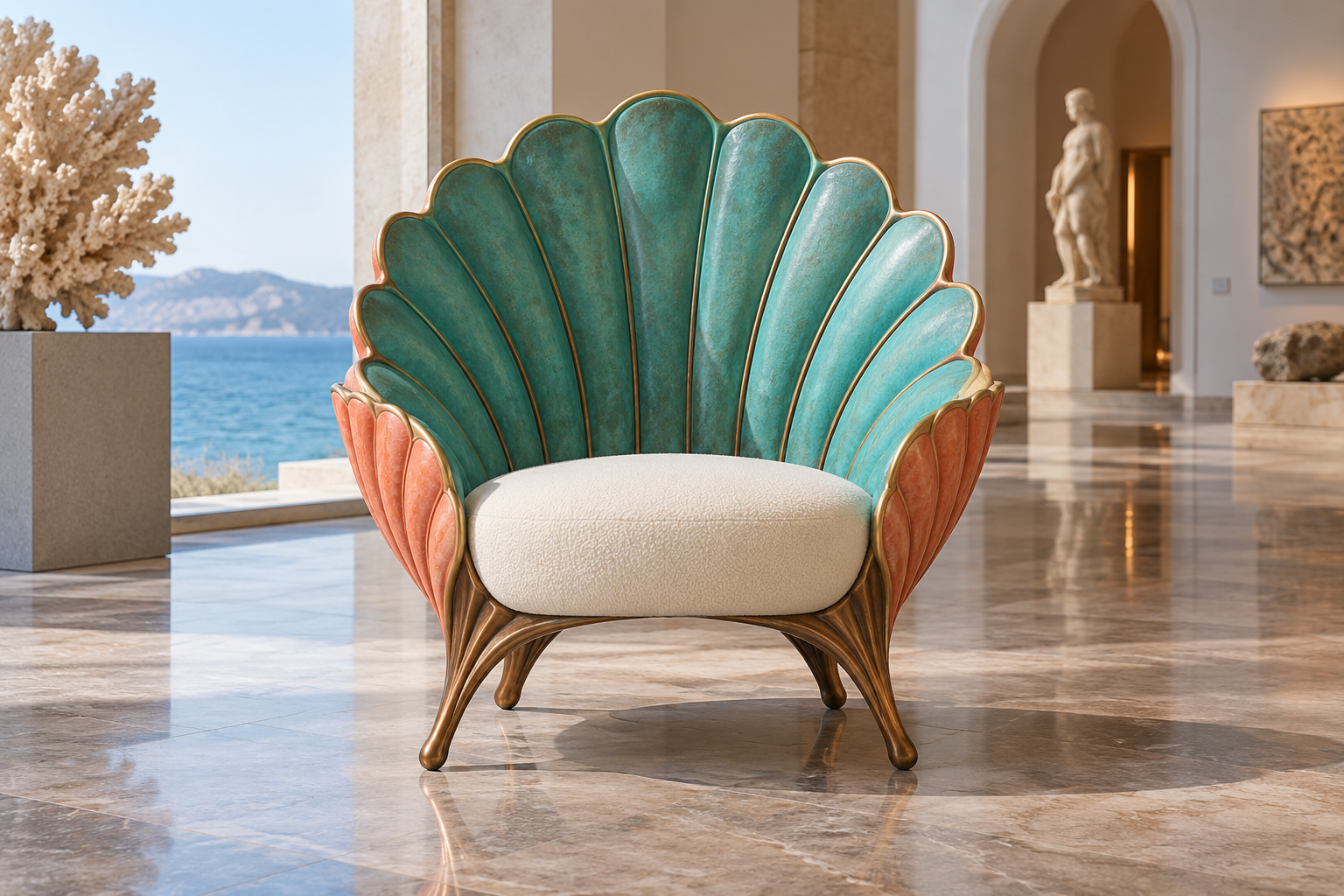
A themed chair makes a story tangible. It can suggest a sea creature, a woodland guardian, a space traveler, or an invented world through silhouette, texture, color, and detail. The challenge is to keep that story legible while preserving the physical logic of seating. A convincing design does not need to copy every feature of its inspiration. Often a few well-chosen cues create a stronger result than a crowded collection of literal parts. This section explores original character forms, environmental storytelling, playful proportions, and the translation from concept art into a finished object. We consider how a person fits within the composition, what remains visible in a photograph, and how decorative elements meet the seat, arms, and back. The setting matters as well: a chair in a museum play space may call for a different mood than one on a film set or in a destination lobby. Discover ways to turn a theme into a coherent seating experience, with materials and fabrication choices that support the idea instead of distracting from it.
Throne Foundations
Translate the theme into a small set of recognizable cues. A creature-inspired chair might use a wing-shaped back, a repeated scale texture, and a particular color relationship.
An environment-inspired seat might rely on layered rock forms or flowing lines instead of a literal character. Decide which cue must remain visible when someone sits down. This creates a hierarchy for the design and helps prevent a chair from becoming a collection of unrelated symbols competing around the occupant.
Royal Facts
The visitor changes the silhouette. A head can hide a face or emblem, clothing can cover a central motif, and arms can conceal important details. Evaluate the occupied view early.
Also distinguish three-dimensional features from graphics: a printed texture, sculpted relief, and projecting ornament produce different shadows and contact relationships. What appears expressive in a close rendering may read as visual noise from a distance. Test the main theme in outline before relying on small surface details to explain it.
Royal Picks
Develop a silhouette sheet, a seated composition, and a limited material board. For a character concept, compare several expressions or postures in the chair's form rather than settling immediately on the first face-like arrangement.
For an environmental theme, study texture scale and how it changes across arms, back, and base. Use an original reference mix that supports the intended story. A small sculptural study is useful for checking whether projecting ears, horns, branches, or fins work from more than one angle.
Behind the Throne
Every decorative projection has a physical relationship to visitors, clothing, staff, and handling equipment. Position expressive features deliberately rather than adding them after the occupied area is fixed.
Plan replaceable ornament where appropriate and consider how the chair is moved without using fragile details as handholds. A themed surface also needs a coherent reverse and underside if visitors can walk around it. Resolve those less glamorous views as part of the same fictional world rather than leaving them as an unrelated box.
Throne Wonders
A seat can suggest a character without depicting a face. A hunched profile, proud crest, curling arm, or protective enclosing back can imply personality through posture.
Try expressing the theme in a plain silhouette first, then add texture and color only where they strengthen that impression. This approach can produce an original design with a clear identity. It also leaves room for the seated visitor to become the central character instead of being visually overwhelmed by the chair itself.
Throne FAQs
Must themed seating reproduce a familiar franchise? No; an original creature, place, or story can provide the concept.
Can the theme be abstract? Yes, if the chosen forms and surfaces communicate it consistently.
What if the main motif disappears behind the occupant? Move it, repeat it selectively, or redesign the composition rather than relying on empty-chair photographs.
How much detail is enough? Judge it at the intended viewing distance and in the actual occupied scene, where recognition matters more than the number of decorative features.