
Plan Care Around the Installation's Real Life
Statement seating often lives through more than the moment shown in its best photograph. An event chair may be packed and moved repeatedly, a retail display may receive constant contact, and an outdoor attraction may face changing weather. Maintenance begins with those patterns of use and the actual materials beneath the surface.
Record what the object is, how it is assembled, which parts are replaceable, and what the maker specifies for care. A decorative finish can look like stone or metal while requiring a very different treatment. A practical plan protects the visual character of the installation and helps staff recognize when a change needs more than routine cleaning.
Throne Foundations
- Identify the throne and its known materials first.
- Keep the maker's information and earlier photographs together.
- Record condition before planning a change.
- Distinguish observations from explanations.
- Separate routine care, repair, and restoration goals.
- Use guidance specific to the actual surfaces and upholstery.
- Preserve references for intentional scenic aging.
- Plan handling and storage as part of the object's life.
- Define the desired outcome before commissioning work.
- Retain documentation of completed treatments and replacements.
Royal Facts
- One throne may contain several different surface systems.
- An old finish can carry historical information.
- A painted scenic effect may intentionally imitate wear.
- A color match does not establish identical material or condition.
- Upholstery includes support and attachments as well as cloth.
- A photograph can document a change without explaining its cause.
- A repair can alter appearance, function, or both.
- A decorative projection is not automatically a handling point.
- A contemporary replacement decision differs from altering significant historic material.
- Care records can remain useful when ownership or staff changes.
Royal Picks
- Create dated overall and detail condition photographs.
- Keep a simple record of visible changes.
- Retain the exact upholstery identification when available.
- Store the maker's material-specific care guidance with the purchase record.
- Preserve approved finish samples or references.
- Use a setup and packing record for a transported prop.
- Request a written scope for specialist repair.
- Ask the practitioner to describe important uncertainties.
- Keep treatment photographs with the object's history.
- Consult conservation resources for significant or poorly understood furniture.
Behind the Throne
- A neutral description helps a specialist evaluate a problem.
- The most visible area may not be the area most affected by handling.
- An earlier repair can complicate a simple material assumption.
- A newly bright surface is not automatically a better-preserved one.
- Intentional distressing can be lost if its reference is not retained.
- A replacement cushion can change both appearance and occupied height.
- A clear treatment goal helps compare proposals fairly.
- A storage plan should consider the object as assembled and as packed.
- Care instructions should be understandable to the person performing the routine.
- Preserving uncertainty in the record can be more useful than inventing an explanation.
Throne Wonders
- Create an object history folder that travels with a custom throne.
- Document the maker's original finish beside later approved repairs.
- Preserve a theatrical throne's intentionally aged surface through clear references.
- Use a new upholstery proposal to explore a contemporary chair's next chapter.
- Let a careful repair keep an important carved feature in use.
- Compare old and new photographs to appreciate subtle workmanship.
- Record the story behind a removable ceremonial emblem.
- Build a practical packing record for a throne that visits several venues.
- Give a family statement chair a documented history for future owners.
- Treat maintenance as a way of sustaining character rather than erasing time.
Throne FAQs
- Should every throne be polished? No. The appropriate care depends on its material, finish, condition, and guidance.
- Can I use one cleaner across the whole chair? Do not assume different surfaces share the same treatment needs.
- What should I photograph first? Overall views, important details, and visible concerns with a date.
- Is worn appearance always damage? No. It may include intentional finish effects or historically meaningful evidence.
- When does a specialist help? When identification, significant material, instability, repair, or treatment scope needs informed assessment.
- Can old upholstery simply be replaced? Discuss its significance and construction before removal.
- What belongs in a repair brief? The object record, observed issue, desired outcome, and intended future use.
- Should repairs always be invisible? The appropriate visual result depends on the object and agreed treatment approach.
- How do touring props benefit from records? Teams can distinguish intended appearance from new changes and restore approved setups.
- What is the most useful care habit? Keep object-specific information and consistent observations available over time.
Identify the Assembly Before Choosing a Treatment
Separate the supporting frame, scenic skins, upholstery, coatings, attached ornament, and any integrated effects. Keep product and finish information with the installation records, including the approved care instructions and contact details for specialist work.
Historic objects require a separate conservation approach. Do not apply ordinary event-display refurbishment methods to an artifact simply because the two objects look similar. For a contemporary installation, agree the desired appearance and acceptable changes before treatment begins.
Create a Useful Condition Record
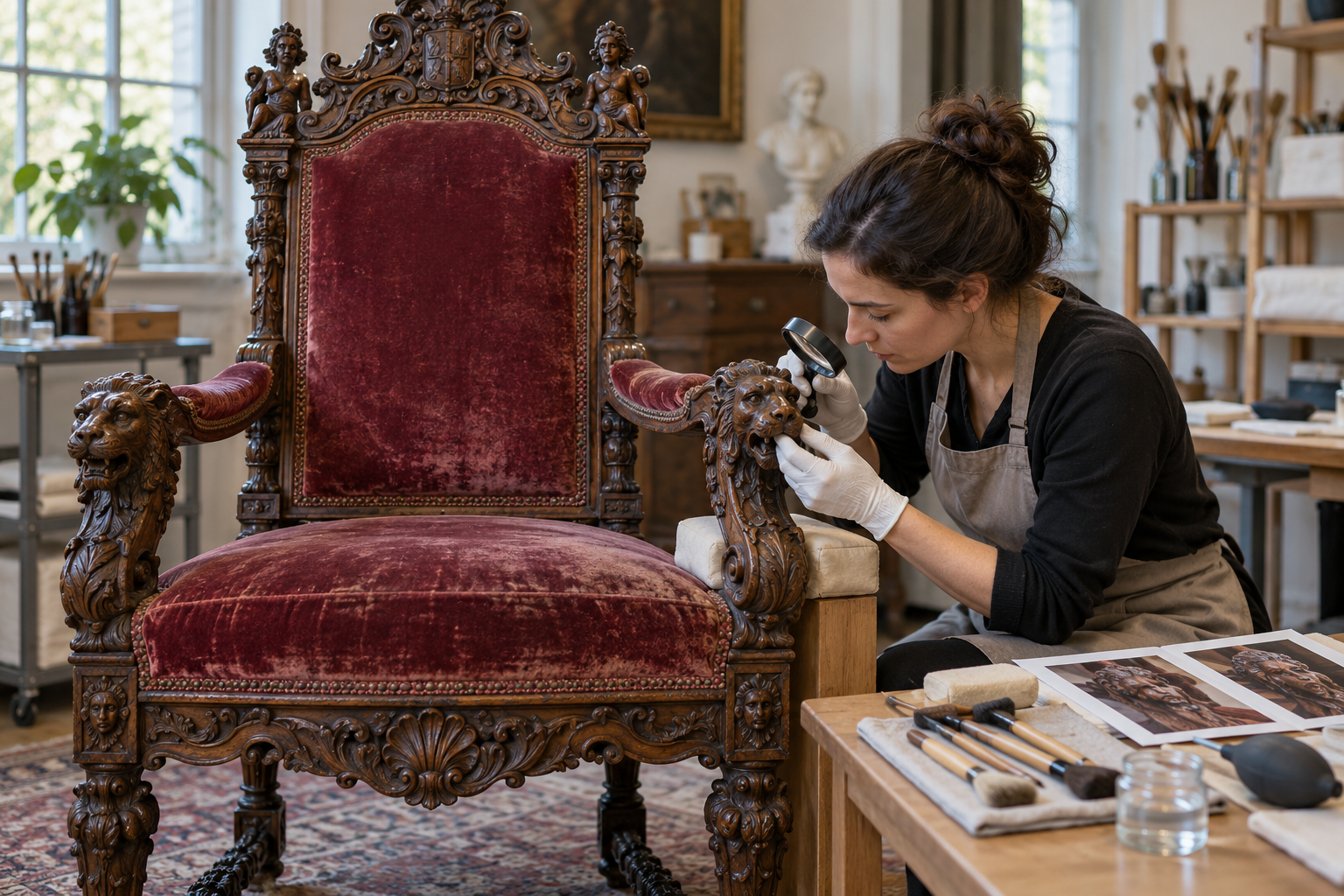
A condition record does not need to begin as a complicated report. Take clear overall photographs, then photograph important details and any visible changes. Include the back and less obvious areas when they can be viewed appropriately. Record the date and describe what you observe in neutral terms: an open seam, a loose trim, a faded area, a mark on an arm, or a missing decorative component.
Separate observations from explanations. 'The lower corner is lighter' describes a visible condition; 'the original maker used the wrong finish' makes a claim the photograph may not support. Keep earlier images so future changes can be compared. For a rental or touring throne, repeat the record at useful points in its working life. A consistent record makes conversations with the maker, upholsterer, conservator, or supplier more precise than a vague recollection that the piece used to look different.
Distinguish Routine Care from Restoration
Routine care maintains an object within an agreed plan. Repair addresses a particular problem. Restoration may aim to recover a selected appearance or function. Reupholstery and refinishing can change the object substantially. These words should lead to a discussion about the proposed result rather than being treated as interchangeable promises that the throne will look better.
Decide what you want to preserve before requesting work. On a contemporary event chair, replacing worn upholstery with an agreed new textile may fit its working purpose. On a historic throne, the existing textile, finish, or earlier alteration may form part of its significance. A useful treatment brief explains the object, the concern, the desired use, and the qualities that should remain. It gives the specialist something more concrete to review than an instruction to restore everything to perfection.
Build a Material-Specific Routine
For a modern throne, gather the maker's care instructions and the upholstery supplier's guidance. Identify which surfaces they apply to. Keep the information with exact material and product references where available. If an instruction is unclear, ask before turning it into a regular routine. A care plan should be understandable to whoever actually looks after the piece, not only to the person who originally bought it.
The Canadian Conservation Institute's basic furniture guidance emphasizes stable surroundings and directs extensive repair or cleaning questions toward a conservator. It also challenges the idea that wooden furniture needs to be continually 'fed' with oils. CCI: Basic Care of Furniture and Wooden Objects Rather than collecting several general-purpose treatments, organize a small set of approved tasks around the actual object and its condition. A modest, consistent routine can be easier to maintain than a shelf of products chosen for their promises.
Treat Ornate Surfaces as Individual Areas
An elaborate crest can contain deep relief, edges, applied details, and areas that collect visible deposits differently. A smooth arm may be touched often while the upper back is rarely handled. Look at those areas separately when discussing care. The fact that they share a color does not mean they share the same condition or construction.
Do not confuse intentional painted aging with unwanted grime, especially on a scenic throne. Keep finish reference photographs for such pieces so the intended effect remains understandable to later owners or staff. Where a coating appears unstable, loose, or unfamiliar, leave treatment decisions to an appropriate specialist. The useful owner-level task is often careful observation and documentation. Preserving a subtle surface can be a better result than removing the very effect that made the object distinctive.
Give Upholstery Its Own Conversation
Upholstery combines more than the visible cloth. Padding, support, seams, trim, attachments, and the relationship with the frame all contribute to the seat. When something changes, describe the specific concern: a fabric mark, a moving trim, an uncomfortable cushion, or a problem at the junction with the wood. Those descriptions help determine whether the next conversation belongs with a cleaning specialist, an upholsterer, the maker, or a conservator.
Keep the textile identification and care instructions accessible. For a contemporary replacement, review how the new material changes the appearance and sitting position as well as the color. For significant older upholstery, discuss the implications before removing it. Avoid treating the seat and back as independent cosmetic panels when their construction and history may be closely connected to the frame. A good brief respects both the visible design and the way the upholstered system is assembled.
Plan Handling, Display, and Storage Together
A throne's working life includes the moments when it is moved, installed, stored, covered, and returned to use. Ask the maker or relevant specialist for an appropriate handling plan, including which components detach and how the object is supported. Ornamental wings, crests, and carved arms should not be assumed to be carrying points simply because they are convenient to reach.
Review the setting as part of the care plan. Nearby drinks, flowers, cleaning activity, direct exposure, and repeated movement may all influence how the piece is managed. For a temporary installation, establish who checks condition at arrival and departure and who has responsibility for packing. A clear process can be practical and unobtrusive. It allows the throne to keep doing its intended job while making its vulnerable details easier for the people around it to understand.
Commission Repair with a Defined Outcome
When specialist work is needed, provide the condition record, history, material information, and intended future use. Ask the practitioner to explain the proposed scope, what remains uncertain, and what the finished result is expected to look like. Discuss whether the work changes appearance, construction, function, or several of those at once.
For a visually prominent repair, review how it will relate to the surrounding surface. A perfectly invisible match may not be possible or appropriate, depending on the object and treatment approach. Keep the final documentation so later care does not have to begin from the same uncertainty. The best conversation is a collaborative one in which the owner explains priorities and the practitioner explains what the object can reasonably support. That produces a clearer decision than judging a proposal only by a promise of dramatic transformation.
Keep the Next Use in View
At the end of an event or maintenance cycle, document condition, repairs, missing components, and any restrictions before the seat returns to storage or public use. A clear handover is more useful than relying on someone to remember what happened during the last installation.
Refurbishment should connect the visual outcome with the next operating period. Replace worn service components deliberately, retain records of finish changes, and have concerns about the support or intended interaction assessed by the appropriate specialist. Care works best when it remains part of the project's design process.
Related Articles

Color and Upholstery for Statement Seating
Color and upholstery can transform the character of statement seating. Explore palettes, texture, pattern scale, seams, trim, and real lighting to create a coherent seat for interiors, events,…

Commissioning Custom Seating: Turn an Idea into a Clear Design Brief
A striking idea becomes a successful commission through clear decisions. Learn how to turn inspiration into a practical throne design brief, collaborate with a maker, review samples and…
Designing Statement Seating: Form, Comfort, and Fit
A memorable seat needs more than a striking silhouette. Explore how form, usable dimensions, comfort, materials, and setting work together to turn an imaginative chair into a convincing…