Let the Dragon Shape the Design
A dragon throne can be majestic without looking like a chair covered in unrelated monster parts. The strongest designs translate a small number of dragon forms into a convincing whole: wings establish the back, scales introduce texture, and the movement of a neck or tail connects one part of the outline to another. The result feels designed rather than decorated after the fact.
Begin by deciding what kind of presence you want. A protective dragon might curl around the occupant. A ceremonial guardian could appear through paired heads and a broad, orderly back. A wild creature might influence the throne through tension and sweeping movement. These are original creative choices, not rules borrowed from any one fictional universe. This guide explores how to develop those choices through silhouette, motif, material, color, and setting while keeping the chair itself visually understandable.
Throne Foundations
- Choose the dragon's character before selecting ornaments.
- Start with one defining gesture such as folded or open wings.
- Develop a clear outline without relying on fine scales.
- Include a seated figure when reviewing the back.
- Use related forms across heads, arms, and base.
- Choose a consistent level of realism.
- Build a hierarchy of large forms and smaller textures.
- Describe visible finish and actual material separately.
- Review the design in its intended setting.
- Edit details that weaken the main dragon idea.
Royal Facts
- Paired wings can frame an occupant as well as define the chair.
- Tiny scale patterns may disappear in a small website image.
- A side view can reveal overlaps hidden in a front drawing.
- A bronze appearance can be produced through different material systems.
- A folded-wing outline can suit a narrower concept than a full spread.
- A quieter central back can make the occupant easier to see.
- A miniature needs its own treatment of readable detail.
- A lighting effect can change the apparent depth of carved relief.
- A dragon motif can be suggested without a literal complete creature.
- An original concept and a practical furniture specification are different stages.
Royal Picks
- Use small silhouette studies to compare wing arrangements.
- Prepare front and side drawings before polishing details.
- Include an occupant outline with representative clothing.
- Make a scale-pattern sample at the intended viewing size.
- Compare finish samples under clear and dramatic light.
- Use a simple maquette to assess projecting forms.
- Choose one detail sheet for the dragon's anatomy language.
- Test the concept as a small homepage thumbnail.
- Keep a material board limited enough to remain coherent.
- Ask a maker to develop the physical version around its intended use.
Behind the Throne
- The dragon's strongest gesture should survive without surface texture.
- Wing tips can compete with the central crest if both demand attention.
- Literal animal anatomy is optional; visual consistency is essential.
- A tail motif can remain within a panel rather than crossing a route.
- Repeated small spikes can obscure the larger outline.
- A restrained textile can balance a highly detailed sculpted frame.
- Different viewing angles may reveal unintended creature-like tangles.
- The brightest finish should support the image's focal hierarchy.
- A clear daylight study exposes problems that theatrical darkness can hide.
- A compact dragon crest can suit a room better than a huge wing span.
Throne Wonders
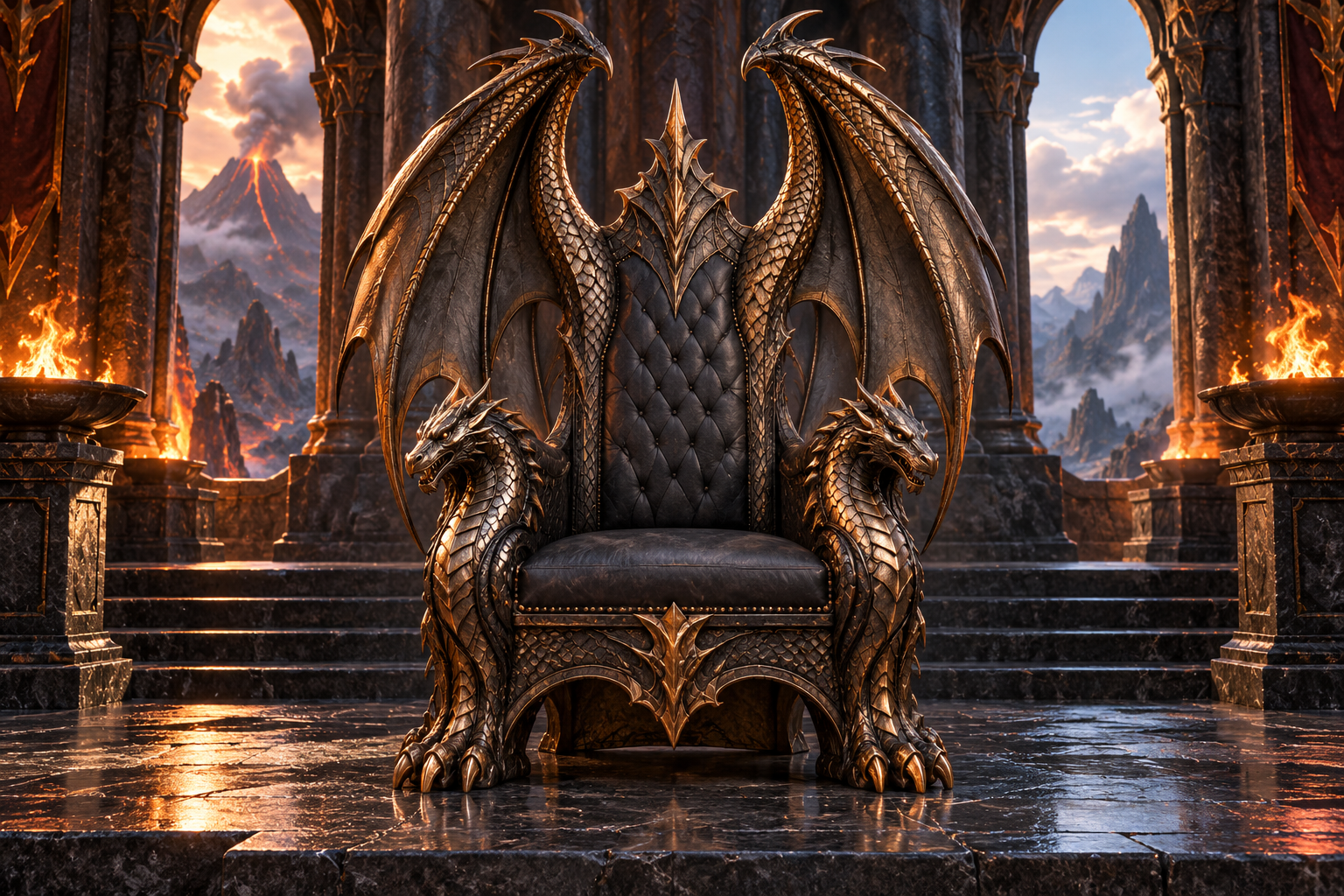
- Design a bronze guardian throne with folded wings and deep blue cloth.
- Translate dragon scales into a subtle carved border.
- Use pale timber and ivory upholstery for a luminous dragon court.
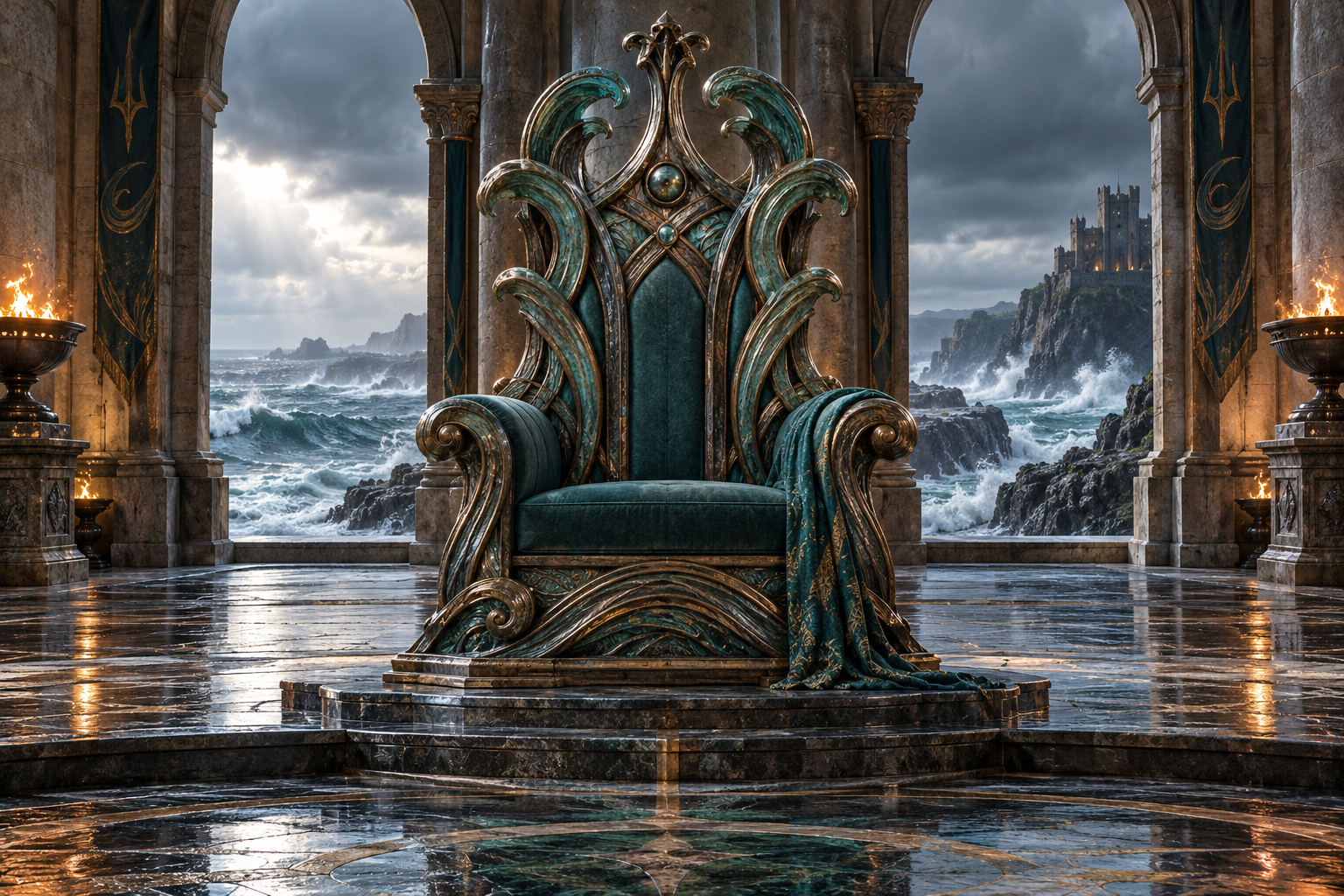
- Create a coastal dragon throne with sea-green patina.
- Let two restrained head forms define the armrests.
- Explore a geometric dragon silhouette with almost no literal anatomy.
- Design a miniature with exaggerated wing edges and simplified scales.
- Use a coiled tail pattern as the border of a quiet back panel.
- Give a ceremonial dragon throne a removable crest for changing occasions.
- Build a volcanic setting around a balanced chair rather than a forest of spikes.
Throne FAQs
- Does a dragon throne need a full dragon sculpture? No. Selected forms can establish the theme.
- How can wings look balanced? Review their main masses and negative spaces with the occupant included.
- Should every surface have scales? No. Quiet areas can make the textured areas more effective.
- Can wood suit a dragon throne? Yes. Carving and grain can support a distinctive creature language.
- Must the palette be red and black? No. Choose colors that support the intended character and setting.
- Can I use a famous fictional throne as a model? Develop an original design instead of reproducing recognizable proprietary details.
- What makes a miniature different? Detail must remain readable at its final physical and photographic size.
- Why draw a side view? It reveals projection and overlap that a front view can conceal.
- Can a rendering prove the throne is usable? No. Physical use needs a separate practical design and specification.
- What is the best finishing test? The chair should remain clear and distinctive without relying on dramatic effects.
Choose One Main Dragon Gesture
A dragon provides an enormous library of forms, which makes restraint useful. Choose the gesture that defines the throne before adding secondary details. Outspread wings create width and a strong upper outline. Folded wings can establish a narrower, more architectural back. A coiled body can frame the seat, while a rising neck can suggest a distinct central crest.
Draw that gesture in several simple versions. Keep the occupant visible and test the shape without texture. If the concept only reads as a dragon after dozens of small scales are drawn, its main form may need work. A recognizable gesture gives the throne an identity even in a thumbnail, a distant stage view, or a wide illustration. It also helps decide which other motifs to omit, because not every dragon feature needs to appear on the same chair.
Use Wings as a Deliberate Frame
Wings are especially effective because they can create a visual field around a seated person. Paired wings can form a balanced back, with their highest points placed to support the overall composition. A more compact design might use the folded profile of a wing rather than a literal full spread. Think about the direction of the outer edges and the negative spaces between the wing forms.
Avoid allowing the wings to become a separate spectacle that overwhelms the seat. Include the head and shoulders of a representative occupant in the drawing. Check the design from the front and at an angle, where overlapping parts can create unexpected tangles. For a physical chair or prop, the practical treatment of projecting wings needs its own maker's specification. The concept should describe the intended look and use without pretending that a dramatic rendering has already solved those details.
Make Scales Work at More Than One Distance
Scale patterns can give a dragon throne richness, but their size and placement matter. Tiny repeated scales can disappear from a distance and become visual noise in a photograph. Very large scales can dominate a surface and compete with the chair's outline. Try a hierarchy: broad forms establish the creature, medium details reveal the anatomy, and selected fine textures reward a closer look.
You might place scales along the outside of the arms while leaving the seat and central back quieter. Another approach uses a change in surface direction to suggest overlapping armor without carving every scale separately. Compare the texture in a wide view and a close detail. An original design becomes more convincing when each viewing distance offers something clear, rather than requiring the viewer to decode the entire object at once.
Give Heads, Claws, and Tails a Clear Role
A pair of dragon heads can create memorable arm terminals. Claw-like forms can suggest the base. A tail can connect the rear structure visually to the floor. The challenge is making each element feel related to the larger creature language. If the wings are smooth and stylized while the heads are densely anatomical and the feet resemble an unrelated animal, the throne may lose its visual unity.
Choose a consistent level of realism. A restrained geometric dragon can be as expressive as a detailed sculptural one. Keep decorative projections away from the places where the intended occupant needs to move or rest, with the final practical design reviewed for its actual purpose. A tail does not need to wind across the approach route to communicate its presence; its motion can be suggested within a side panel or along the chair's visible base.
Pick Materials That Support the Creature's Character
Materials can make similar silhouettes tell different stories. Dark carved wood can emphasize the maker's hand and the relationship between grain and relief. A bronze-like finish can suggest a monumental cast object. A pale stone-inspired treatment can make the same dragon feel like an architectural guardian. Upholstery introduces another voice, ranging from quiet charcoal to a warm contrasting textile.
Describe the appearance and the actual material separately when developing a physical version. A scenic surface that resembles metal has different practical implications from a metal component. Test proposed finishes on the intended substrate and in the planned lighting. For an illustration or digital concept, keep the material behavior believable: highlights, texture scale, and the way adjoining parts meet should support the chosen impression. A convincing material family often contributes more than adding another decorative creature.
Create Color Relationships Beyond the Obvious
Dragon design offers more possibilities than red, black, and glowing orange. Weathered bronze beside deep blue cloth can suggest a ceremonial relic. Ivory and warm timber can produce a guardian throne with a lighter mood. A sea-green surface can connect the creature to a coastal realm. Charcoal upholstery can quiet a complicated frame, giving the sculpted features room to be understood.
Choose where the strongest color contrast belongs. If the throne must frame a person, the seat and back should help that figure remain readable. A brightly colored crest may pull attention away from the occupant; that could be useful for an object showcase and unhelpful for a portrait. Review the palette at the size it will be seen on the final webpage, print, or screen. Subtle distinctions can vanish when the image becomes small.
Use Light to Reveal Form Instead of Hiding It
A dark throne in a dark hall can sound dramatic and still produce a confusing image. Light needs to distinguish the wings, arms, seat, and background. Raking light can reveal scale relief, while a gentler frontal component can keep the central seating area understandable. Strong metallic highlights should describe the form rather than turn its most important features into bright streaks.
Try an ordinary clear-light version before committing to a highly theatrical scene. If the design falls apart without smoke, extreme contrast, or glowing effects, the underlying form may need attention. Then build atmosphere around a design that already works. A warm side light against cool daylight, for example, can create depth while leaving the dragon's outline visible. The mood should enrich the throne rather than conceal how its parts relate to one another.
Match the Setting to the Design's Scale
A dragon throne can belong in a castle hall, a domestic reading room, a stage setting, or a miniature display. Each setting changes the useful level of detail and the amount of visual space available. A large wing span might suit a wide fantasy hall and overwhelm a compact room. A subtle dragon crest can provide the theme without requiring a full sculptural creature.
For a miniature, exaggerating selected forms may help them remain readable at small scale. For a camera prop, compare the wide composition with the close view used for an actor. For furniture, connect the theme to the room's other materials instead of surrounding it with unrelated fantasy objects. The design becomes stronger when its intended setting explains why these dragon features have the proportions and finish they do.
Build an Original Dragon Throne Brief
Finish the concept with a clear description of its main gesture, level of realism, material family, color relationships, and intended setting. Include front and side views, a representative occupant, and a few important detail studies. A balanced winged back, paired head-shaped arms, selected scale textures, and a restrained base may provide all the dragon language the chair needs.
Originality does not require maximum complexity. It comes from a consistent set of choices that produces a recognizable identity. When the outline, surfaces, and setting support the same character, the throne can feel unmistakably draconic without copying a famous prop or covering every inch in spikes. Let the creature guide the design, then edit until the seat and the dragon belong to the same visual idea.
Related Articles
Fantasy Throne Design: From Story Concept to Physical Seating
Bring a fantasy seating concept into the physical world. Follow the design from a clear story idea through silhouette, materials, occupant space, scenic surfaces, and a practical brief…
Color and Upholstery for Statement Seating
Color and upholstery can transform the character of statement seating. Explore palettes, texture, pattern scale, seams, trim, and real lighting to create a coherent seat for interiors, events,…
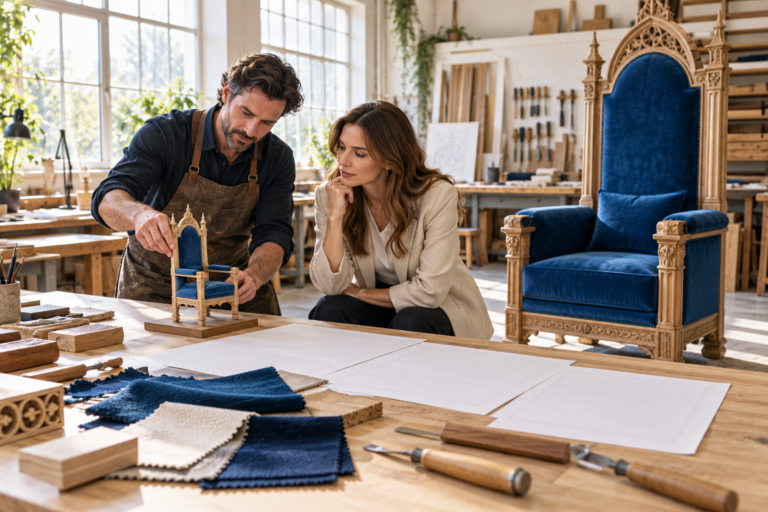
Commissioning Custom Seating: Turn an Idea into a Clear Design Brief
A striking idea becomes a successful commission through clear decisions. Learn how to turn inspiration into a practical throne design brief, collaborate with a maker, review samples and…